
The complete guide
How to Choose Silk Hair Ties That Actually Stay Put
The small annoyance nobody talks about
Hair ties are one of those things you only think about when they go wrong. The elastic snaps halfway through the day. The tie digs a groove into the ponytail so you cannot wear your hair down afterward. You pull it out and three hairs come with it. None of this ruins a day, but it adds up, and most people just accept it because a bag of twenty ties costs almost nothing.
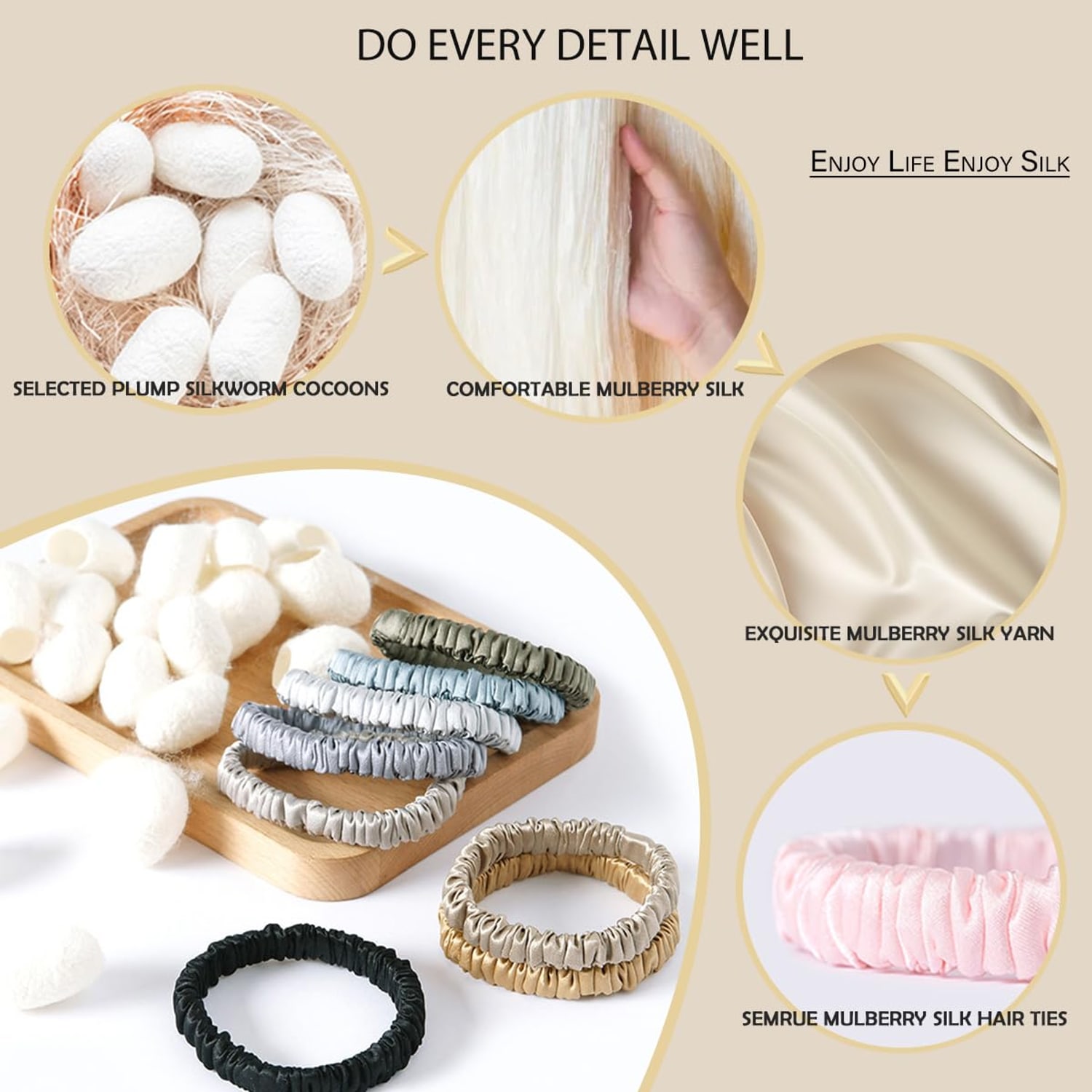
Silk ties take a different approach. Instead of leaving the elastic bare, the band gets wrapped in fabric, and the fabric chosen is one of the smoothest there is. Hair slides across silk with less friction than it does across cotton or raw rubber. That means less catching when the tie goes on and less tugging when it comes off. It is a small upgrade, repeated several times a day.
What 22 momme actually tells you
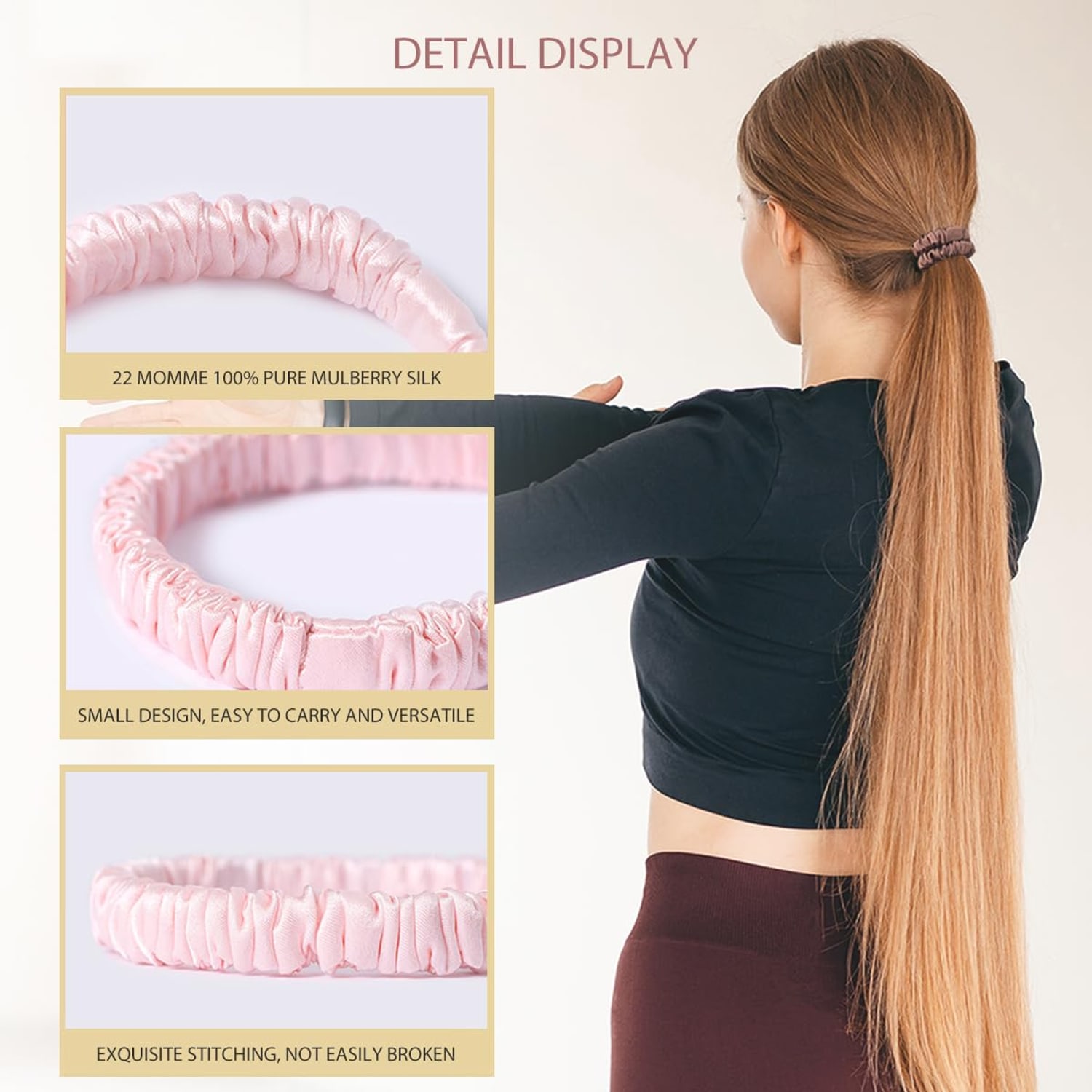
Momme is the number silk is sold by. It describes weight per unit area, and it is the closest thing silk has to a thread count. Lightweight silk accessories often land around 16 momme. At 22 momme you are into the heavier end of what is used for bedding and accessories.
In the hand the difference is obvious. Lower momme silk feels slippery and a bit insubstantial, almost like a lining fabric. Higher momme silk has body. It has a denser drape and a quieter shine rather than a glossy one. On a hair tie that extra weight matters because the fabric is being stretched, twisted, and pulled across itself constantly. A thicker silk simply has more to give.
It is worth being clear about what momme does not tell you. It is a measure of weight, not of silk grade or finish. A high momme figure is a good sign, but it works alongside how the tie is sewn and how good the inner elastic is.
Skinny versus wide, and why it matters
Scrunchies come in two broad families. The wide, gathered style is the one people picture from old photos, a big fabric ring that sits like a cuff around the ponytail. The skinny style, which is what this set is, uses far less fabric and sits close to the hair.
Neither is better in general. They are better at different things.
Wide scrunchies are decorative. They add visible volume, they look deliberate, and because the fabric spreads the tension over a bigger area they can feel gentle on the scalp. The downside is bulk. They do not tuck under a hood, they look odd under a helmet, and a messy bun secured with one can end up looking top heavy.
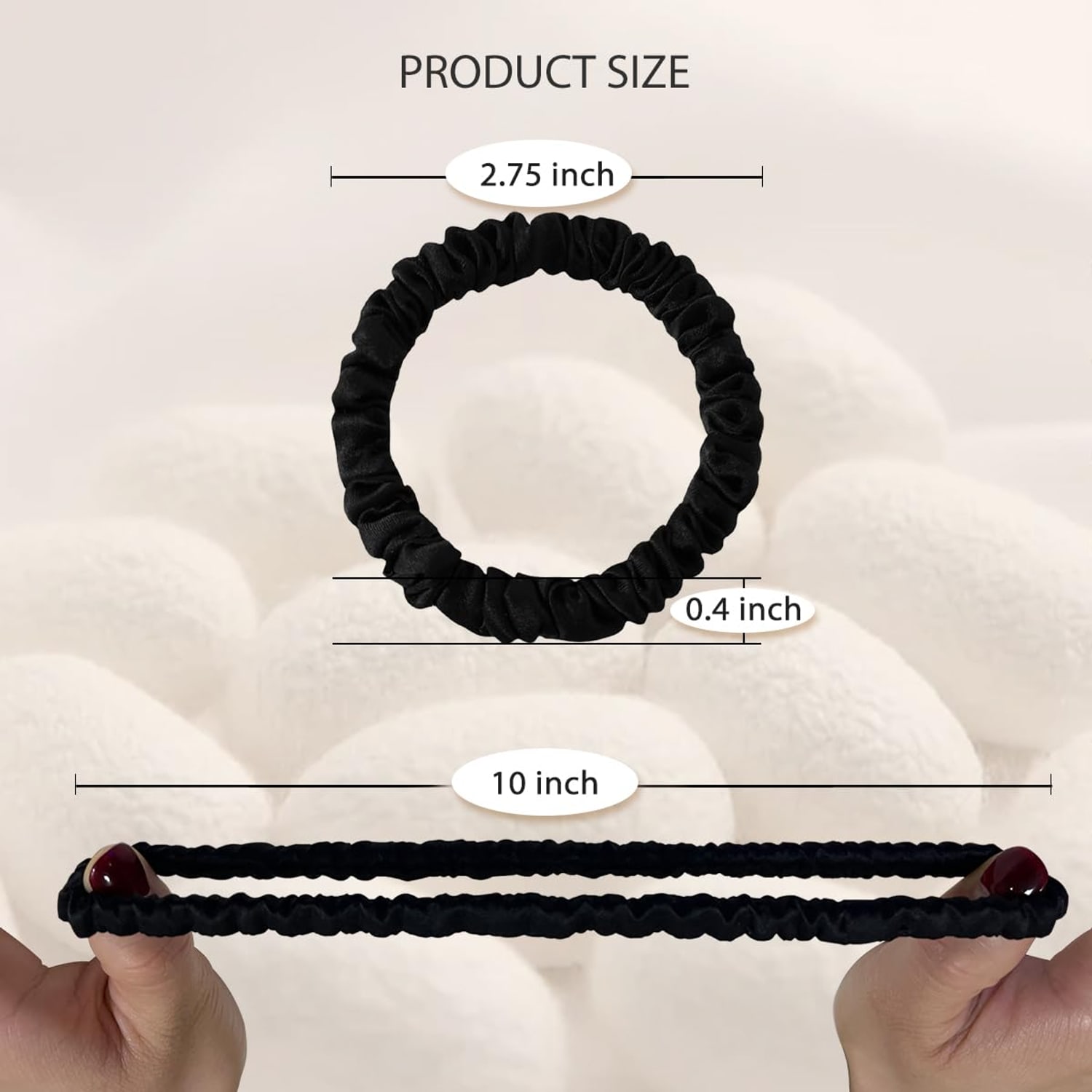
Skinny ties go almost unnoticed. They hold a ponytail tight and neat, they disappear inside a bun, and they lie flat when you pull a hat on. Worn on the wrist they look like a thin black band rather than an obvious hair accessory. For people who tie their hair up for practical reasons rather than style reasons, this is usually the more useful shape. Among the best skinny silk scrunchies, the thing to look for is an inner elastic with real recovery, because a slim tie relies on the band more than a wide one does.
Who these suit
If you tie your hair up most days and want something quiet, the black skinny style is an easy fit. It works under a cap at the gym, sits flat at the base of a low bun for work, and does not clash with anything.
If your hair is fine, the combination of a smooth surface and a firm inner band gives you grip without needing to pull hard. Fine hair tends to slide out of coarse elastics, and the usual fix is to wind the tie an extra turn, which is exactly what creates a crease. A tie that holds at two turns is kinder.
If your hair is thick or long, the slim shape is easier to layer than a bulky one. Three wraps of a skinny tie takes up less room than two wraps of a wide scrunchie, and the ponytail sits closer to the head.
If you have curls or coils, the main benefit is on removal. Curl patterns get disturbed when a rough band drags down the length of the hair. A smooth band comes away more cleanly, though technique still matters. Ease it off rather than pulling it straight down.
If you want something that makes a visual statement, this is not it. These are plain black and deliberately understated. A colored or patterned wide scrunchie would serve you better.
How to choose a set
Start with your usual hairstyle. Count how often you reach for a tie and what you do with it. Someone who wears a high ponytail for exercise every day needs different hold from someone who clips their hair up to cook dinner.
Then look at the elastic. The silk gets all the attention, but the band is what actually does the work. Good elastic returns close to its original length after you stretch it. Cheap elastic goes slack after a few weeks and you end up winding it one more time to compensate.
Think about color honestly. Black is the safest choice because it disappears against dark hair and reads as intentional against light hair. If you have light hair and want the tie to vanish, a matching neutral is better, though you then lose the go-with-everything convenience.
Finally, think about quantity. Hair ties get lost at a rate that no other accessory matches. Buying four at once is not over-buying, it is accepting reality. Four matching ties mean you can keep one in each place you actually need one, and it never matters which one you grab.
Looking after them
Silk is not fragile, but it is particular. Three things shorten its life more than anything else, which are heat, harsh detergent, and hard wringing.
Wash by hand in cool water with a small amount of detergent made for delicates. Swirl them around for a minute, rinse until the water runs clear, then lay them on a towel and press gently to lift the water out. Do not twist them. Lay flat to dry, out of direct sun and away from a radiator.
Dark dyes sometimes release a little color the first time they get wet, so wash a new black set on its own before mixing with anything pale.
If one gets caught in a tangle, do not pull. Hold the hair above the knot with one hand and work the tie free with the other. Yanking it is how both the hair and the silk get damaged.
How often to wash depends on use. A tie worn to the gym wants rinsing out after each session. One worn around the house is fine every couple of weeks. Rotating through four of them means each one gets a rest, which is another quiet argument for buying a set.
A note on what we are not claiming
Silk is smooth, and hair slides over it with less friction than it does over cotton. That is a property of the fabric and it is easy to feel. We are not going to tell you it changes your hair health, thickness, or growth, because that is not something a hair tie can promise. Buy these because they feel nice, hold well, and look tidy.
The short version
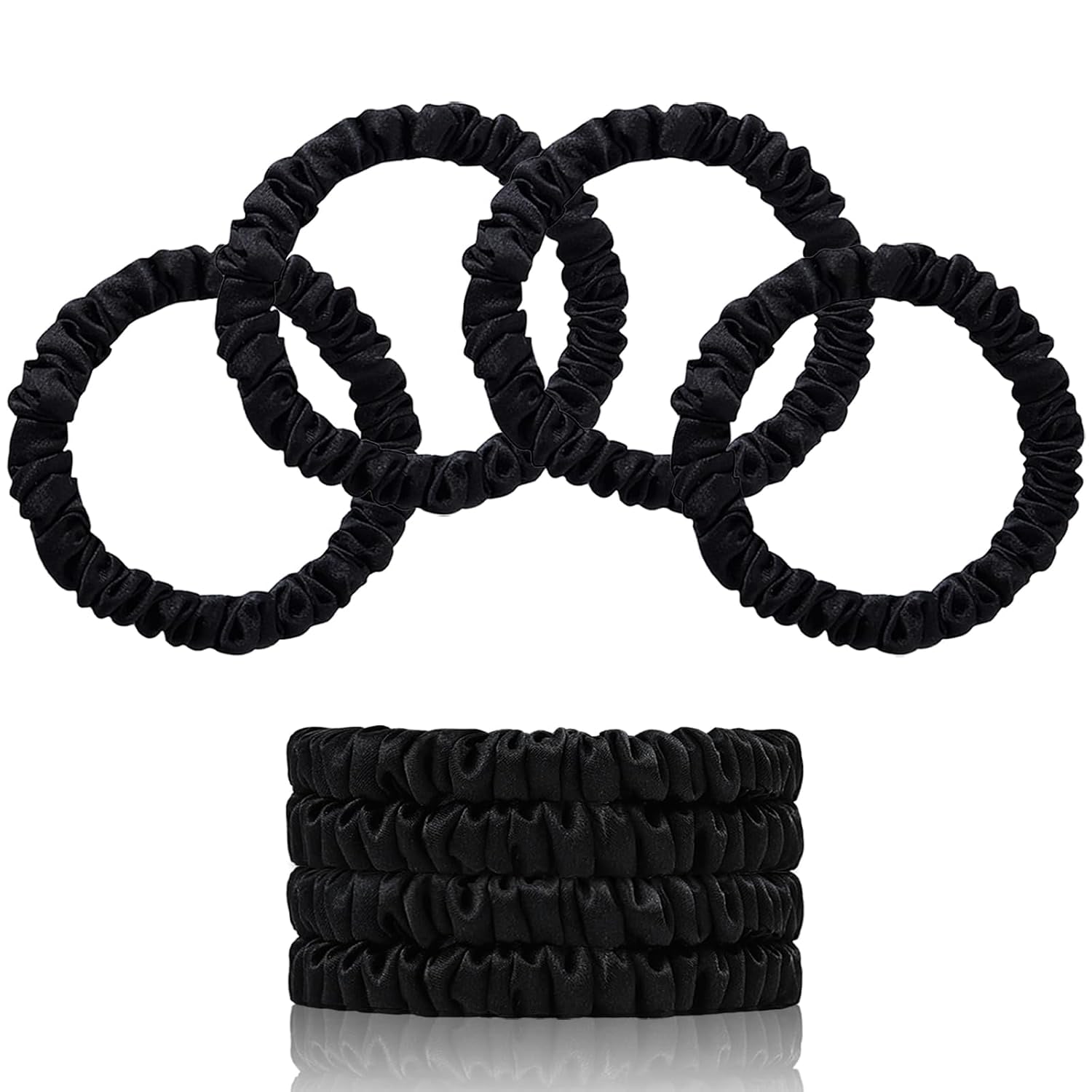
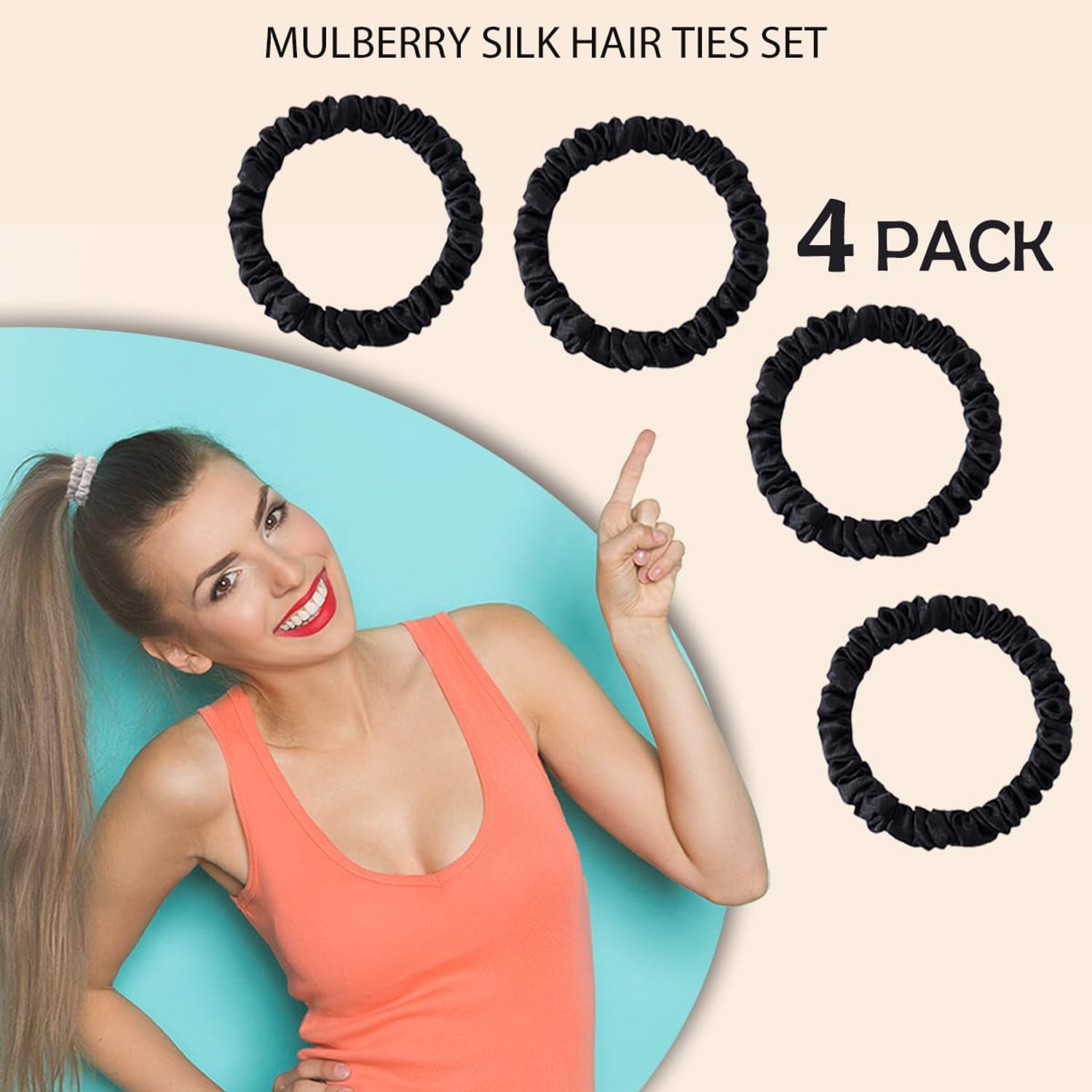
Four plain black hair ties, wrapped in 22 momme mulberry silk, in the skinny style rather than the big gathered one. The silk is heavier than the usual accessory weight, so it feels dense and smooth instead of thin. The slim profile holds a ponytail neatly, tucks away in a bun, sits flat under a hat, and passes as a thin band on the wrist.
They suit anyone who ties their hair up regularly and wants something quiet and practical. Hand wash in cool water, lay flat to dry, and keep them away from heat. Brand, fiber percentages, and country of origin are not stated by the maker.
Orders ship from US warehouses in 3 to 7 working days, free on orders over 150 dollars and 20 dollars under that. Returns are accepted within 14 days of delivery if the ties are unused and unwashed.