
The complete guide
How to Choose and Wear a Small Square Silk Scarf
The outfit that is almost finished
Most wardrobes have the same gap. The shirt is fine. The jeans are fine. The coat is fine. But the whole thing looks like it stopped one step early, and you cannot quite say why.
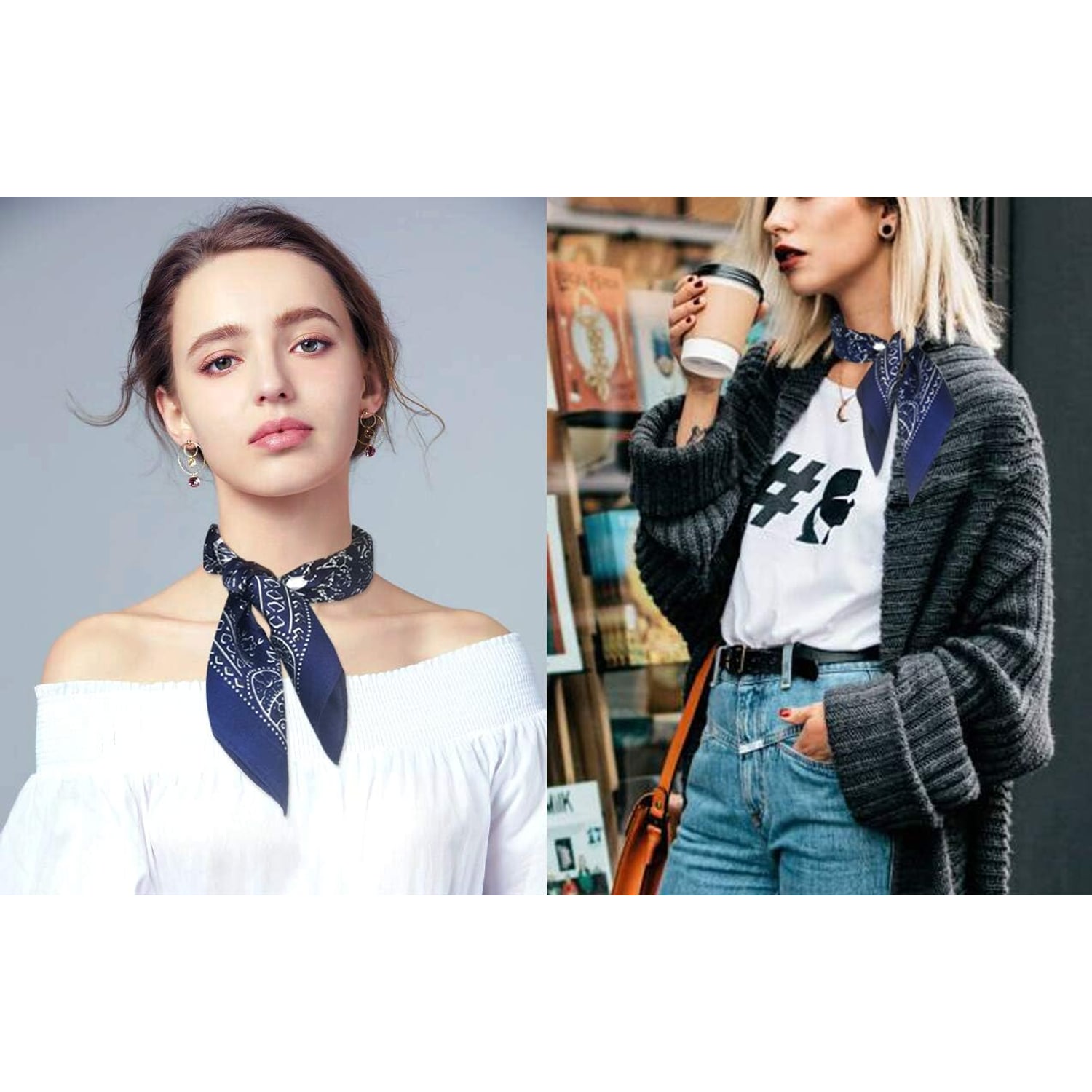
Nine times out of ten the missing piece is color at the neck. That is the spot your eye lands on first when you look at someone, and it is usually the emptiest part of an outfit. A small square silk scarf fills it. One knot, four seconds, and the same clothes read as considered instead of thrown on.
This guide covers what a 21 inch square silk scarf actually does, how the fabric behaves, how to tie it without fighting it, and how to wash it so it still looks good in five years.
What 21 inches gives you
Square scarves come in roughly three useful sizes, and each one does a different job.
Pocket-square sizes, around 12 to 16 inches, are for folding into a jacket. They are too short to wrap a neck comfortably. Big squares, 35 inches and up, are shawls. You can fold one into a neck scarf, but the bulk shows, and they are hot in summer.
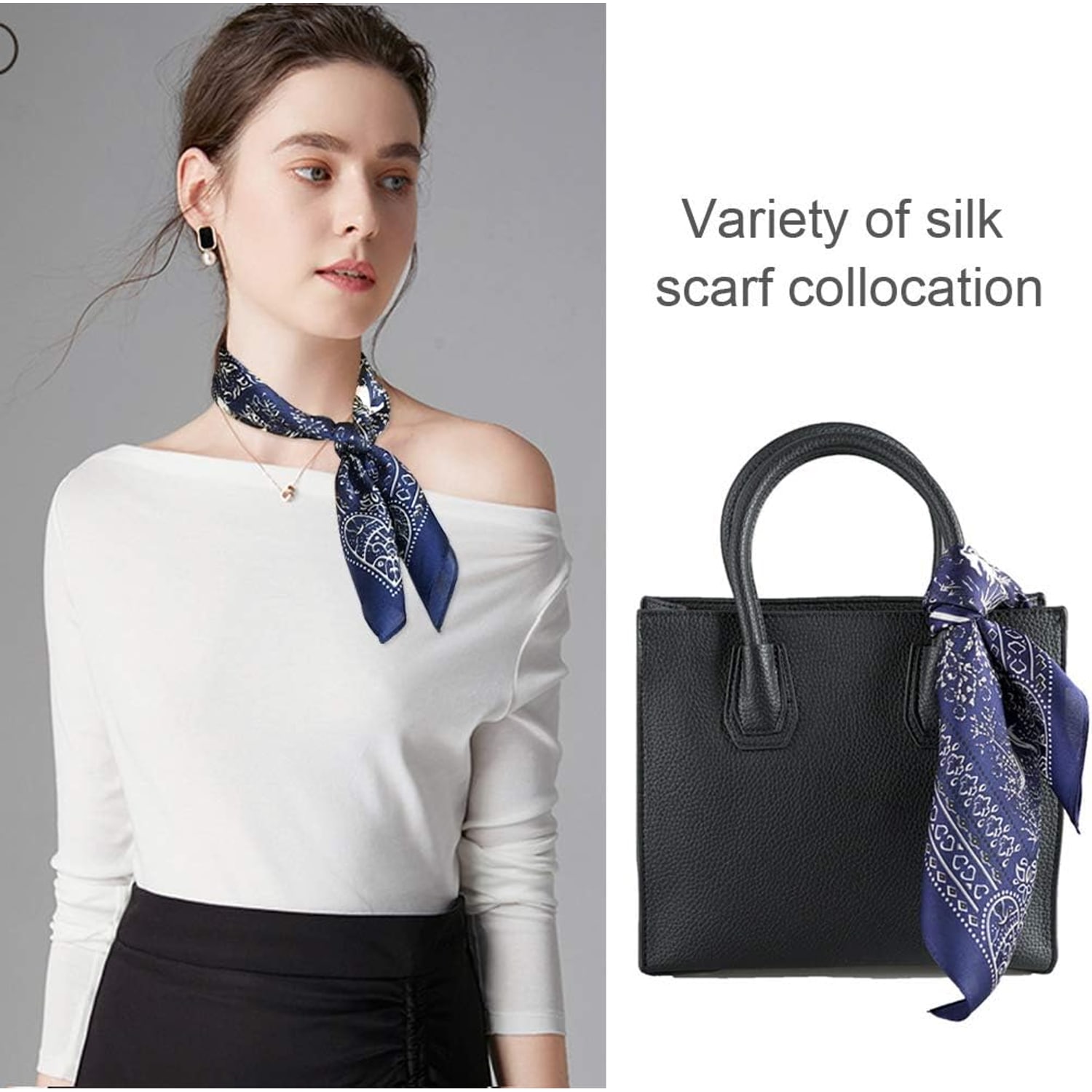
The 21 inch square sits in between and is the most useful size for daily wear. Folded on the bias it makes a band long enough to circle most necks and tie with room to spare. Left flatter it drapes over a collar with a soft point at the front. It also fits anywhere else you want it. Around a wrist. Through a belt loop. Tied to a bag handle. Knotted around a ponytail.
That flexibility is why people who own one square silk scarf usually end up owning several. It is not a seasonal item you put away in April.
Why mulberry silk matters
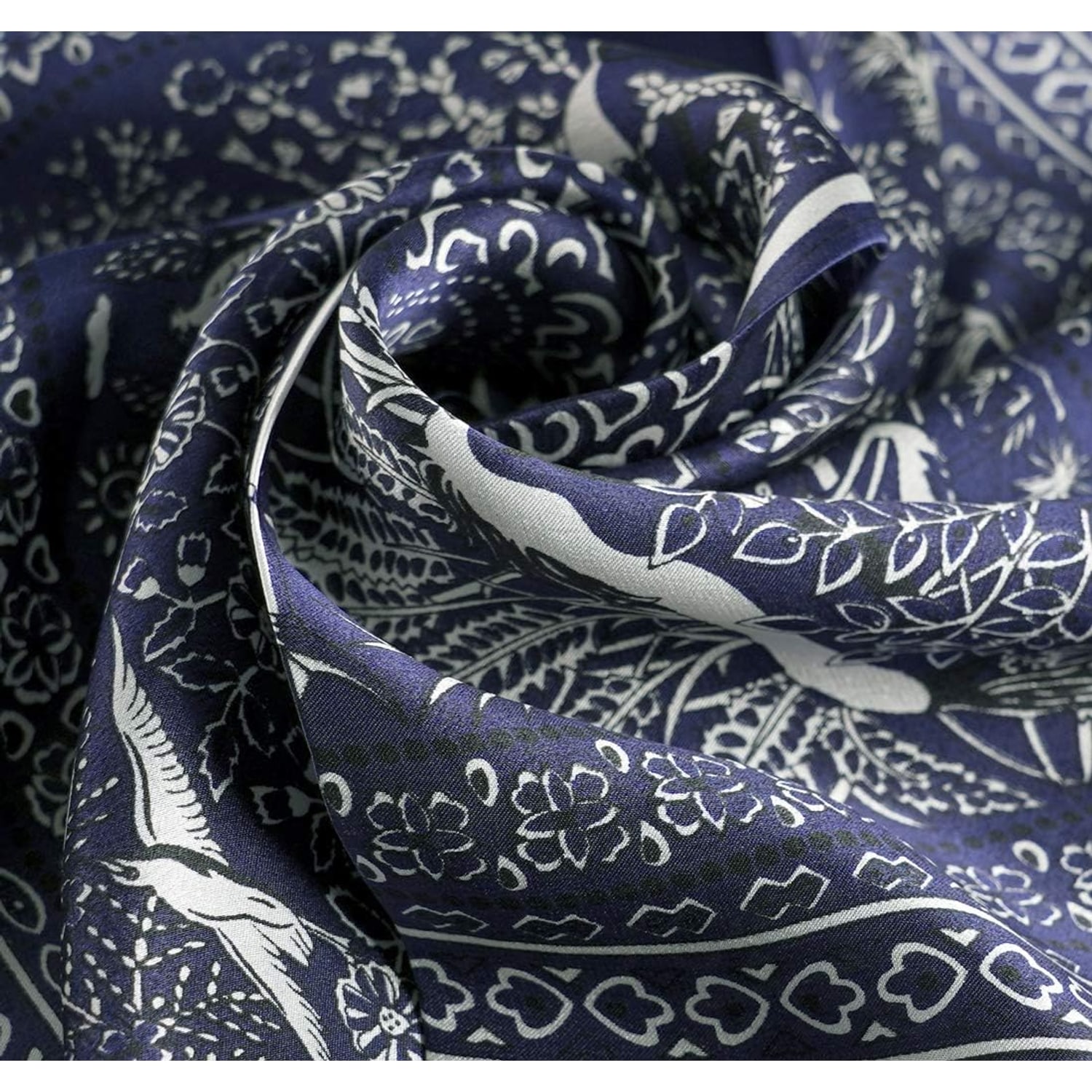
Not all silk feels the same. Mulberry silk comes from silkworms raised on a single diet, which produces long, even fibers. Those long fibers can be woven into a smooth, continuous surface with very few breaks. That is where the quiet shine comes from, and the cool hand you notice the first time you put it on.
Two practical things follow from this.
First, smoothness. Silk has far less friction than cotton. A cotton bandana grips skin and hair. Silk slides over both. If you have ever taken off a cotton scarf and found your hair pushed in four directions, you will notice the difference immediately.
Second, temperature. Silk is breathable and does not hold heat the way wool does. A 100% mulberry silk scarf is comfortable in August in a way that no other scarf fabric is. In cooler months it still works, just as a layer of color rather than a layer of warmth. If you want heat at the neck, you want wool. If you want the scarf to be wearable most of the year, silk is the answer.
The one-sided print
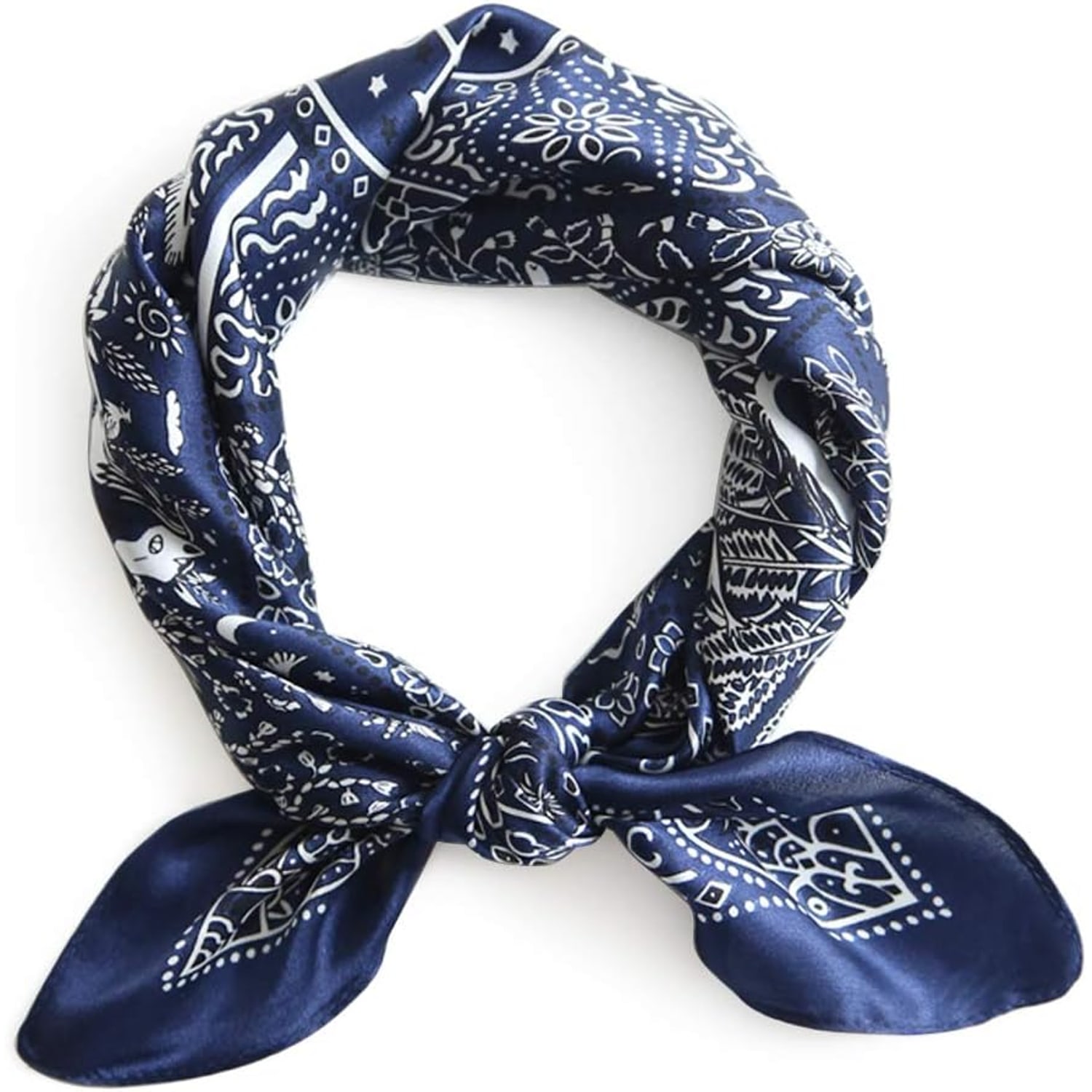
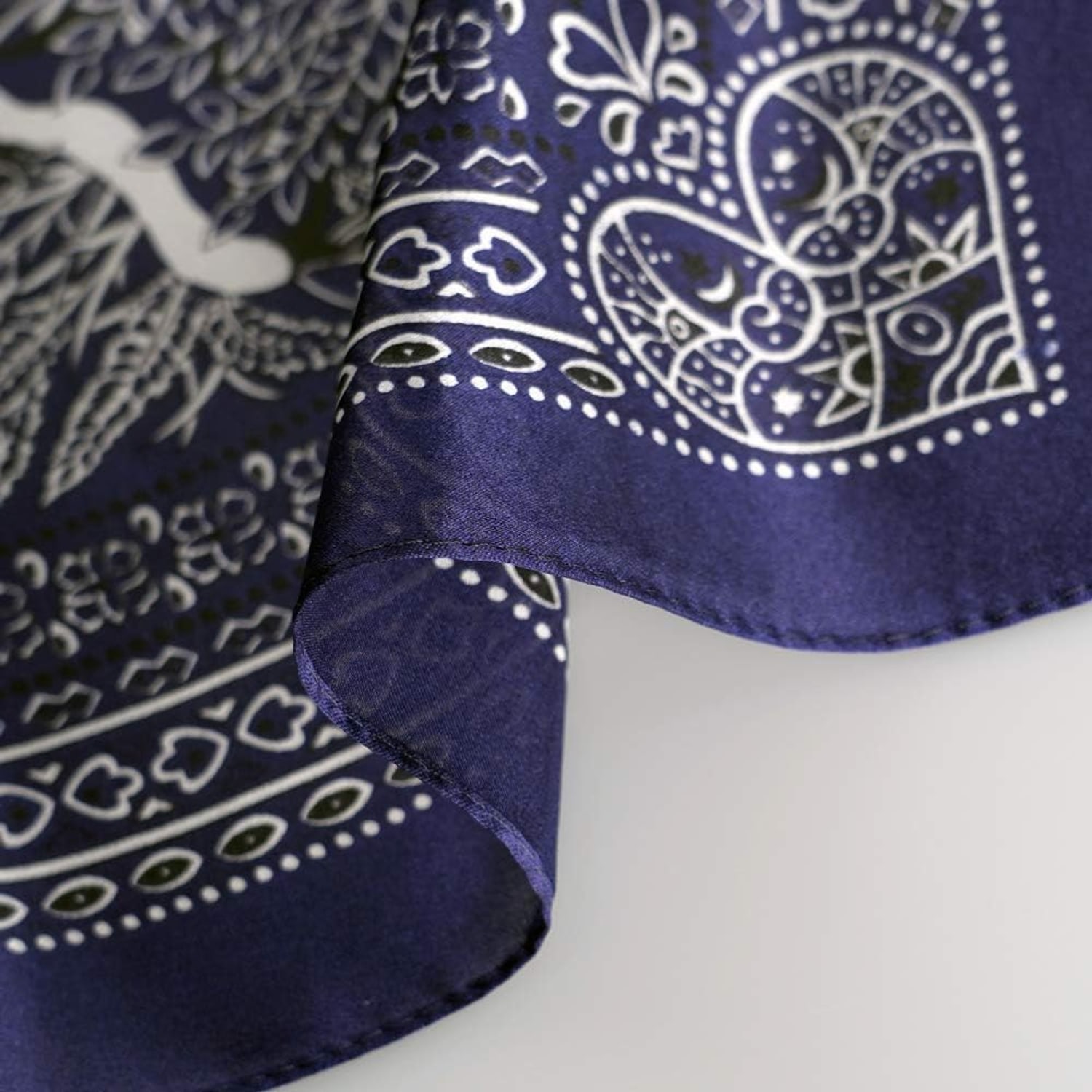
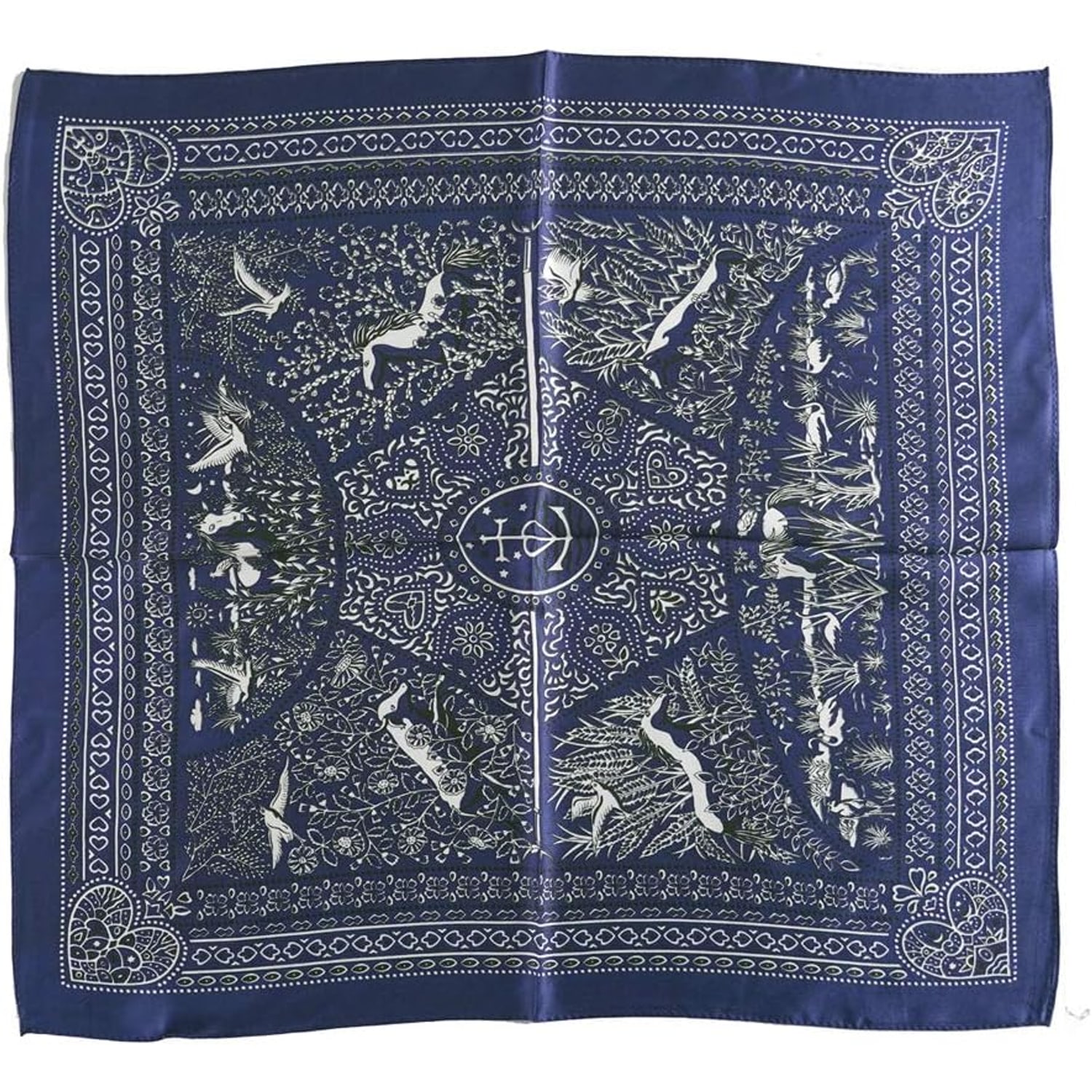
This scarf is printed on one face. The reverse carries a paler ghost of the same blue floral design.
That sounds like a limitation. In practice it is a tool. Every fold you make decides how much of the full-strength print shows, which means one scarf can look loud or quiet depending on your mood.
Fold it on the bias into a wide band and most of what sits at the front is printed face. That is the bold version. Roll it tight into a cord and the print breaks into small flashes of blue, which reads much softer against a patterned shirt. Twist it before you knot it and you get a mix of both.
Worth knowing before you buy: nobody looking at you is auditing the reverse side. One-sided printing is standard across most of the printed silk scarf market, and the practical difference in wear is small.
How to tie it without a tutorial
Four knots cover almost everything.
The neckerchief. Fold corner to corner into a triangle, then roll the long edge down until you have a band about two inches wide. Put the point at the front or the back, cross the ends behind, bring them round, and knot. This is the everyday one.
The cowboy. Same triangle, but keep it wide. Point at the front, tie behind the neck, leave it loose. Looks relaxed with denim.
The collar knot. Fold into a narrow band, drape it around an open shirt collar, and tie a single loose square knot off to one side. Good under a blazer.
The bag bow. Fold into a band, loop once around a handle, tie a bow. Takes ten seconds and makes an old tote look intentional.
A note on slipping. Silk is smooth, so a single loose knot can work itself open over a long day. Use a double knot, or pick up a small scarf ring. Tying a little higher on the throat also helps, because the fabric has less room to travel.
Who it suits
This is one of the few accessories with no sizing problem, which is why it works so well as a gift. There is no neck measurement, no shoe size, no guessing.
It suits people who wear a lot of plain colors and want an easy way to break them up. It suits anyone whose office dress code is dull. It suits travelers, because a silk square weighs almost nothing and changes an outfit you have already worn twice. It suits people with long hair who want a silk ponytail scarf rather than an elastic that leaves a kink.
Who it suits less well: anyone looking for actual warmth, and anyone who needs a wash-and-forget accessory. Silk needs hand washing. If that is a dealbreaker, a cotton square is the honest alternative.
Caring for silk properly
This part is short because the rules are short.
Wash by hand, in cool water, with a detergent made for silk or wool. A regular laundry liquid is too harsh. Swish, do not scrub. Do not soak it for long stretches, and never use bleach.
To dry, press the water out between your palms or roll the scarf in a towel. Wringing twists the fibers and leaves creases that do not come out. Lay it flat or hang it over a rail, out of direct sun. Sun fades printed silk faster than washing does.
If you iron, use the lowest silk setting, work on the reverse, and put a thin cloth between the iron and the fabric. Slightly damp silk presses much better than bone-dry silk.
The habit that protects a silk scarf most is also the easiest. Spray perfume and hairspray first, let them dry, then put the scarf on. Alcohol marks silk, and those marks are hard to lift.
Store it folded loose in a drawer or hanging. Avoid sealed plastic for long periods, since silk does better with a little air.
Spotting quality
If you are comparing a few options, here is what actually tells you something.
Check the fiber content. "100% mulberry silk" is a specific claim. "Silk feel", "silky", or "silk blend" are not the same thing. Check the hem. Hand-rolled hems are the mark of higher-end scarves, though plenty of good everyday scarves use a neat machine hem. Check whether the size is listed in real measurements rather than vague words like "small" or "medium".
Finally, be realistic about price. Mulberry silk at this size sits in a predictable range. Something far below it is usually polyester, and polyester gives itself away the moment you put it against your neck on a warm day.
The short version
A 21 inch square of mulberry silk is a small thing that does a lot. It fills the empty space at the neck, it ties onto hair and bags and wrists when you want a change, and it weighs so little that it travels everywhere without being noticed.
The blue floral print here is single-sided, which gives you control over how bold it looks. Mulberry silk means it stays cool in warm weather and slides over skin and hair without grabbing. Hand washing is the trade-off, and it is a small one for something you will wear this often.
Buy one, tie it badly for a week, and by the second week you will have found the knot you keep.