
The complete guide
How to Choose a Silk Pillowcase, Momme, Size and Care Explained
The small annoyance that sends people shopping for silk
Most people do not go looking for a silk pillowcase because they read an article about textiles. They go looking because something keeps bugging them. Hair that looks fine at bedtime and looks slept-on by morning. A pillow crease down one cheek that takes an hour to settle. A cotton case that feels fine for ten minutes and warm after thirty.
None of those are dramatic problems. They are the kind of low-level friction you put up with for years before you realize there is a cheap fix sitting on the other side of a single purchase. Swapping one pillowcase is about as small a change as you can make to a bedroom, and it is one of the few changes you notice the very first night.
Silk is the material people land on because the fiber behaves differently from cotton. That is the honest version of the story, and it is enough.
What silk actually does differently
Cotton is spun from short fibers. Thousands of fiber ends poke up from the surface of the yarn, and together they create a texture. Cotton bedding can be beautifully soft and still have that texture, which is why a high thread count sateen feels smoother than a rough percale.
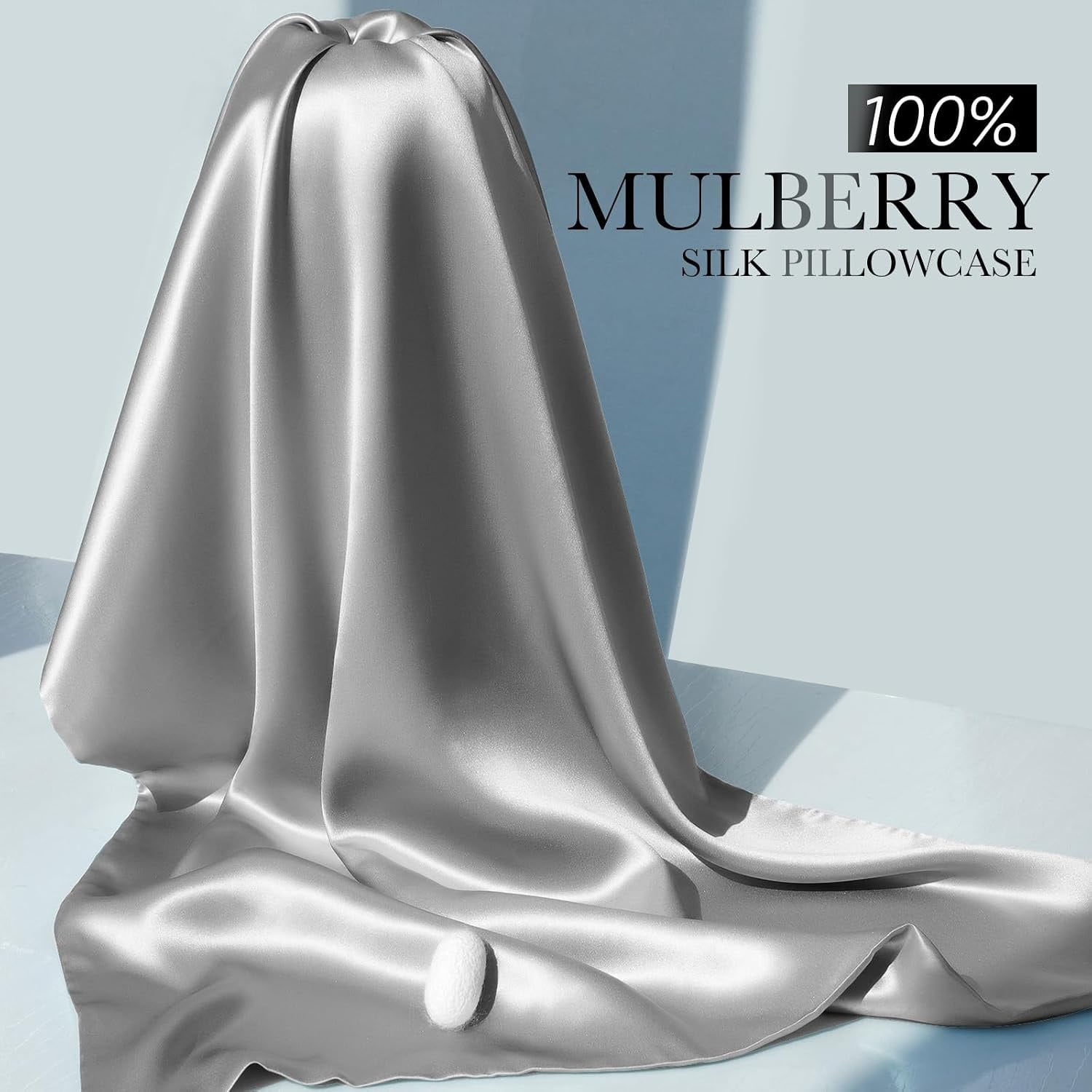
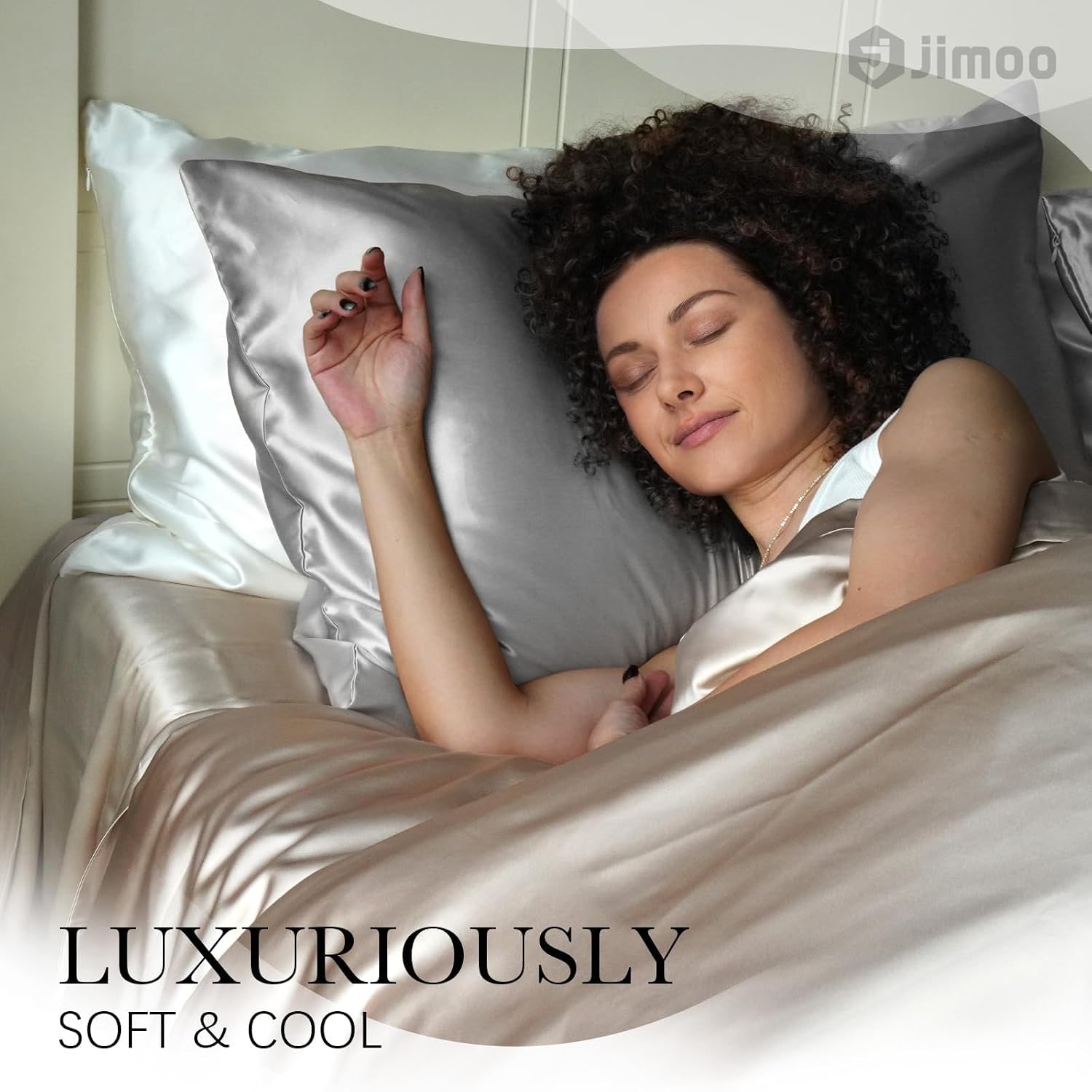
Silk is different in structure. It is a continuous filament, long and even, so the surface of a woven silk fabric has far fewer loose ends. Hair and skin slide across it instead of catching. That is the single mechanical reason silk feels the way it feels, and it explains most of what people like about it. Less drag means hair moves with you when you turn over instead of being tugged in place.
Silk also sits closer to your own temperature than a heavy cotton or flannel case does. It feels cool when you first lie down and then evens out. Whether that matters to you depends on how warm you sleep.
That is where the useful claims stop. Silk is a smooth natural fiber. The rest is comfort and preference.
Momme is the number that matters
If you only learn one piece of silk vocabulary, make it momme. It is a weight measurement, written as a number followed by "momme" or sometimes "mm" in listings. It tells you how heavy a standard area of the silk is, which in practice tells you how substantial the fabric feels.
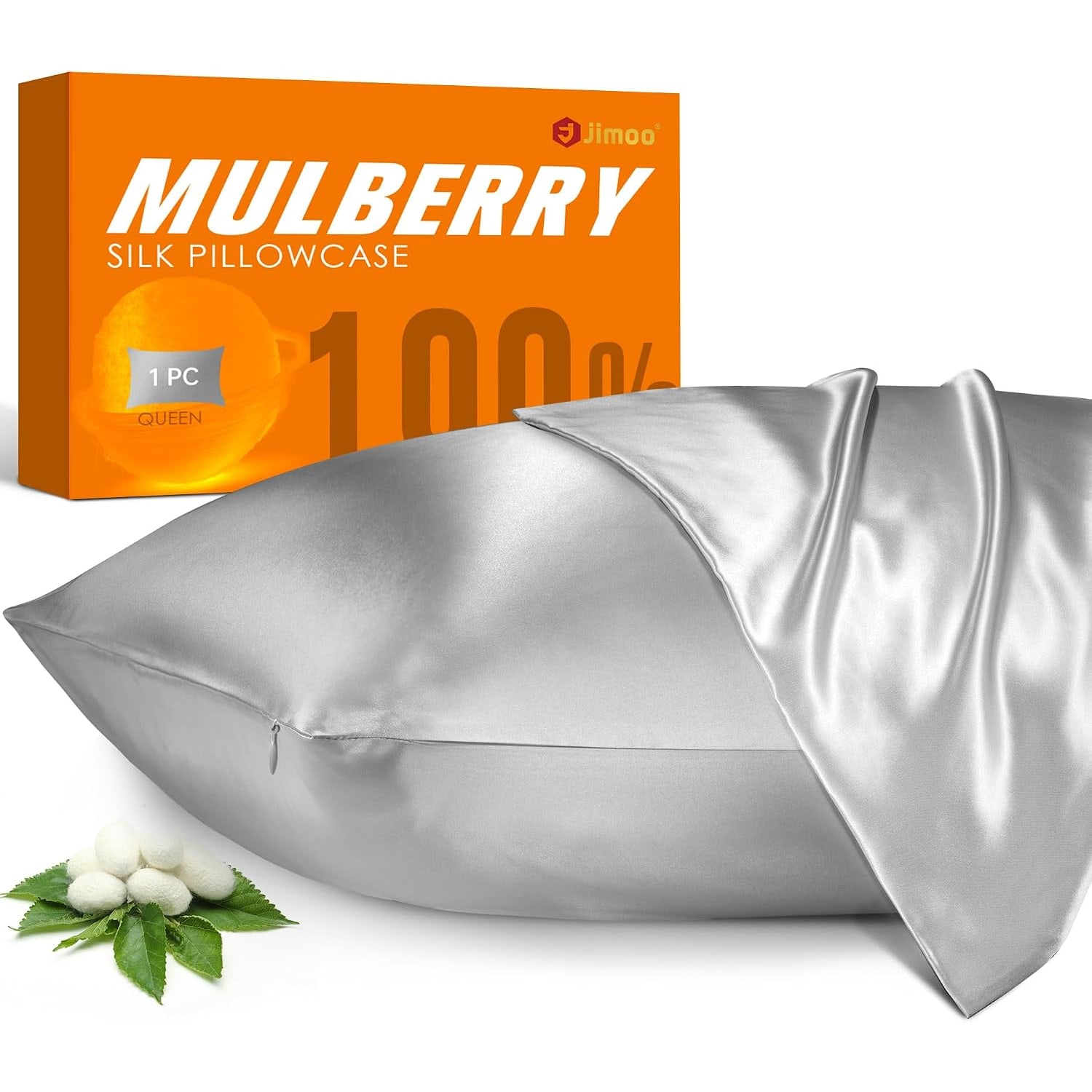
Bedding silk usually runs between 16 and 25 momme. Below 16 you are into fabric that is thin enough to feel flimsy and that tends to wear through faster at the seams. Around 19 is the common entry point. At 22 momme, like this silver gray case, the cloth has real body. Shake it out and it falls rather than floats. Run your hand over it and it feels like fabric, not film.
Going much heavier than 25 is possible but starts to feel stiff for a pillowcase, and the price climbs sharply. For most people, the best 22 momme silk pillowcase sits in the sweet spot: dense enough to last, light enough to still feel like silk.
Thread count gets quoted for silk too, and this one is listed at 600. It is a fair indicator of a fine, close weave, but it is less meaningful for silk than it is for cotton. Read momme first, thread count second.
Check both sides before you buy
Here is the thing that catches people out. Plenty of pillowcases are sold as silk when only the top panel is silk. The underside is cotton, polyester, or a blend, which keeps the cost down.
On paper that sounds reasonable. In practice it means that every time the pillow flips, gets turned during a bed change, or simply lands upside down, you are sleeping on the cheaper side without knowing it. Half the nights you get what you paid for and half you do not.
This pillowcase is 100% mulberry silk on both faces. It does not matter how it lands. When you are comparing options and trying to work out which is the best mulberry silk pillowcase for your money, that detail is worth more than most of the marketing on the page.
Getting the size right
American pillow sizes are reasonably standardized, which makes this easy if you measure.
A standard pillow is 20 x 26 inches, about 51 x 66 cm. A queen is 20 x 30 inches. A king is 20 x 36 inches. This case is cut for standard, so it fits that first measurement. Silk has some give but it will not stretch ten inches, so a queen pillow in a standard case will bulge, strain the seams, and eventually tear at the zipper.
Lay your pillow flat, smooth it out, and run a tape measure along the long edge. If you get 26 inches, you are set. If your pillow has been through a few years of use and reads a touch short, a standard case will still work fine, just with a little extra fabric.
One more fit note. If you use a thick quilted pillow protector, add its bulk into your thinking. A thin zippered protector is no problem. A plush one can make a standard case a squeeze.
Why the hidden zipper is worth having
Pillowcase closures come in three common forms. An open end, which is the simplest and lets the pillow work its way out overnight. An envelope flap, which tucks the pillow in and generally stays put but leaves a visible fold. And a zipper.
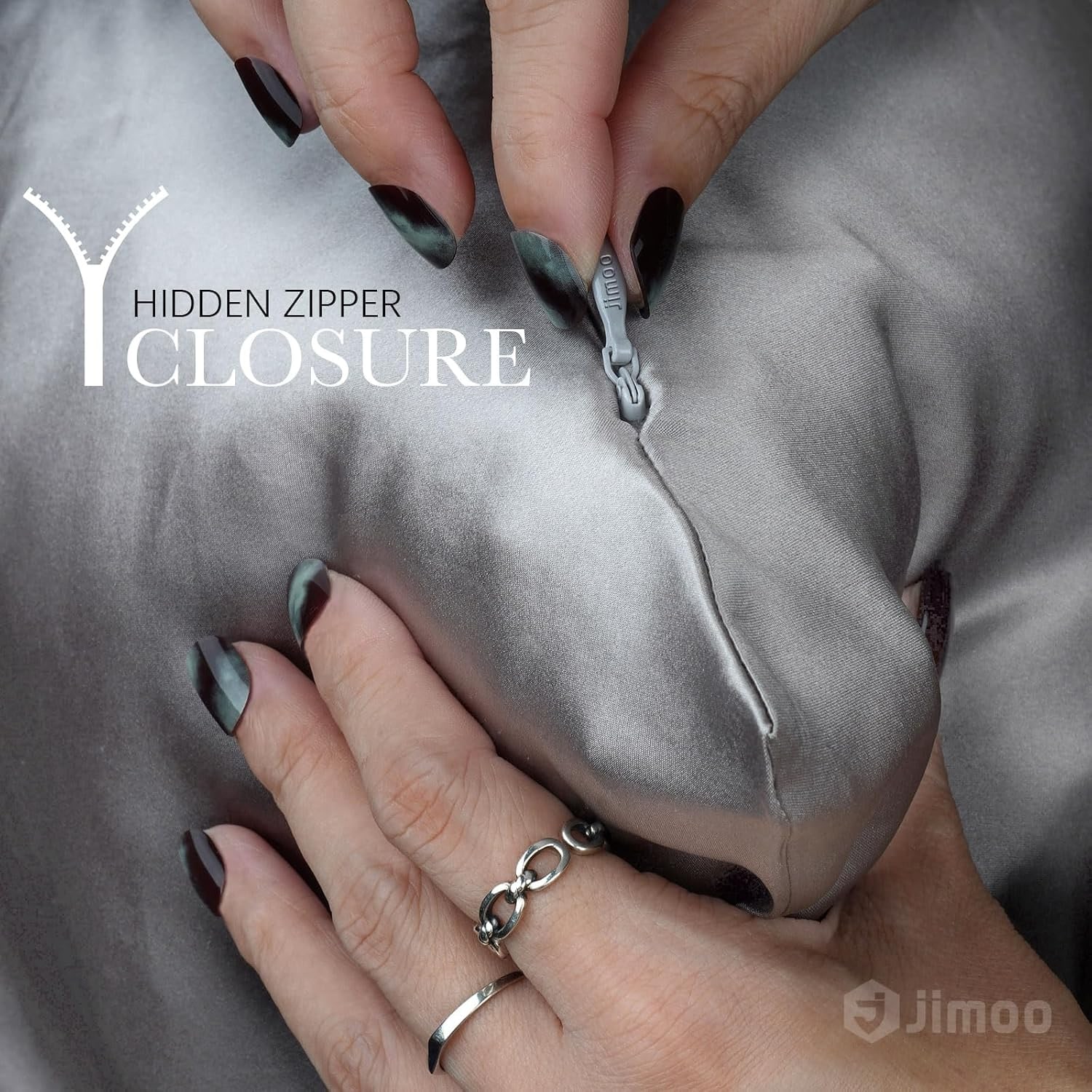
A zipper seals the case completely. The pillow stays inside no matter how much you move, and the case keeps its shape through the wash. A hidden zipper takes that one step further by tucking the closure into the seam, so you get a clean, unbroken edge on a made bed.
The practical tip with any zippered silk item is to close the zipper before you wash it. An open zipper pull can snag the fabric as it tumbles. Closing it takes two seconds and saves a pulled thread.
Living with silver gray
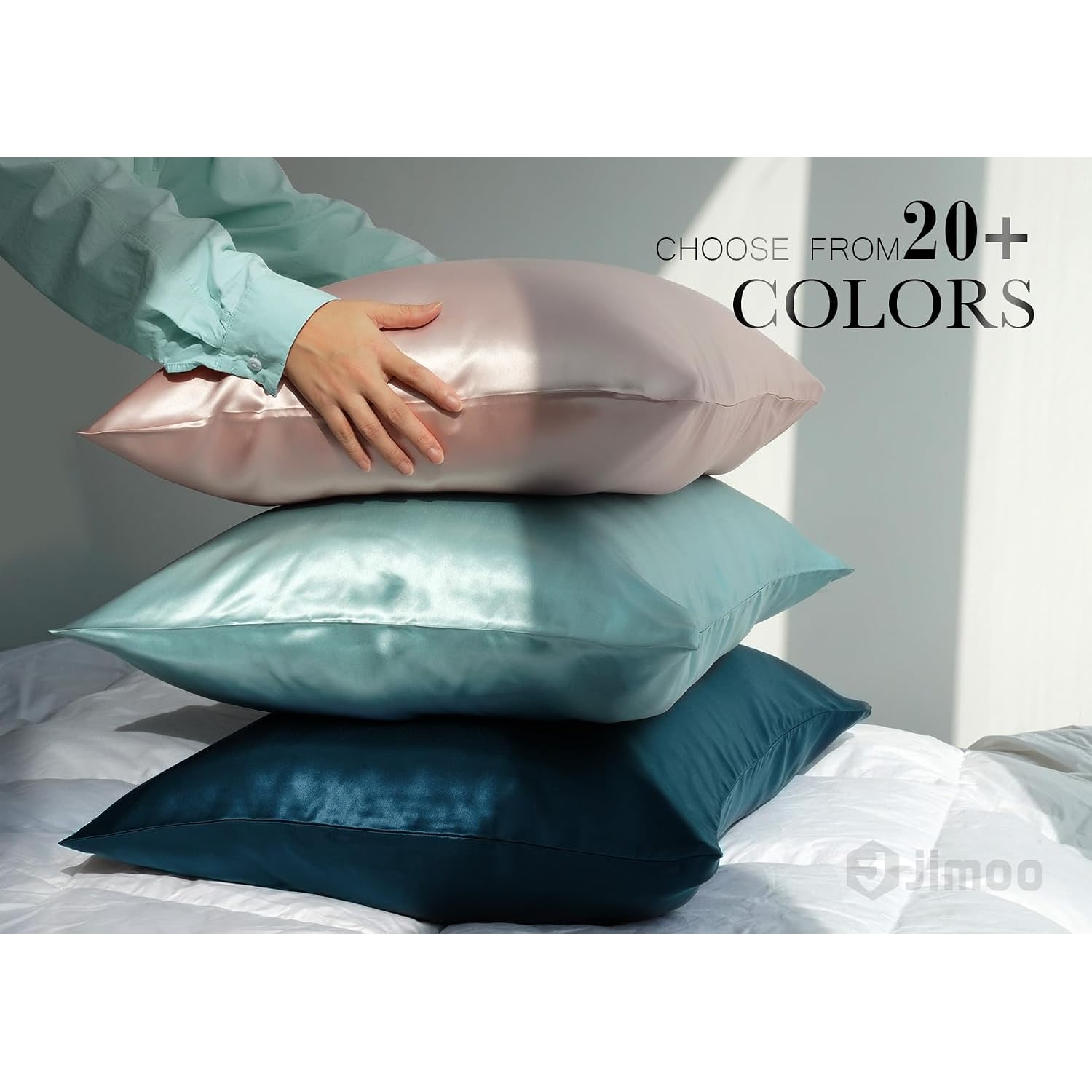
Color choice on bedding is less about taste and more about how much work you want the piece to do. White shows everything and needs frequent washing. Deep colors can dominate a room. Silver gray lands in the middle, which is why it keeps selling.
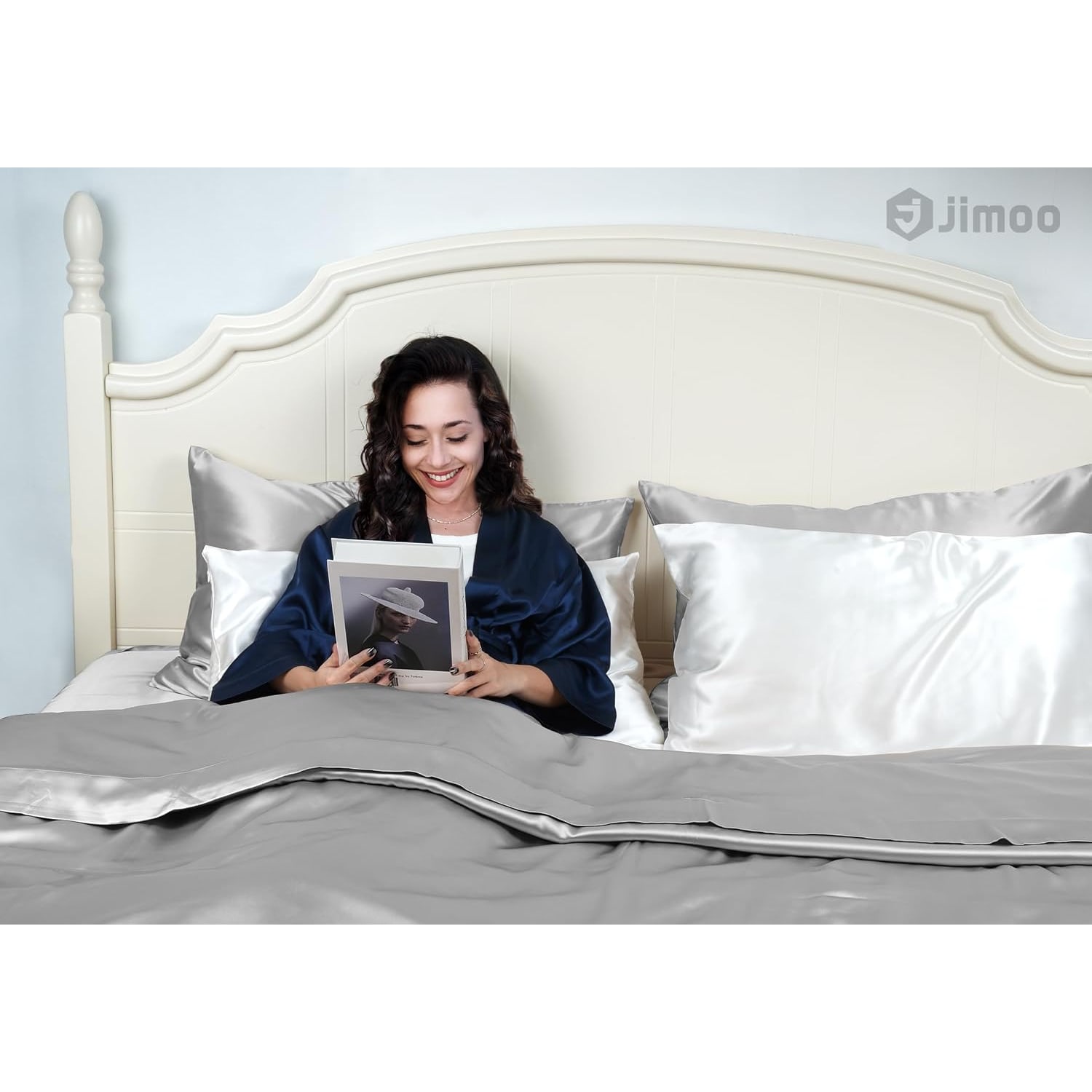
It reads as a cool, muted neutral. Against white sheets it adds a quiet contrast. Against charcoal or navy it softens the palette. Next to natural linen and wood it looks intentional rather than accidental. Silk also catches light, so the same gray looks slightly brighter by a window and slightly deeper under a bedside lamp.
If you are hunting for the best gray silk pillowcase to drop into an existing bedroom without redoing anything else, this is the kind of tone that does not pick fights with what you already own.
Washing it without ruining it
Silk is not fragile, but it is not indestructible either. The care routine is simple once you know it.
Wash in cool water, either by hand in a basin or in the machine on a gentle cycle. If you use the machine, put the pillowcase in a mesh laundry bag and wash it with other soft items. Nothing with zippers, hooks, buttons or coarse texture should share the load.
Use a mild liquid detergent made for delicates. Skip anything with bleach, optical brighteners or enzymes, because those will dull the surface over repeated washes. Use less than you think you need.
Do not wring it. Press the water out gently, then lay it flat or hang it to dry away from direct sun and heat. Sunlight is the main threat to the color. Most silk dries quickly, often within a couple of hours in a ventilated room.
If you want it pressed, use a low iron on the reverse side while the fabric is still a little damp. Plenty of people skip this entirely, since the creases relax once the case is stretched over a pillow.
Wash it about once a week, the same as any pillowcase. If you use hair oils or heavy night creams, go more often. Owning two cases makes that routine effortless, which is why a lot of buyers order a pair.
Who it suits, and who it does not
It suits people with long hair, people who sleep warm, people who want a small upgrade that shows up immediately, and people shopping for a gift that feels considered without being a gamble.
It is less of a fit if you want zero-maintenance bedding you can throw in a hot wash with towels. Silk asks for a gentle cycle and air drying. That is a few extra seconds of thought per week, not a chore, but it is worth knowing before you commit.
It is also not the right choice if your pillow is a queen or king. Size mismatch is the most common reason a pillowcase gets returned, and it is completely avoidable with a tape measure.
The short version
This is one standard-size pillowcase, 20 x 26 inches, in silver gray. It is 100% mulberry silk on both sides at 22 momme, woven at a stated 600 thread count, with a hidden zipper closing one end.
The 22 momme weight means it feels like proper fabric rather than something thin and slippery. Silk on both faces means you never end up on a cotton backing. The hidden zipper keeps the pillow in and the edge clean.
Wash it cool and gentle, dry it in the shade, and keep it away from bleach. Measure your pillow before you order. If you want a pair, get two, and the rotation takes care of itself.