
The complete guide
How to Choose a Silk Pillowcase, Without Overthinking It
The problem with the pillowcase you already have
Most of us never choose a pillowcase. It arrives as part of a sheet set, it goes on the bed, and it stays there until it wears out. That is fine until you start noticing the side effects. Hair that looks fine when you go to bed and looks slept-in by morning. A crease pressed into one cheek that takes an hour to fade. A pillow that feels pleasantly cool for about four minutes and then holds heat for the rest of the night.
Cotton is a good fabric. It is also an absorbent one with a textured surface. Under a microscope a cotton weave looks like a field of tiny ridges, and your hair drags across those ridges every time you turn over. Cotton also pulls moisture out of whatever it touches, which is useful in a towel and less useful under your face at 3am.
Silk behaves differently. The fiber is smoother, the weave is denser and finer, and it handles moisture and air in a way that keeps the surface feeling settled rather than clammy. That is the whole pitch. It is not complicated, and it is why one pillowcase is often the single change people make to their bed that they actually notice.
What momme actually tells you
If you shop for silk bedding for ten minutes you will run into the word momme. It is a weight measure, written as a number followed by mm or the word momme. Higher means heavier and denser fabric.
Here is the practical version. Below about 16 momme, silk is light. It feels lovely in your hand but it is thin, it wrinkles in a way that looks tired, and the seams take more strain. Above about 25 momme the fabric gets heavy and the price climbs fast. The sweet spot for pillowcases sits around 19 to 22.
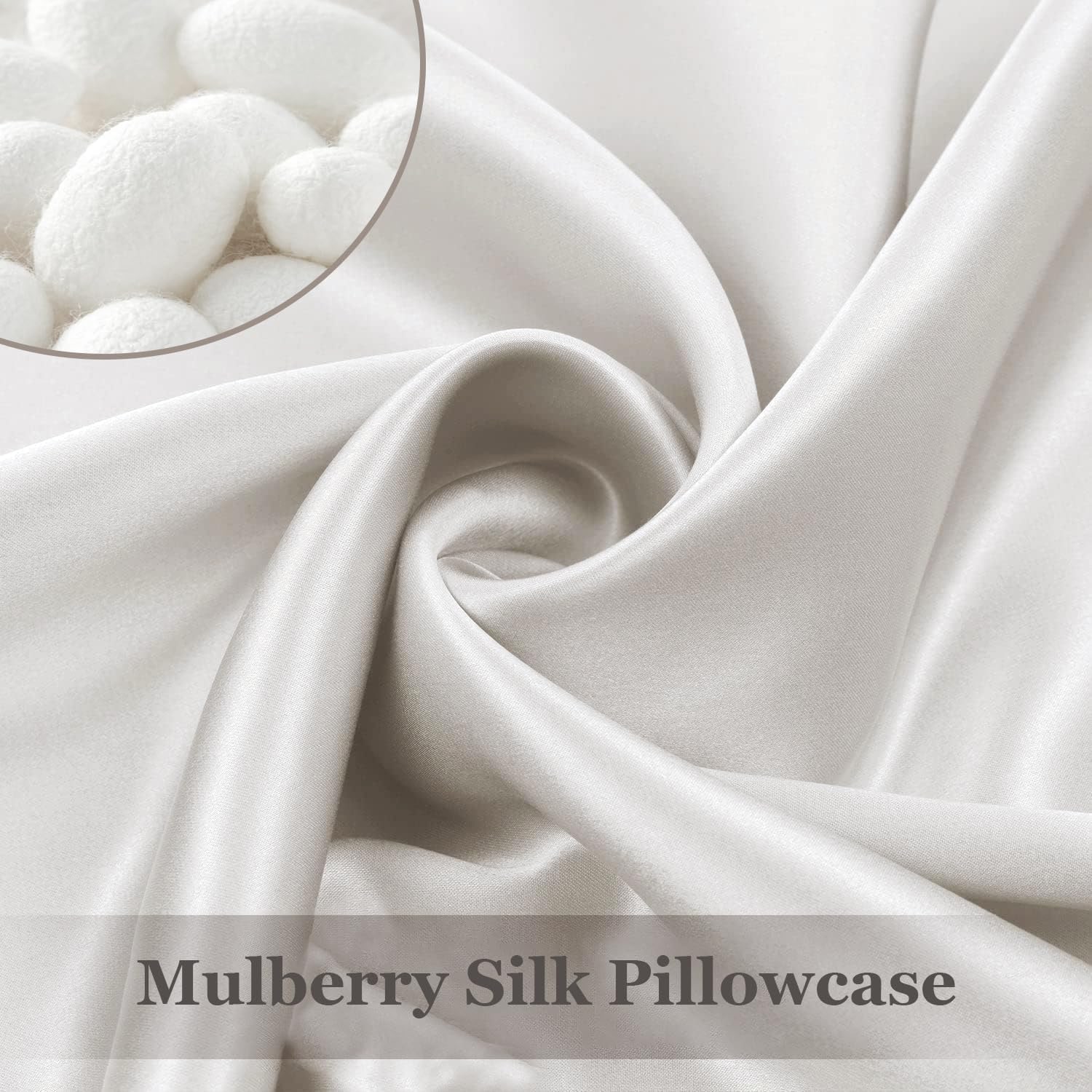
This case is 22 momme, which puts it at the upper end of that practical range. In use that means fabric with proper body. It falls over the pillow instead of clinging to it, it holds its shape after washing, and it does not feel like you are sleeping on a scarf. If you are comparing options and want the best 22 momme silk pillowcase for everyday use, weight is the first number to check and the one most worth paying for.
Thread count is the other figure you will see. For silk it is measured differently than for cotton because the threads are so much finer, which is why the number here is 900. It is a real measurement, but momme is the more honest comparison between two silk products.
Why both sides matter more than you think
A lot of silk pillowcases are not fully silk. They use a silk face and a cheaper cotton or polyester back, which cuts the cost and looks identical in a photograph. It works, in the sense that you get silk against your face as long as you remember which way up the pillow goes.
You will not remember. Nobody does. You will flip the pillow at some point in the night to find the cool side, and you will land on polyester.
Both sides of this case are 100% pure mulberry silk. That is the main reason people seek out a both sides mulberry silk pillowcase rather than a single-faced one. There is no wrong side, no label to check, no hunting around in the dark. Both faces behave the same, wear the same and wash the same.
Size, and why the standard is the right default
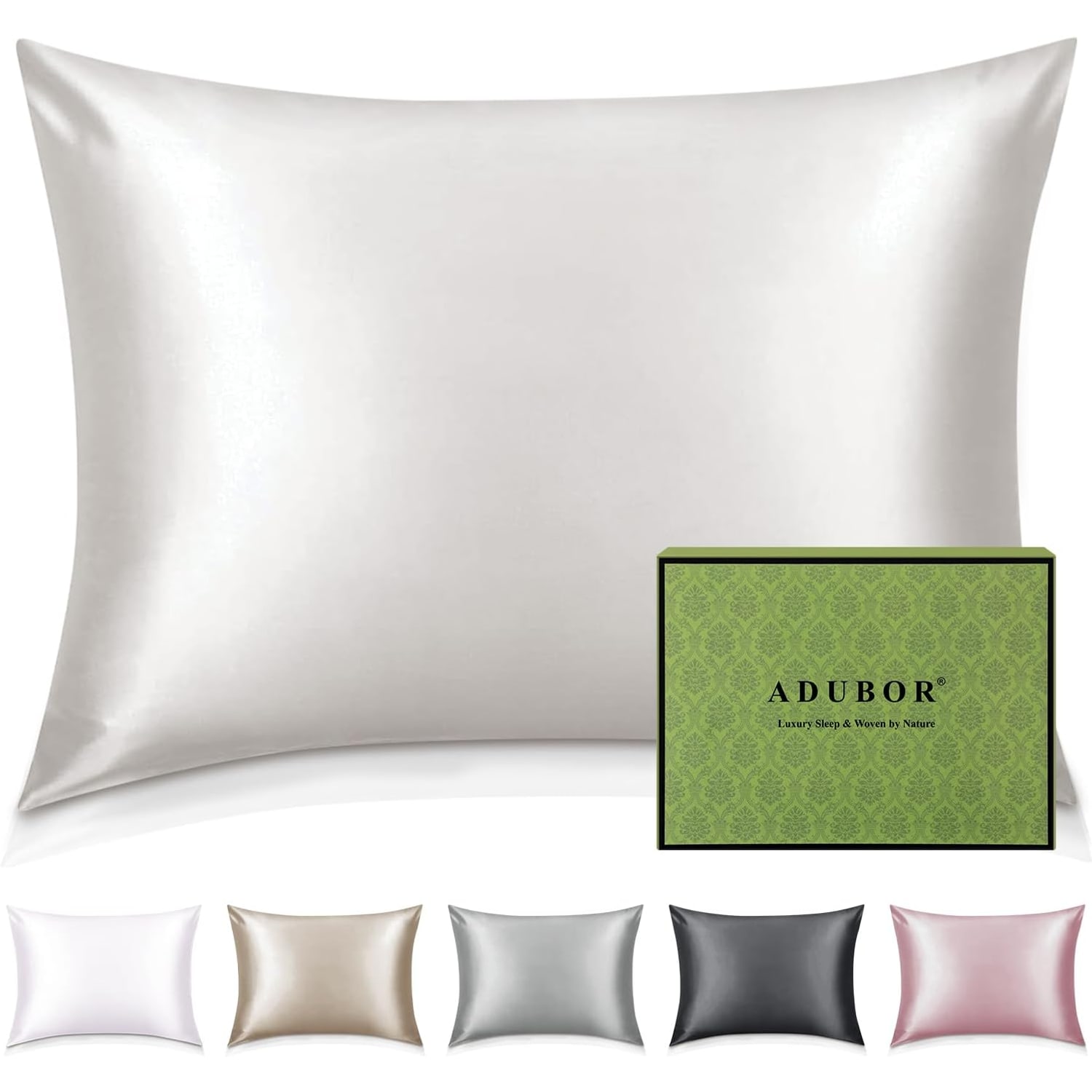
US pillow sizes are straightforward. Standard runs 20 x 26 inches, queen runs 20 x 30 inches, and king runs 20 x 36 inches. This case is the standard, at 20 x 26 inches, or roughly 51 x 66 cm.
Pull the case off your current pillow and measure the pillow itself, not the case. If it comes in around 20 by 26, you are in the right place. A standard case on a queen pillow will not close, and a standard case on a smaller decorative pillow will bunch and slide.
One more thing worth knowing. Silk has very little stretch compared to a cotton jersey. It is a woven fabric, so it holds its dimensions. That makes a correct measurement more important here than it would be with a stretchy case, and it is also why the finished pillow looks so neat once the size is right.
Temperature, friction and what you will actually notice
Two things change the first night.
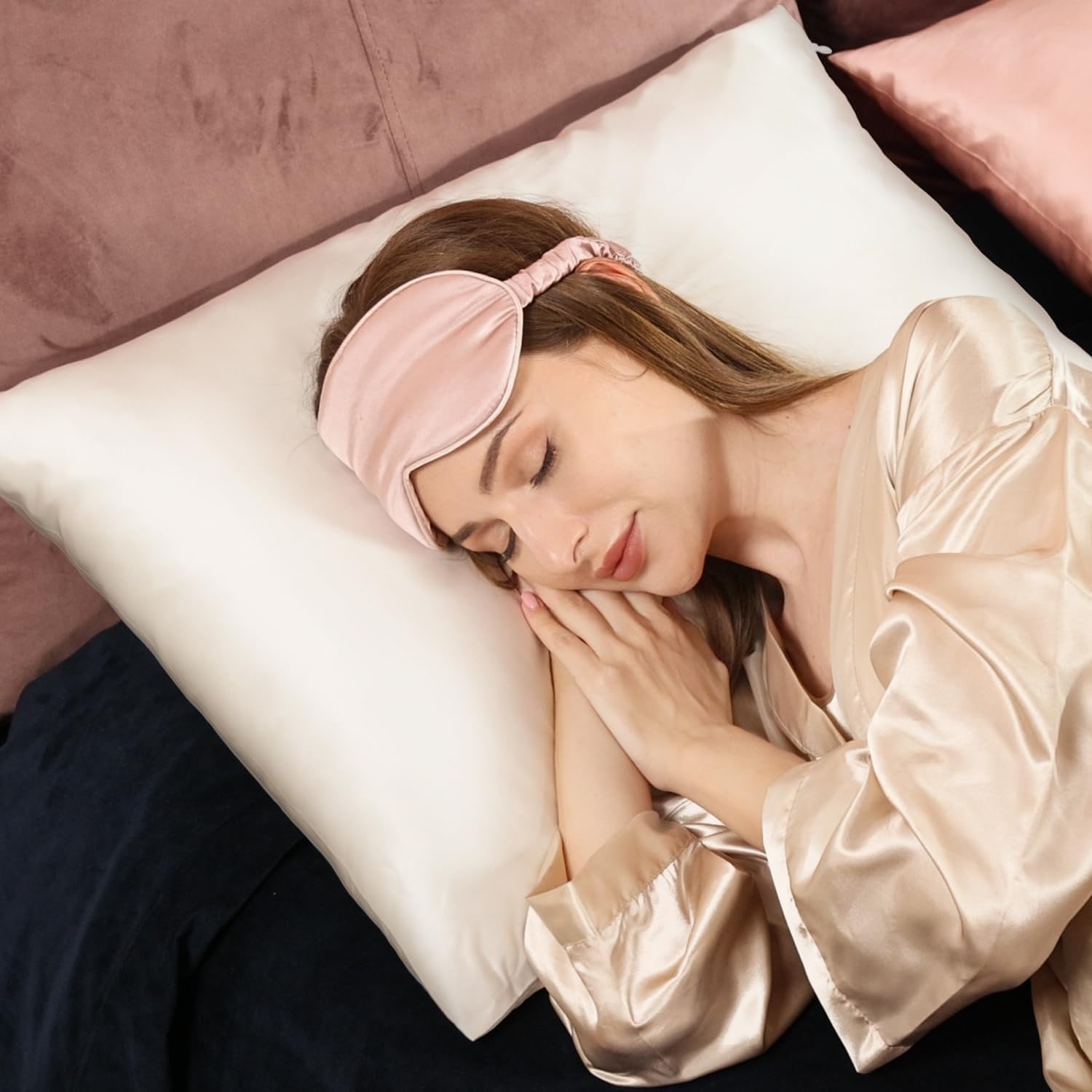
The first is the surface. Silk is smooth enough that hair and skin slide across it instead of catching. If you have long hair, you will see it in how the hair sits in the morning. If you sleep hard on one side, you will see it in the lines on your face, which tend to be lighter and fade faster. This is friction, nothing more exotic than that, but it is real and it is measurable in how your mornings go.
The second is temperature. Silk is a protein fiber with a breathable structure, so air and moisture move through it rather than pooling in it. In summer the case tends to feel cool when you first lie down and does not build up that damp warmth. In winter it does not feel cold the way a metal zipper does, because it takes on your body temperature quickly and then stays there. Year round, that is the behavior most people want from bedding.
There is also a small, quiet benefit that nobody advertises. Silk holds very little static. Synthetic satin can make fine hair lift and frizz on dry nights. Silk does not do that.
Caring for it without making it a chore
Care is hand wash or dry clean only, and hand washing takes about ten minutes.
Fill a sink or basin with cool water. Add a small amount of detergent made for delicates, the kind sold for wool and silk. Swish the case through the water gently for a couple of minutes. Do not scrub it, do not twist it, and do not let it soak for an hour. Rinse until the water runs clear.
To dry, lay the case flat on a clean towel, roll the towel up and press. That removes most of the water without wringing. Then dry it flat or hang it in the shade. Heat is the real enemy here, more than water, so keep it out of direct sun and away from the dryer and the radiator.
If it needs pressing, use a low iron on the reverse side while the fabric is slightly damp, ideally with a cloth in between.
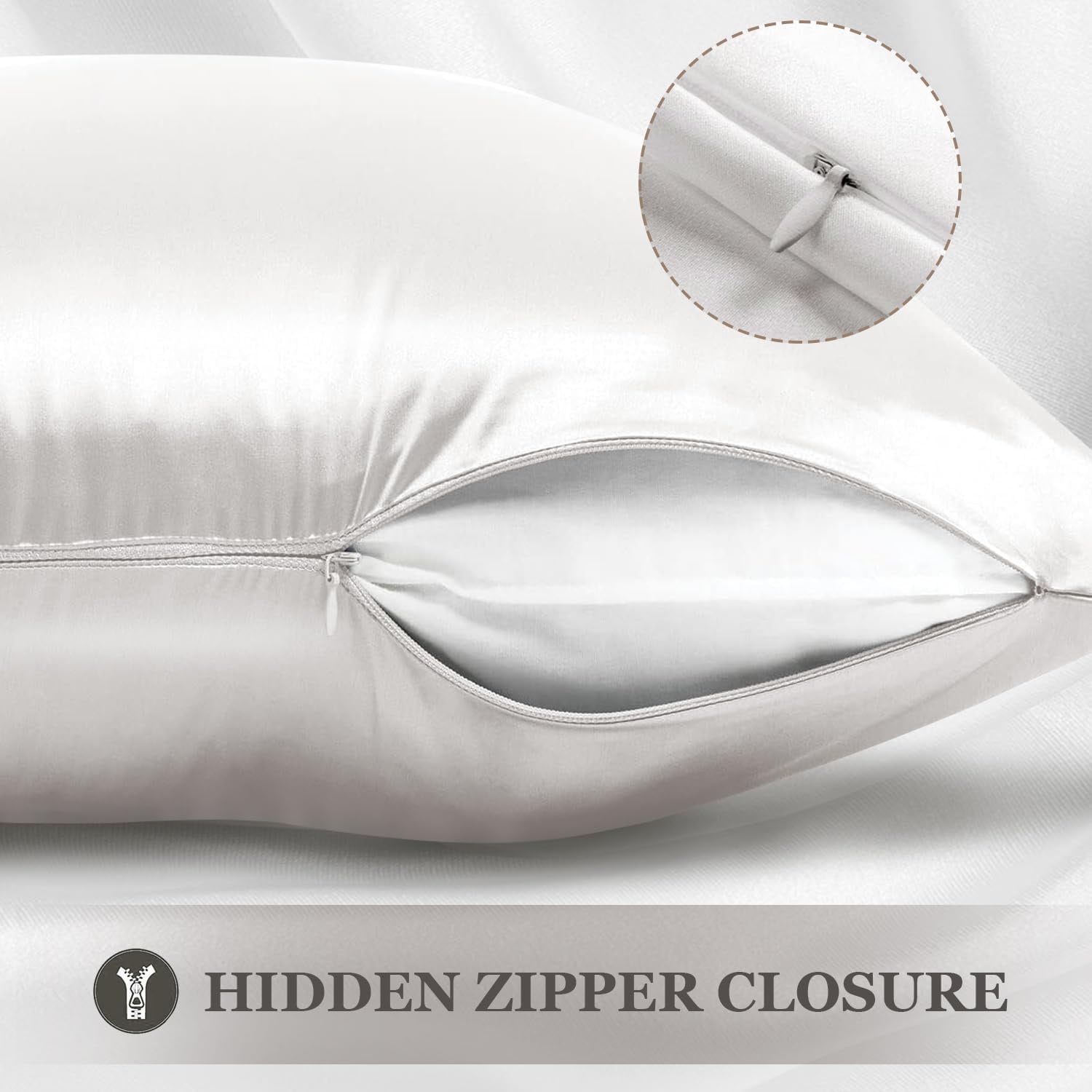
Two habits make this easier. Zip the case closed before washing, which protects the weave from catching on the zipper teeth. And buy a second case if you can, so one is on the bed while the other dries. People who own two wash them properly. People who own one tend to stretch the gap.
Who this suits
Hot sleepers, because of the breathability. People with long, curly or textured hair, because of the lower friction. Anyone who wakes up with creases pressed into their face. And gift buyers, because an ivory standard silk pillowcase needs no sizing conversation, suits almost any bedroom, and is a genuinely nice thing to receive.
It suits anyone who wants to change one thing about their bed rather than replacing the whole set. You keep your pillow, you keep your sheets, and you swap the one piece of fabric your face spends seven hours pressed against.
The short version
This is a single ivory silk pillowcase in US standard size, 20 x 26 inches, made from 100% pure mulberry silk on both faces. It is 22 momme with a 900 thread count, in a plain solid finish with a hidden zipper at one end. Care is hand wash or dry clean, and it should be kept away from heat when drying.
Measure your pillow before you order. Buy two if you can, so washing never becomes a reason to delay. Then stop thinking about it, because a good pillowcase is the kind of thing you only notice when it is gone.