

The complete guide
The Honest Buyer's Guide to a 19 Momme Queen Silk Pillowcase
The problem with the pillowcase you already own
Most of us never think about the pillowcase. It comes with the sheet set, it goes on the pillow, and that is the end of it. Then one morning you notice the sleep creases on your cheek lasting until mid-morning, or your hair looks like it lost an argument overnight, and you start to wonder whether the fabric under your head is doing you any favors.
Standard cotton percale is a good fabric, but at a microscopic level it has texture. Short staple fibers stick up from the weave, and every time you turn over, hair and skin drag across them. You cannot feel each individual snag, but over a few thousand nights it adds up to a lot of small friction.
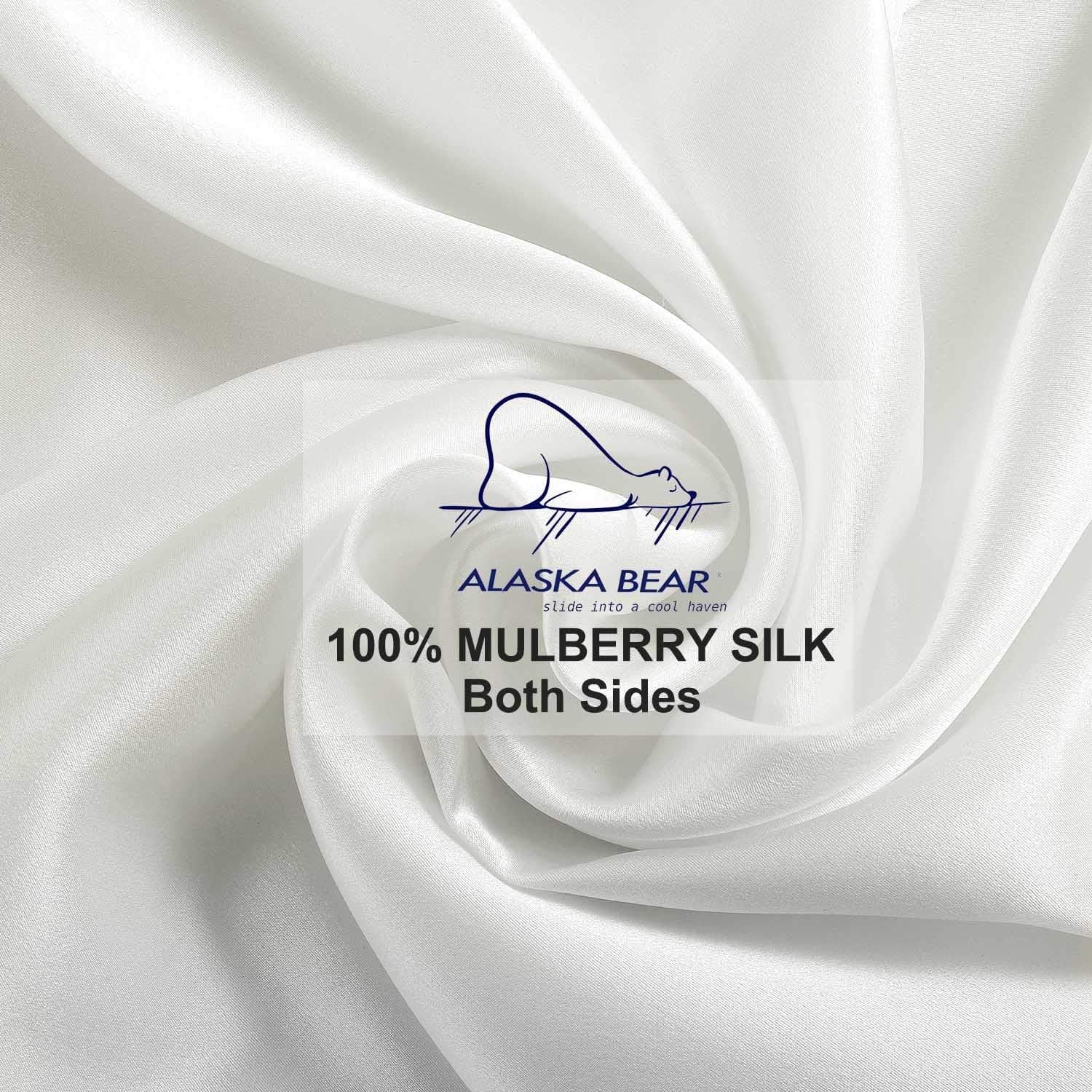
Silk behaves differently. The filament is long, continuous and smooth, so the surface your face meets is closer to a flat plane than a field of tiny fibers. That is the whole mechanical story. Things slide instead of catching. Whether that matters to you depends on your hair and your habits, but it is a real physical difference rather than marketing.
What 19 momme actually tells you
If you have shopped for silk at all, you have seen numbers like 16, 19, 22 and 25 attached to the word momme. It is an old unit of fabric weight, and it is the single most useful number on a silk listing.
Lower momme means a lighter, thinner fabric. It feels lovely in the hand but it is less durable, more see-through, and it shows pulls sooner. Higher momme means a denser fabric with a heavier drape and a higher price, and some people find it a touch warm against the cheek.
Nineteen sits in the middle, and it has become the default for bedding for good reason. A 19 momme silk pillowcase has enough substance to hold its shape and survive weekly washing, without the cost jump of the heavier weights. If you are buying your first silk case and you want one decision taken off your plate, 19 momme is the safe answer.
This one is also graded 6A, which is the top band in the common silk grading scale. That refers to the raw filament, specifically how long, even and consistent it is. Longer filaments mean fewer joins in the spun yarn, and fewer joins mean a smoother finished cloth.
Thread count, and why it matters less here
The listing gives a 600 thread count, which sounds impressive, and it is a fine, closely woven fabric. But thread count is a cotton metric that got borrowed by silk marketing, and it does not translate cleanly. Silk yarns are far finer than cotton yarns, so the raw count is not comparable between the two fibers.
The practical advice is simple. Read the momme weight first, confirm it says 100% mulberry silk, and treat thread count as supporting information. A pure silk pillowcase at 19 momme is a known quantity regardless of what the thread count says.
Getting the size right
This is where most online silk purchases go wrong, and it is entirely avoidable.
US pillow sizes run standard at 20 x 26 inches, queen at 20 x 30 inches, and king at 20 x 36 inches. This case is a queen, so 20 x 30 inches, or 51 x 76 cm in metric. It covers the great majority of queen pillows sold in America.
The catch is that bed size and pillow size are not the same thing. Plenty of people sleep on a queen bed with standard pillows, and plenty of people put queen pillows on a full bed because they like the fuller look. So do not order by bed size. Take a tape measure to the pillow itself, note the width and the length in inches, and match that.
If your pillow comes in at 20 x 26, a queen case will have a few inches of slack. Some people genuinely prefer that softer, slightly slouchy look. If your pillow is 20 x 36, this case will not go on at all, and you want a king.
Gusseted and contoured pillows are their own category. A thick gusset adds loft that a flat case was not cut for, so measure the height as well as the footprint before committing.
The zipper detail
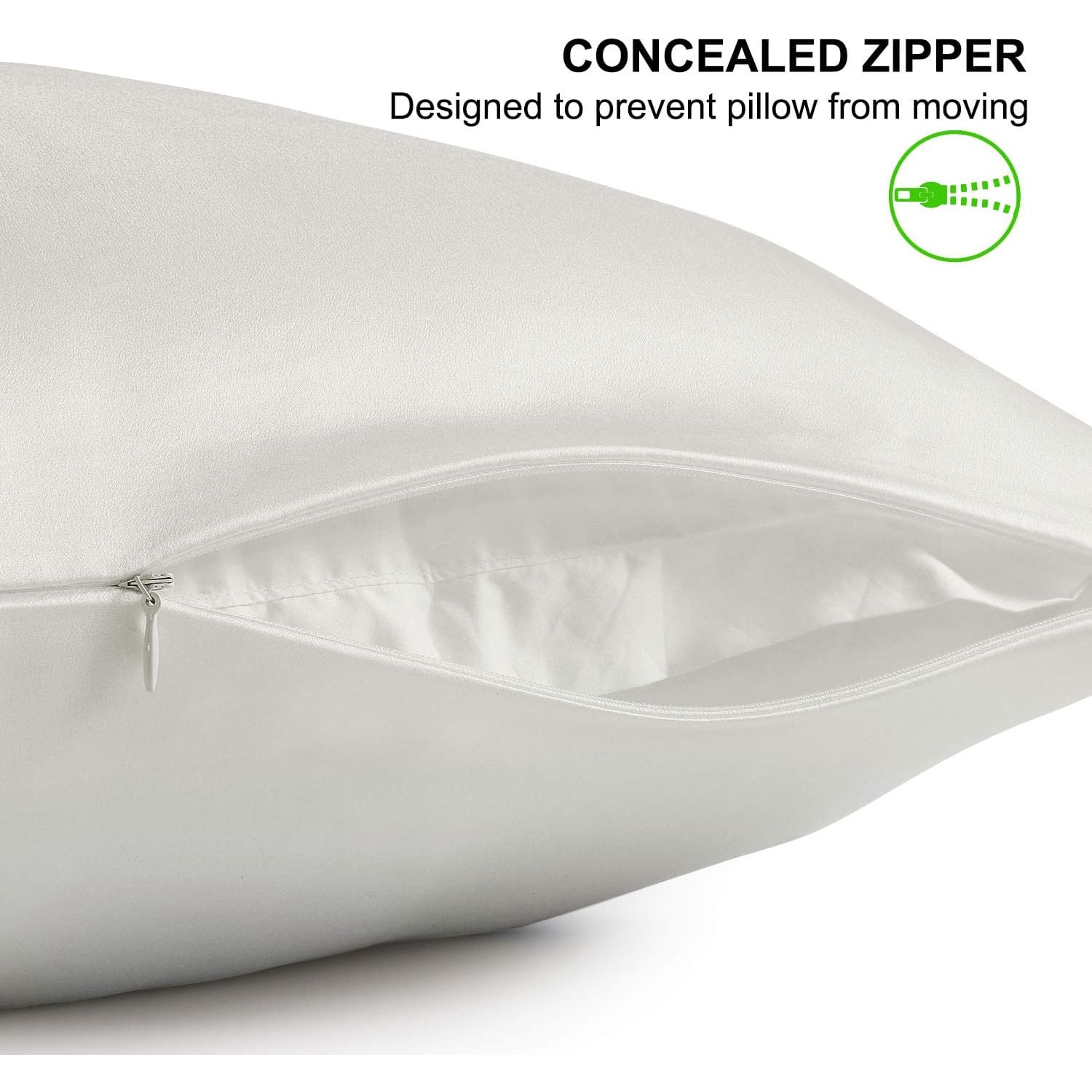
Closures sound like a trivial thing until you have lived with the wrong one. An envelope closure is just a folded flap of fabric tucked over the open end. It looks clean when you make the bed, but when you toss and turn, the pillow gradually shuffles out through the opening. By 3am you are holding a bare pillow corner against your face.
A hidden zipper solves that. The pillow goes in, the zipper closes, and the pillow stays fully enclosed. Because the zipper is concealed in the seam, both faces of the case look finished, so there is no wrong side you have to keep facing down.
Two small habits keep it working well. Zip it closed before it goes in the wash, which stops the teeth catching on the fabric and on other items. And guide the zipper rather than yanking it, since silk around a zipper tape is the one spot where a hard pull can cause damage.
The interior edges on this case are stitched over, which is worth a mention. Raw internal seams on silk will fray with repeated laundering. A stitched-over edge contains them.
Living with silk, honestly
People avoid silk because they assume it needs dry cleaning and endless care. It does not. This case is listed as both hand washable and machine washable, which puts it well within normal household routine.
For machine washing, use cold water on a gentle or delicates cycle, and put the case inside a mesh laundry bag. The bag is the important part. It keeps the silk away from zippers, hooks and buttons on everything else in the drum.
Detergent matters more than most people expect. Use a mild liquid made for delicates or wool. Skip anything containing bleach or oxygen brighteners, and skip enzyme-heavy detergents too, because silk is a protein fiber and those enzymes are designed to break protein down. Fabric softener is also unnecessary, and its residue leaves the surface feeling duller than it should.
Drying is the easy part. Squeeze the water out gently, never wring or twist, then hang or lay flat somewhere out of direct sun. Silk dries fast, often in a few hours indoors. Keep it out of the dryer, where heat and tumbling do the most damage.
If you want to iron it, use the lowest silk setting on the reverse side while the fabric is still a little damp, and keep the iron moving. Honestly, most people hang it up and find it drops its own creases by bedtime.
A weekly wash suits most sleepers, and a bit more often if you use heavy night creams or leave-in hair products. Owning two cases makes that painless, since one is always clean while the other is drying.
About the color
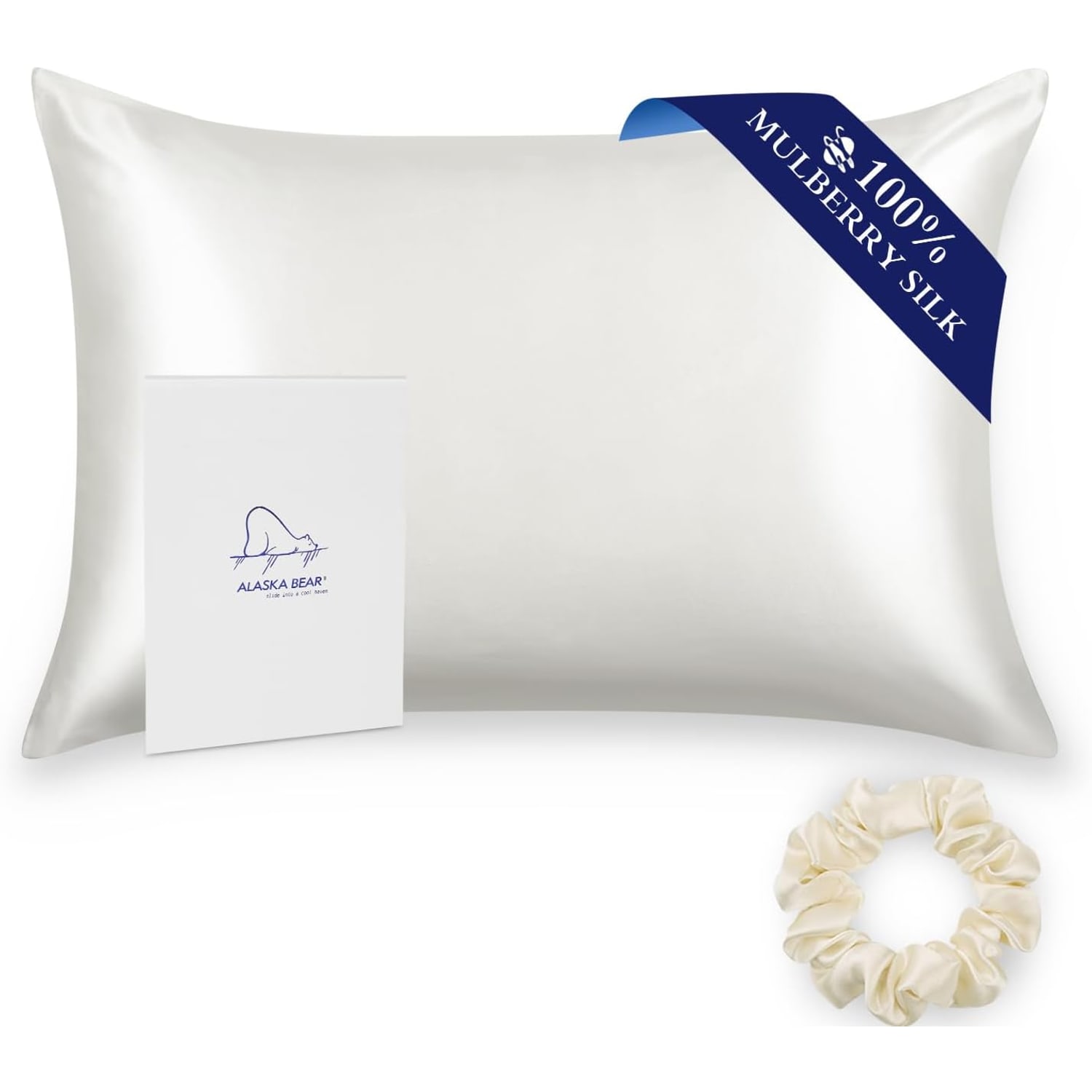
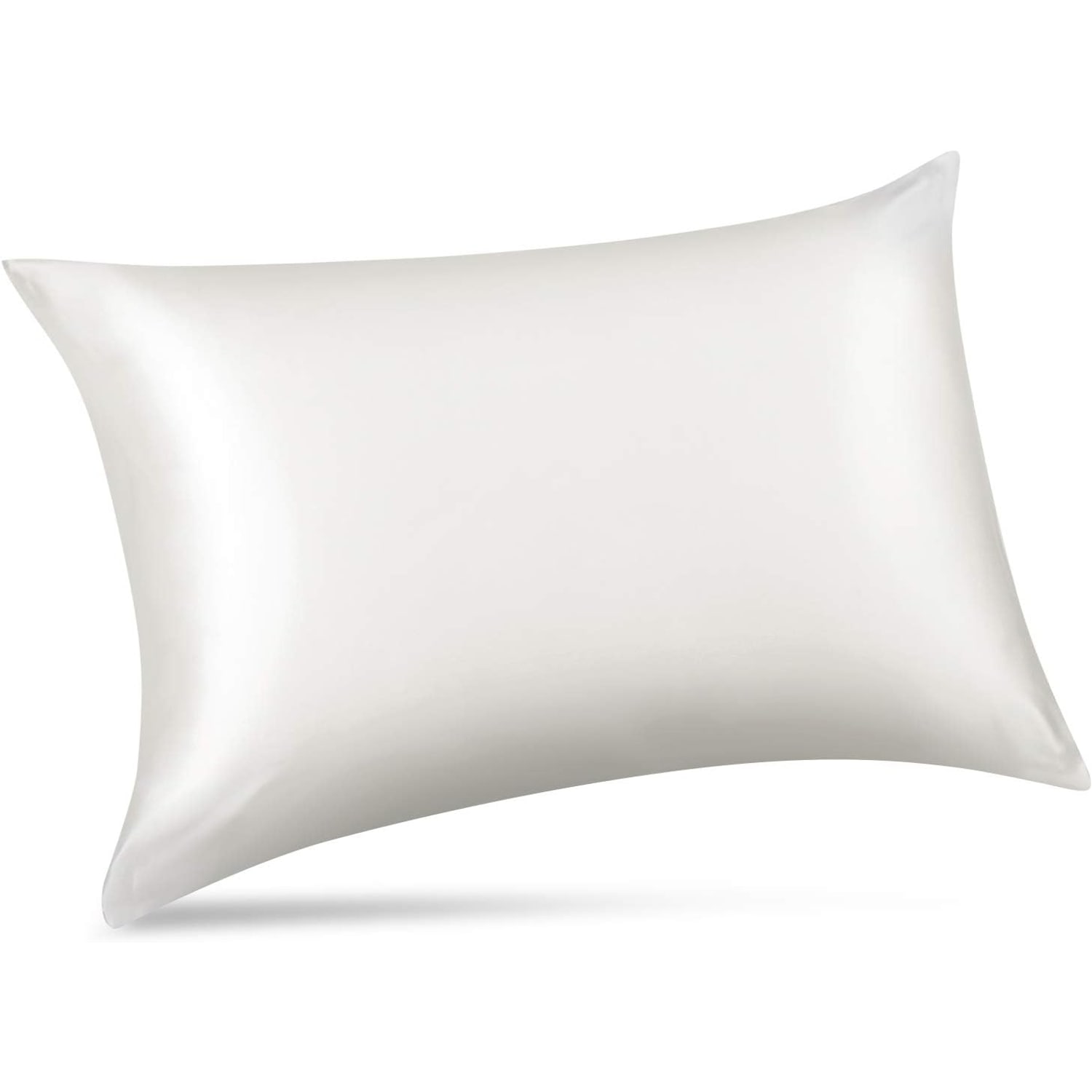
The shade is described as white ivory. That means a soft warm white rather than a hard, blue-leaning optical white. It sits comfortably next to cream sheets, oatmeal throws, natural linen and most off-white bedding, which is why ivory is such a dependable choice when you are not building a whole new bedroom scheme.
One thing to expect with any silk, in any color. Silk reflects light along the length of the filament, so the same piece of fabric can read as pale champagne under a warm bedside lamp and closer to plain white in morning daylight. That shift is the fiber doing what it does, not an inconsistency in the dye.
Who this suits, and who it does not
It suits someone with a US queen pillow who wants a smoother surface than cotton and likes how silk looks on a made bed. It suits restless sleepers, because the zipper keeps the pillow where it belongs. And it makes a straightforward gift, since you do not need to know anyone's measurements to buy it.
It is less suited to someone who wants a crisp, cool, hotel-percale feel, because silk drapes rather than crisps. It is also not the right pick if your pillow is a standard or a king, or if you know you will not give it a gentle wash cycle.
The short version
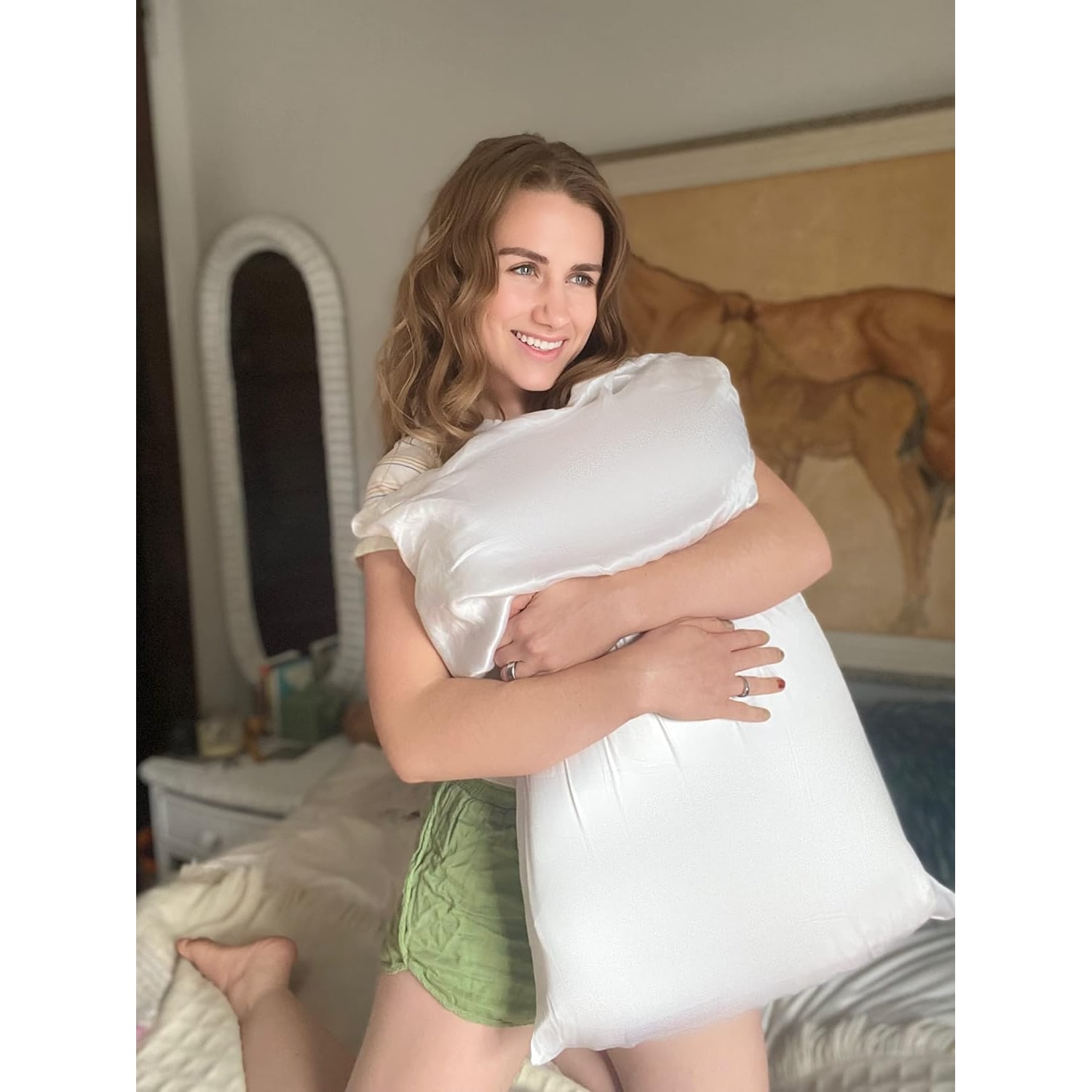
This is a queen pillowcase in 100% Grade 6A mulberry silk at 19 momme, 20 x 30 inches, ivory, with a hidden zipper and stitched-over interior seams. The momme weight is the mainstream choice for bedding. The zipper keeps the pillow in. Measure your pillow before you order, wash it cold in a mesh bag with a gentle detergent, and hang it to dry. Do that and it will keep looking the way it did on night one for a long stretch of nights after.