
The complete guide
How To Choose A Long Silk Scarf (And Actually Wear It)
The problem with most scarves
Most scarves are either too small to do anything useful or too heavy to carry around. The small square sits at the throat and that is its whole job. The chunky knit keeps you warm in January and then lives in a drawer for eight months. Neither one helps when you are sitting in an air-conditioned restaurant in July, or walking into a church that asks for covered shoulders, or on a plane where the cabin has dropped ten degrees since takeoff.
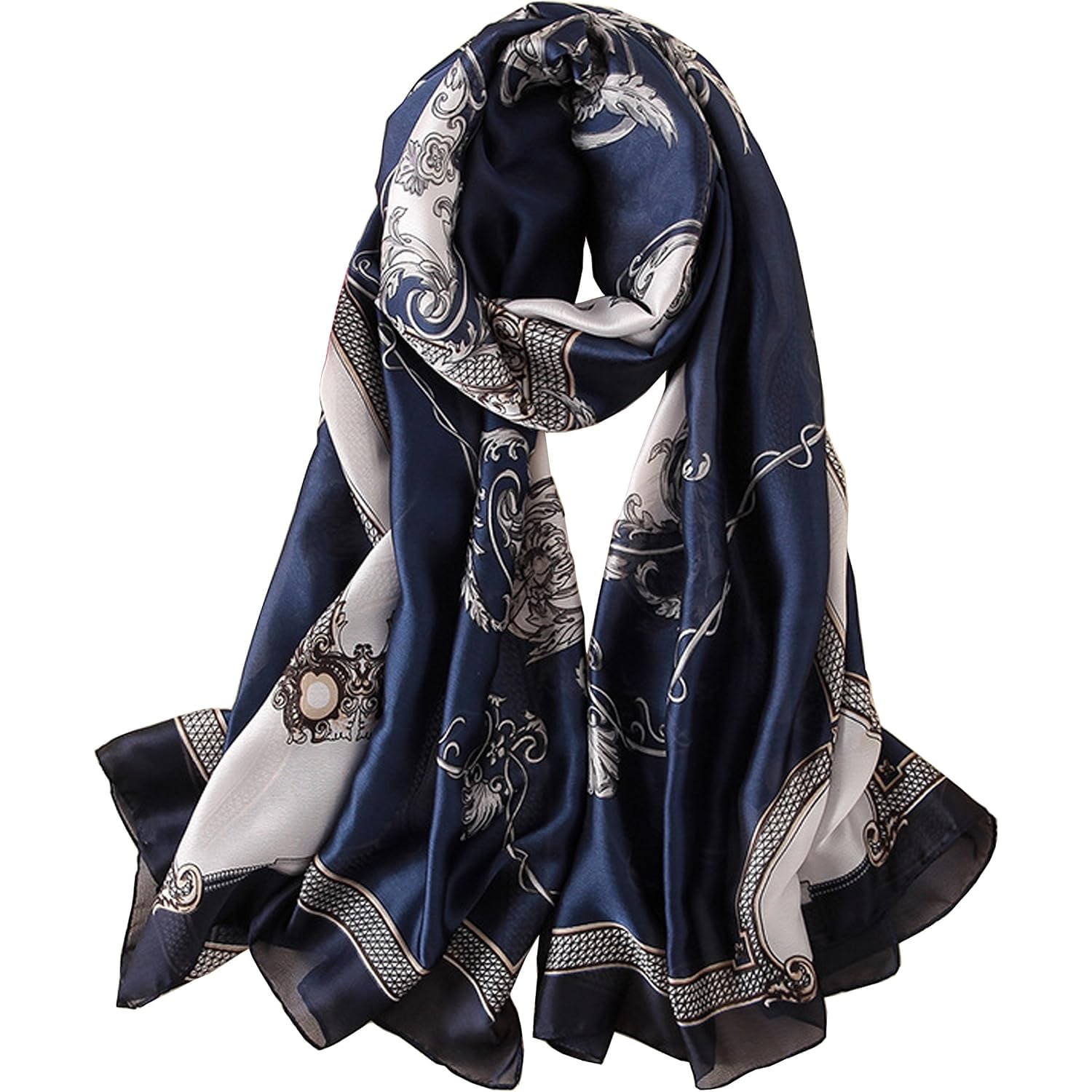
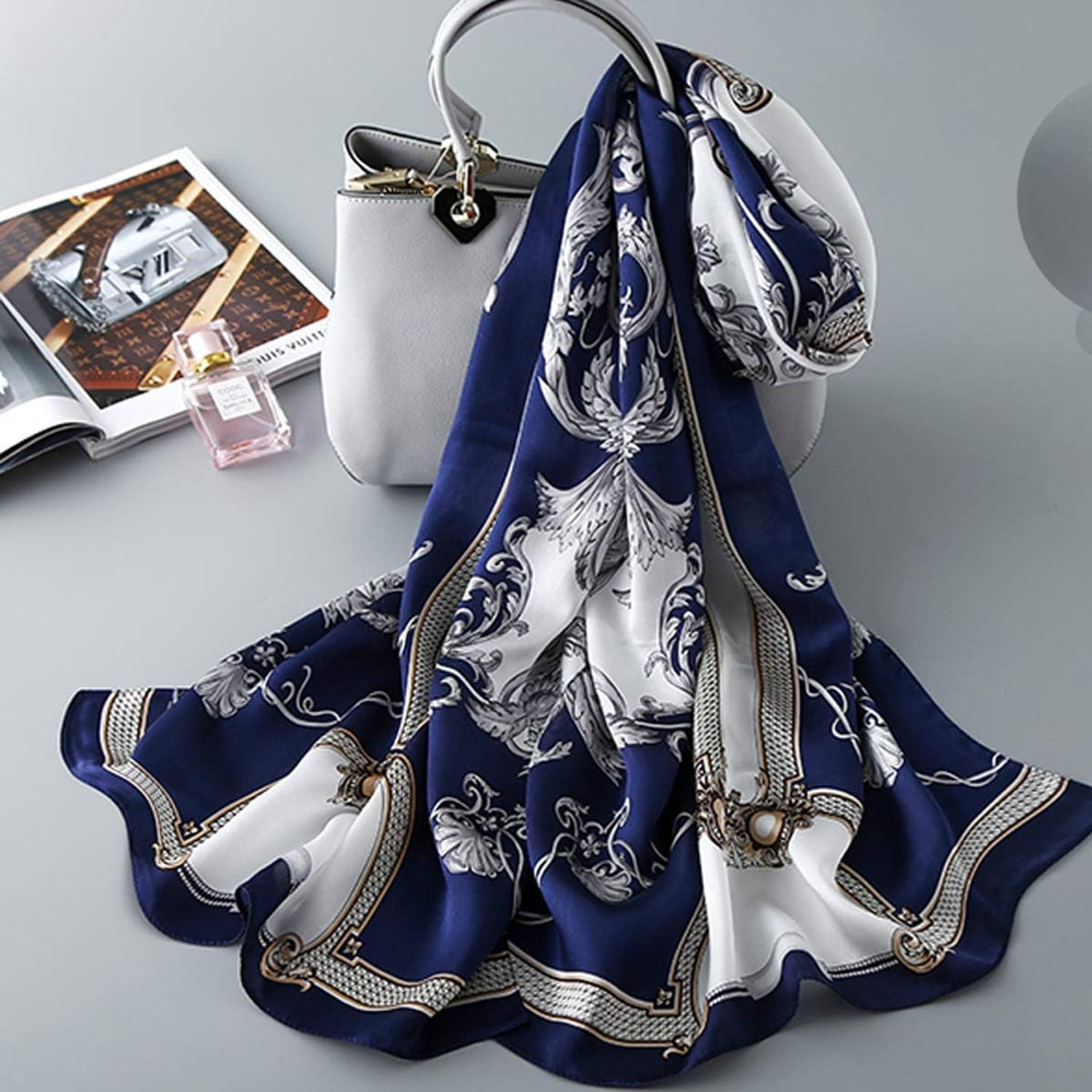
A long lightweight silk scarf solves that gap. At 70 inches by 35 inches, this one is big enough to open across the shoulders like a shawl and fine enough to fold into a handbag without a fight. It is the piece you carry because you might need it, not because you definitely will.
What mulberry silk actually is
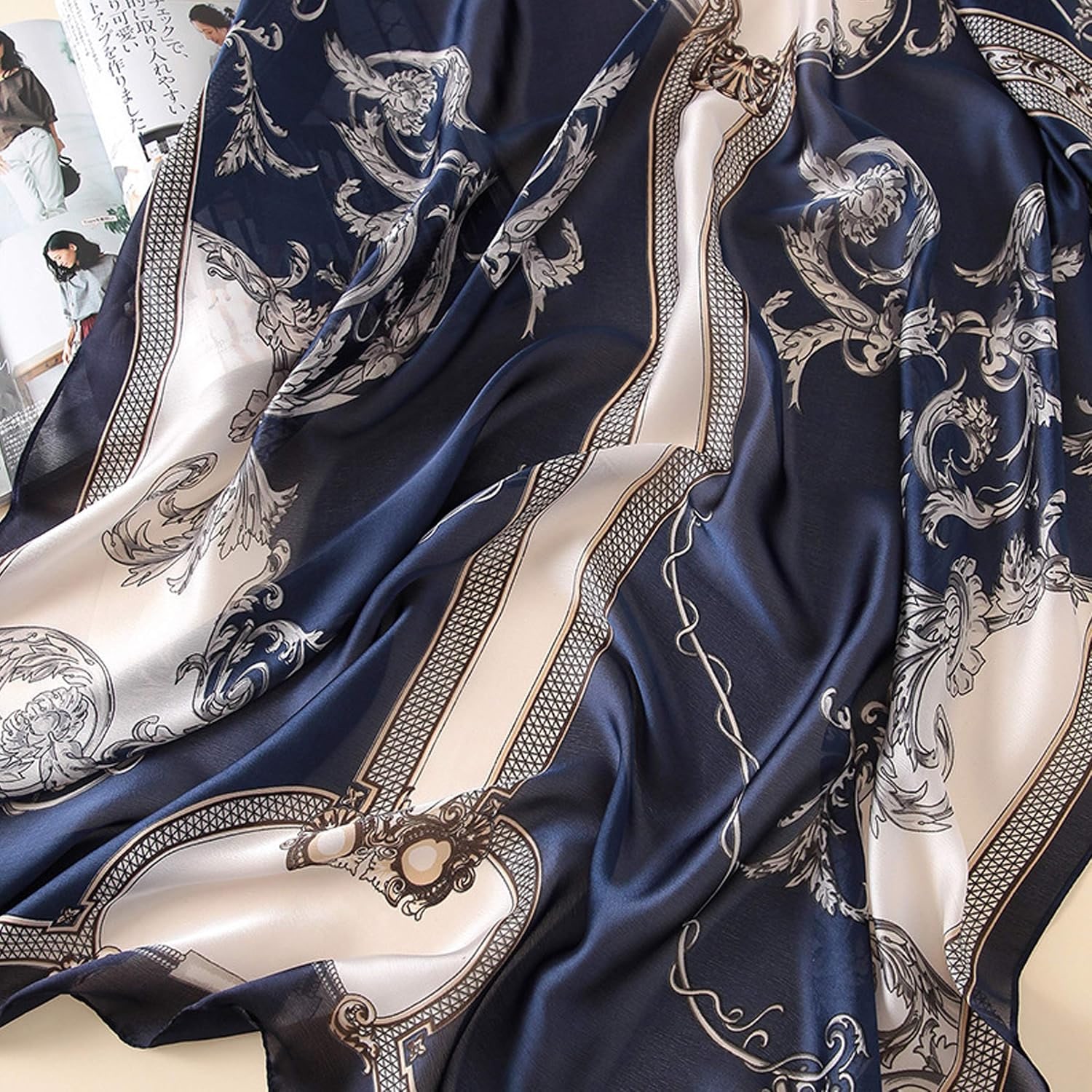
Silk comes from the cocoon of the silkworm. Mulberry silk refers to silk from worms raised on mulberry leaves, and it is the type most fine silk cloth is made from. The fibers are long and even, which matters more than it sounds: long fibers mean fewer joins, a smoother surface and a cloth that falls in soft folds instead of holding its own shape.
That smoothness is why hair and skin move over silk with less friction than over cotton. It is also why silk feels cool when you first put it on and then settles to the temperature of your body. The fiber is fine enough to breathe in summer and still gives you a layer in cooler weather.
This scarf does not list a momme weight, which is the number used to describe how heavy a silk cloth is. It is described as lightweight, and the size tells you the rest. A piece of fabric this wide in a heavy silk would feel like a blanket. This one is cut for drape.
Why the size matters more than anything else
People underestimate how much a few inches change what a scarf can do. A 35-inch square is a neck scarf and nothing more. A 70 x 35 rectangle gives you options.
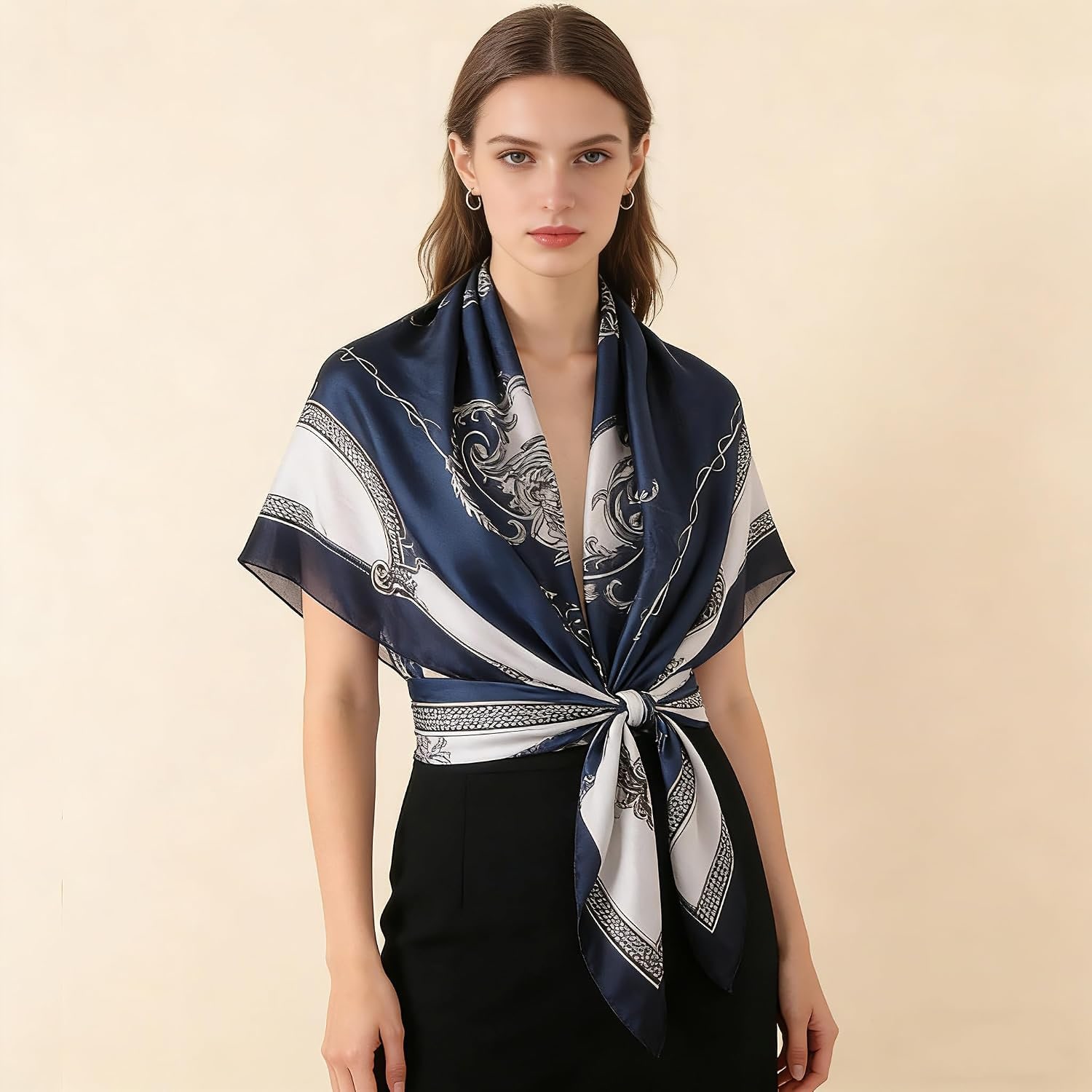
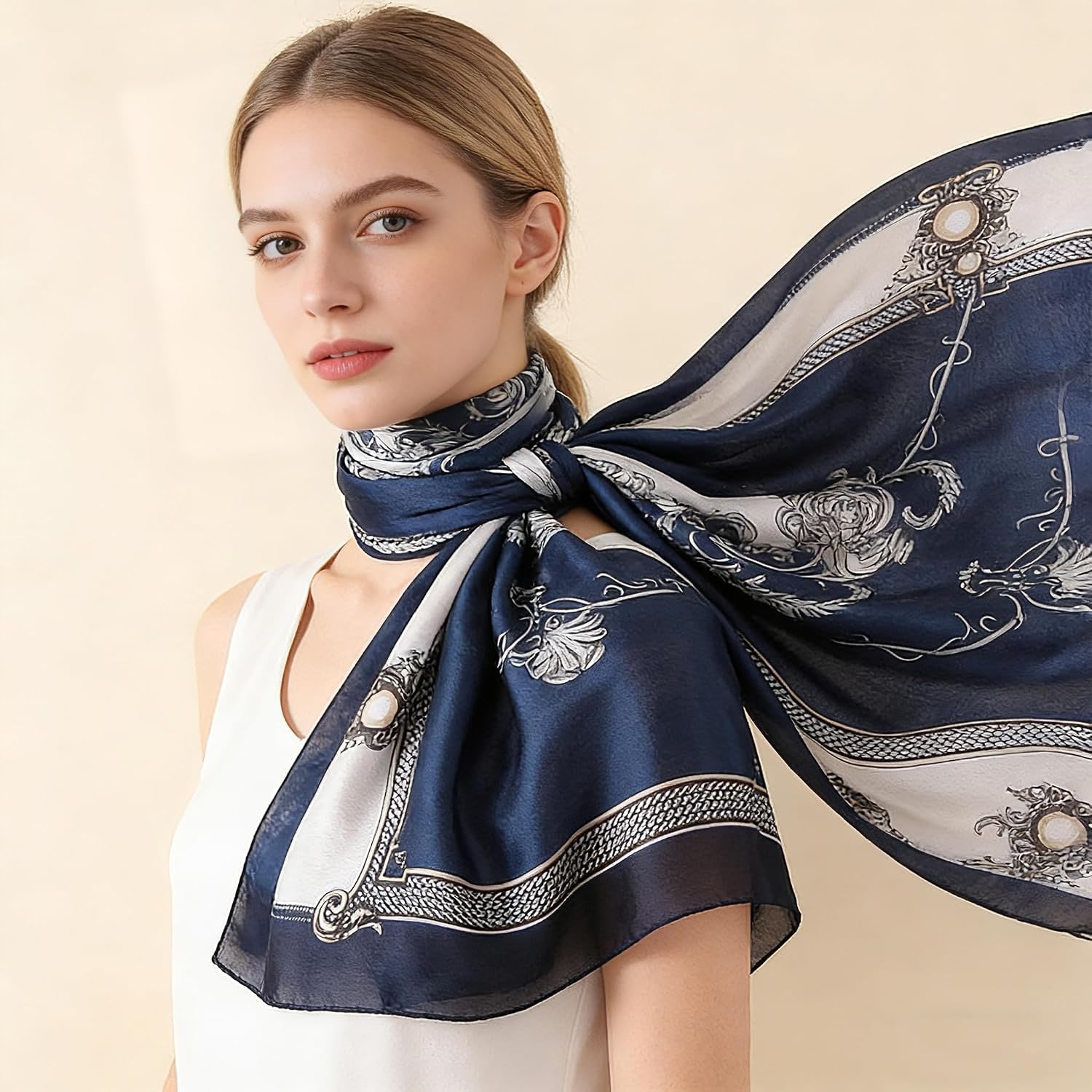
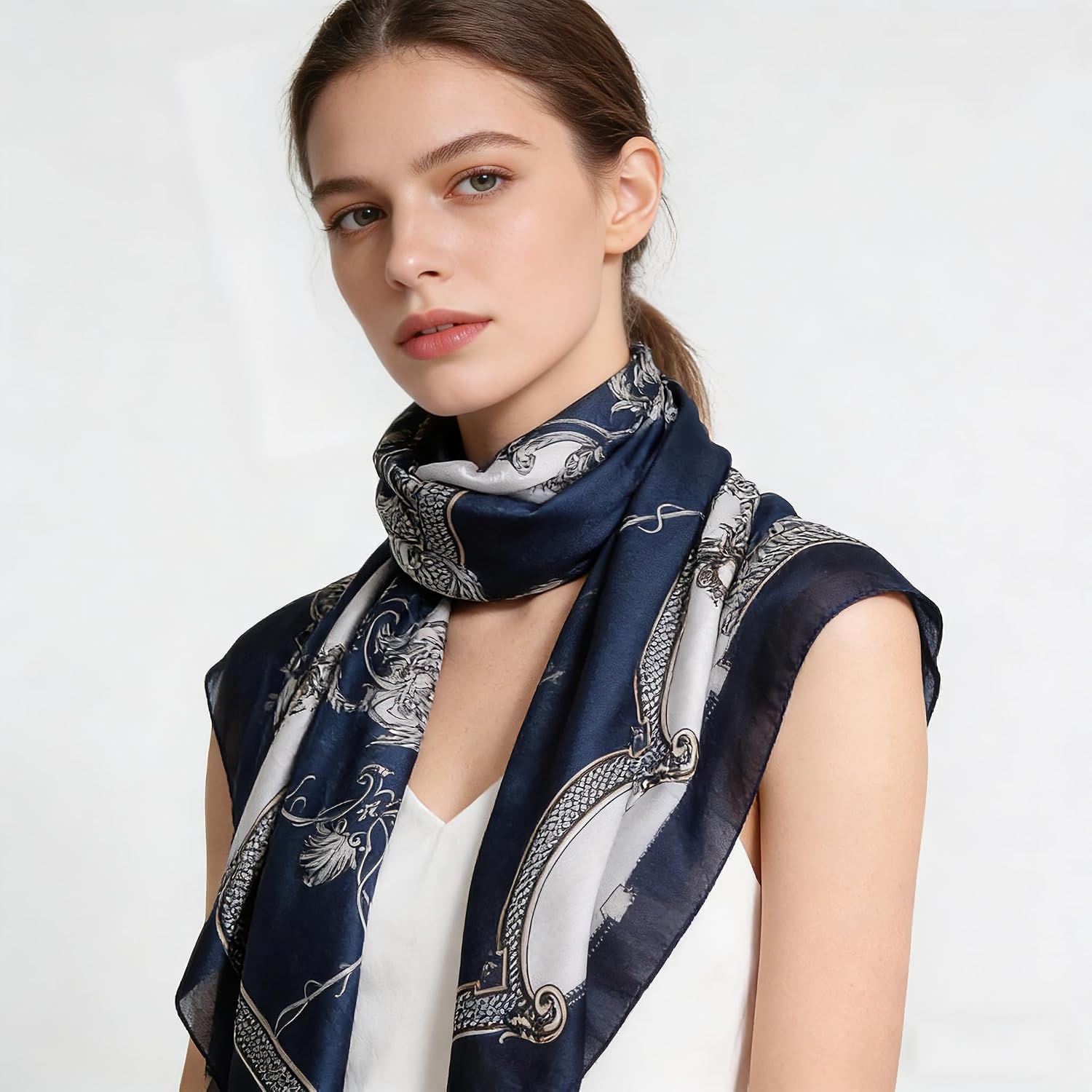
Folded lengthwise into a narrow band, it becomes a neck scarf with long ends you can knot, loop or tuck. Folded once, it is a wide drape that sits on the shoulders and stays put. Opened fully, it is a shawl. Wrapped at the hips, it is a sarong. Over the head, the length gives you enough tail to tie properly rather than tucking two short corners and hoping.
If you are comparing options and want the best large silk scarf for general use, the rectangle usually beats the square. The square looks neater folded into a tie at the throat. The rectangle does that and five other things.
Who it suits
Travelers get the most out of it. The best lightweight scarf for travel is the one you forget you packed, and this one rolls into a corner of a bag. It covers you on a cold flight, gives you a wrap for an evening out and doubles as a shoulder cover for places that ask for one, all without adding weight.
It also suits people who live somewhere with strong sun. Silk gives physical cover from direct light, and it does it without the stifling feeling of a heavy fabric. Over the shoulders at the beach or over the head on a hot walk, it does the job.
And it suits anyone who wants one accessory that moves between daytime and evening. A plain shirt and jeans look finished with a silk scarf knotted at the neck. The same scarf opened across the shoulders works over a dress at night.
How to choose between silk and everything else
Wool is warmer. Cashmere is warmer and softer but costs more and needs more care. Cotton is cheap and washable but creases hard and has none of the fall. Polyester imitations look right in a photograph and feel wrong on the neck, and they hold heat rather than letting it out.
Silk sits in a specific place. It is the fabric you choose when you want drape, lightness and a surface that looks refined without looking stiff. It is not a winter scarf by itself. It is a three-season piece and a winter layering piece.
If you are shopping for the best silk shawl wrap rather than a neck scarf, size and weight are the two numbers to check. You want at least 30 inches of width for shoulder coverage and a weight light enough that it does not slide off under its own mass.
Looking after it
Hand wash only. That is the one rule on this scarf and it is worth following.
Use cool water and a detergent made for delicates. Swirl the scarf through the water, do not scrub it, and rinse until the water runs clear. Never wring it. Lay it on a clean towel, roll the towel up and press to get the water out, then dry it flat or over a padded hanger somewhere out of direct sun.
If it needs pressing, use the lowest iron setting and put a thin cloth between the iron and the silk. Ironing it slightly damp works better than ironing it bone dry. Steam works too, held a little away from the fabric.
A few other things help. Put your jewelry on before the scarf, because rings and watch clasps are the usual cause of snags. Let perfume and hairspray dry before the scarf goes on, since alcohol can mark silk. Store it loosely folded or rolled in a drawer or a cloth bag rather than crushed at the back of a shelf, and keep it out of sealed plastic for long stretches.
Styling without overthinking it
Four approaches cover most situations.
The loop: fold lengthwise to a band, drape around the neck, pass both ends through a loop made in one side. Neat, stays put, good under a coat.
The drape: fold once so it is 35 inches wide, lay it over the shoulders, let the ends hang at the front. Nothing to tie. Good over a dress.
The full wrap: open it out, bring it around the back and over both arms. The most coverage, best for evening or for a cool room.
The head cover: fold to a triangle or a band depending on the look, tie at the back or under the chin. The length gives you room to adjust.
If the fabric slips, a loose knot or a small scarf ring holds it without crushing anything.
The short version
This is a 70 x 35 inch mulberry silk scarf that works as a neck scarf, a head covering and a shawl. The silk is smooth and light, it folds into almost no space, and it moves between summer sun cover and a soft layer under a winter coat. Care is hand wash only, cool water, dry flat, cool iron.
Buy it if you want one accessory that does several jobs and travels well. Skip it if what you actually need is a thick wool scarf for January mornings, because this is not that. For everything in between, a long silk rectangle is hard to beat.