
The complete guide
How to Choose Silk Hair Ties That Actually Hold
The small annoyance nobody talks about
Pulling out a hair tie should not be an event. But if you have ever stood in front of a mirror at the end of the day, working a rubber band out of a ponytail one strand at a time, you know it sometimes is. The band grabs. A few hairs come with it. There is a dent across the back of your head that takes brushing to smooth out.
That is friction, and it is almost entirely a surface problem. A bare elastic, a cotton-wrapped band, a band with a metal crimp: all of them grip hair while they hold it. Silk behaves differently. It is a smooth filament fiber, so hair slides over it instead of dragging. That is the whole argument for silk hair ties, and it is a modest, practical one rather than a dramatic claim.
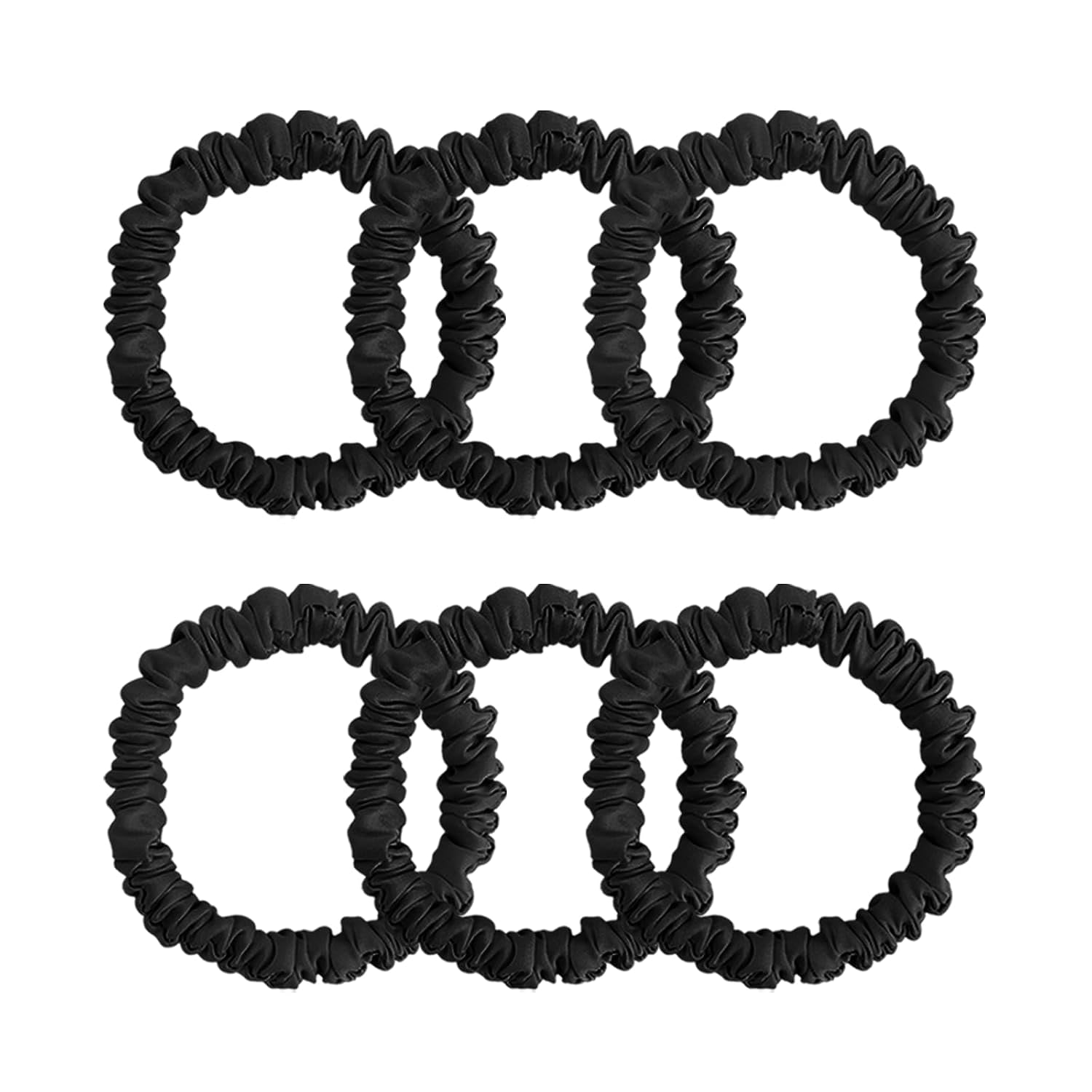
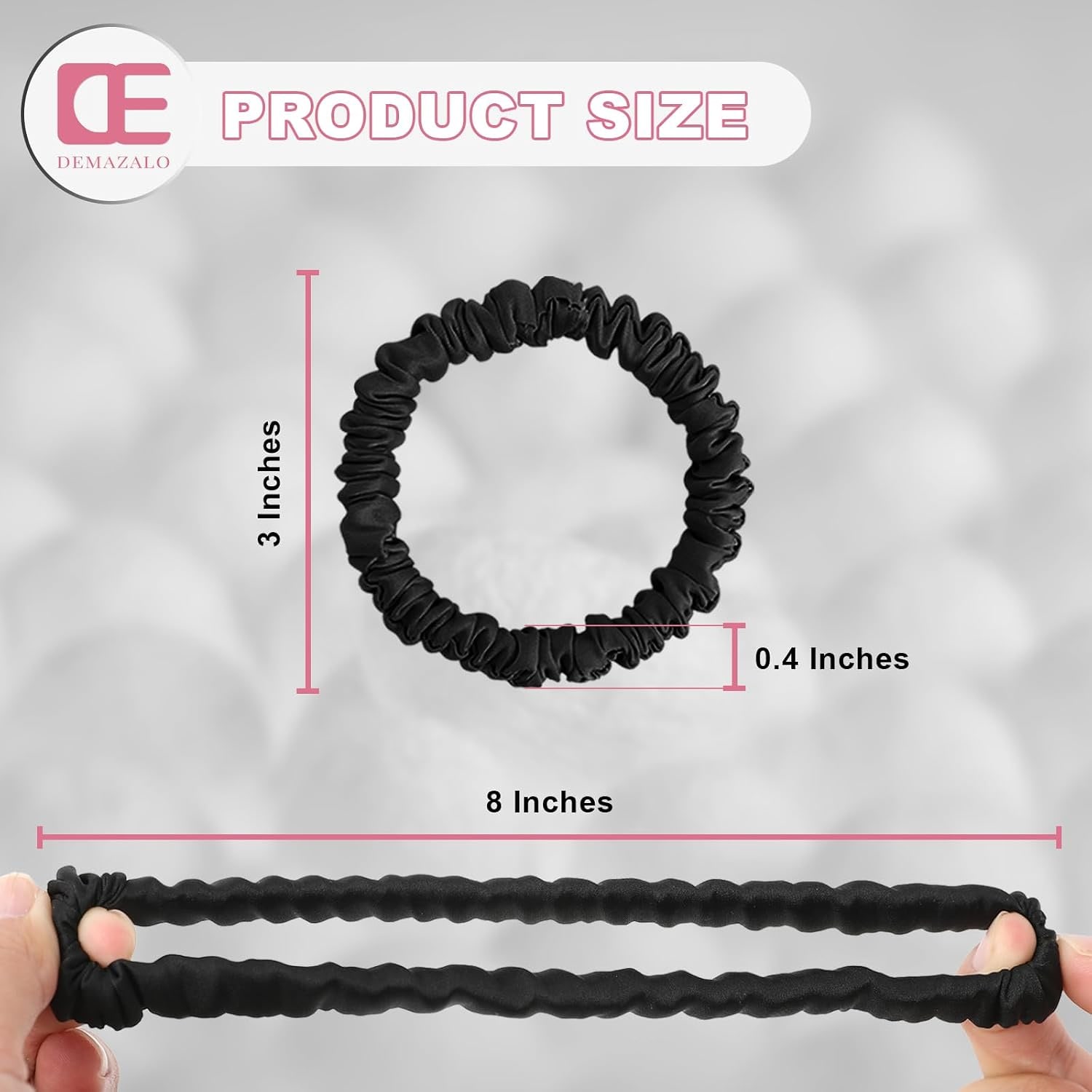
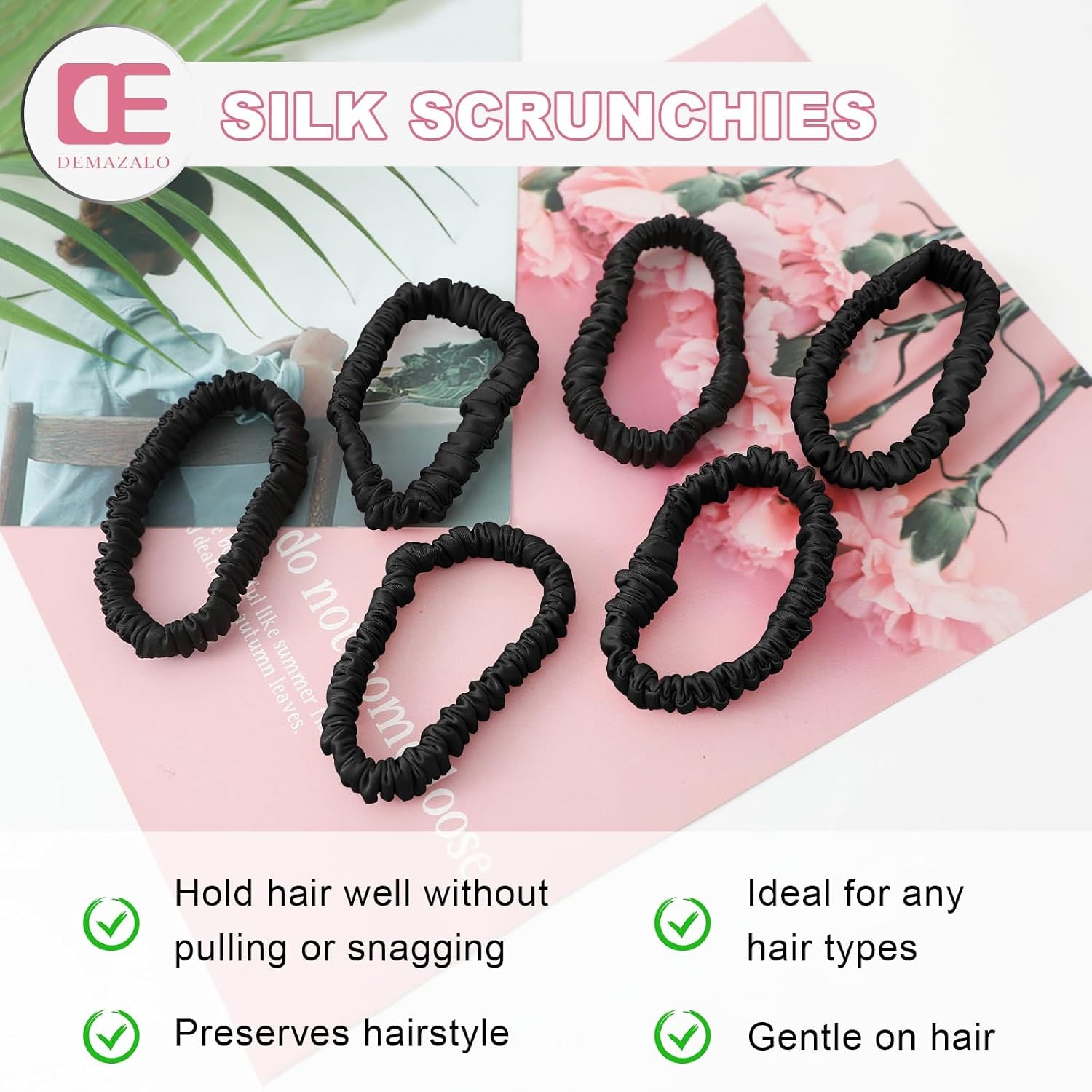
This pack contains six black silk hair ties. Each measures about 4.02 by 3.94 inches flat, with a thickness around 0.87 inches, and the complete pack weighs 0.63 ounces. That is all the hard information available. The maker does not state momme weight, the exact silk percentage, or the elastic composition, so this guide sticks to what silk accessories do in general and how to pick and use them well.
How a silk hair tie actually works
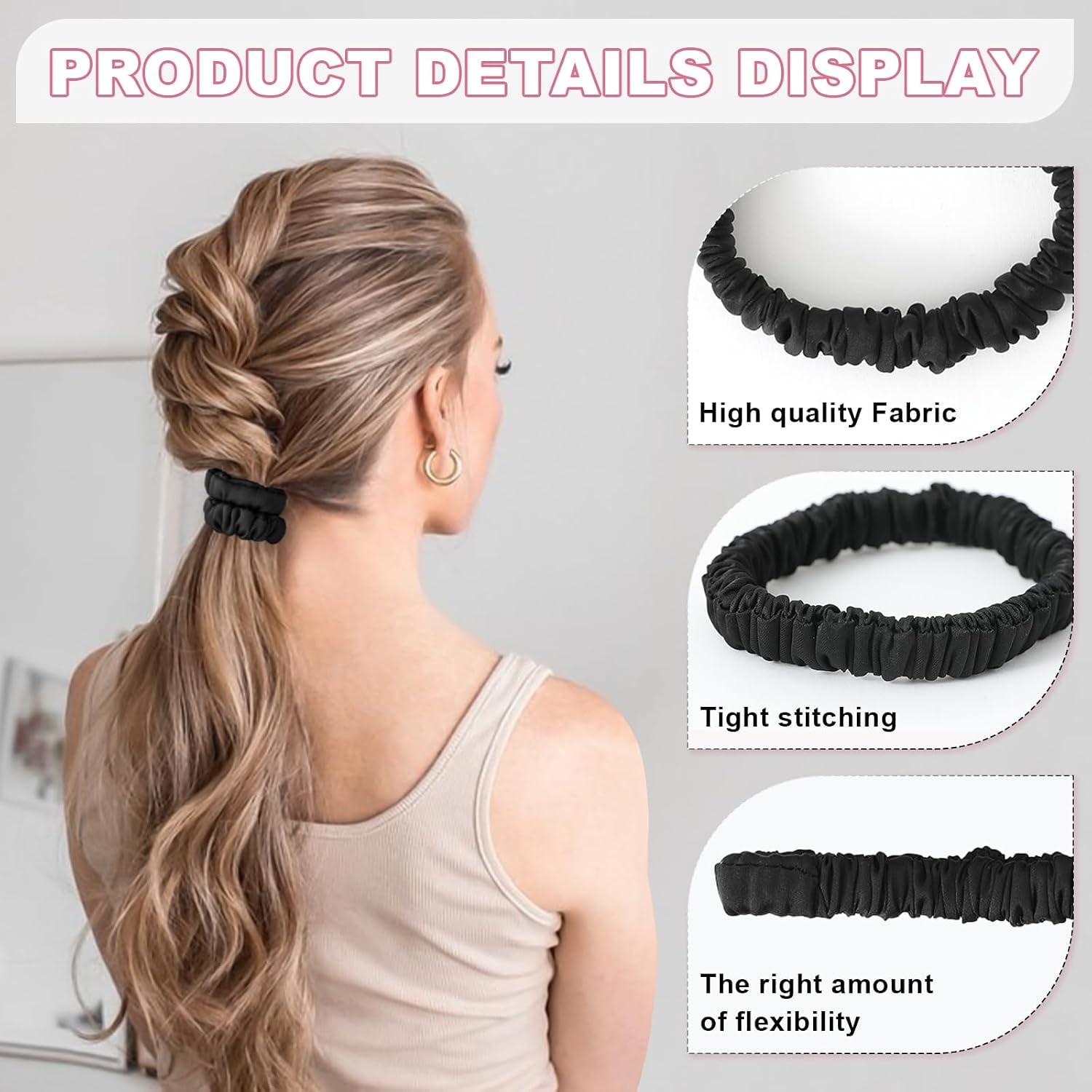
A scrunchie-style tie has two parts. There is a stretch core, which does the holding, and a fabric tube over it, which does the touching. Most of the comfort difference between hair ties comes from that second part.
A bare elastic has nothing between the rubber and your hair. A cotton tube is better, but cotton is a staple fiber with tiny ends that stick out of the yarn, and those are what catch. Silk is a continuous filament, which is why the surface feels slick. When you pull the tie down and off, hair releases rather than resists.
The trade-off is that slickness cuts both ways. A silk tie can slide in hair that a cotton one would grip. That is not a flaw so much as a thing to work with. You adjust the number of wraps instead of relying on the fabric to grab.
Getting the hold right
Here is the practical bit most people figure out by accident over a week.
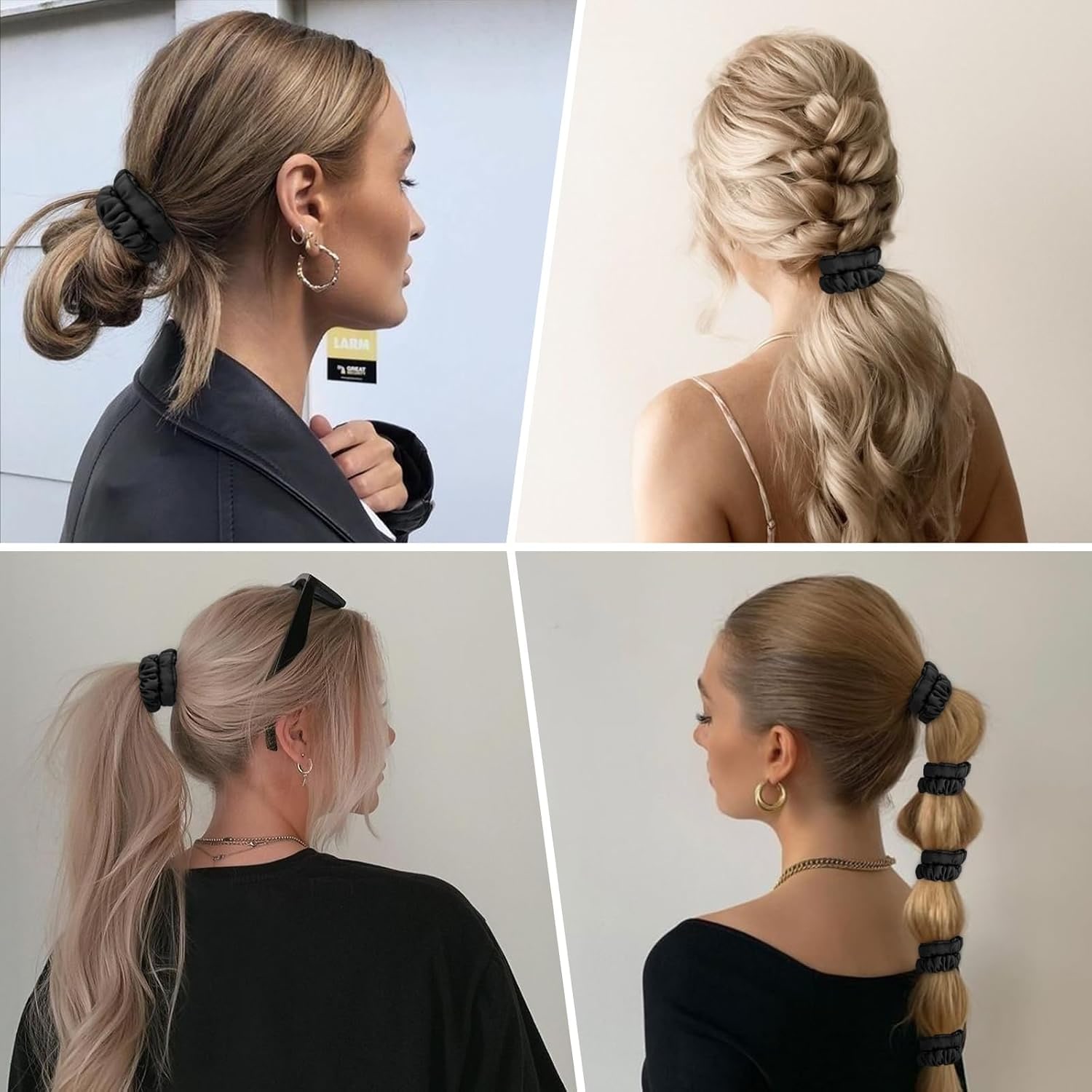
Medium thickness hair usually lands on two wraps for a daytime ponytail. Thick hair often needs just one, sometimes two. Fine hair tends to want three, occasionally four. The exact number depends on your hair length and how high you wear the tail, since a high ponytail puts more weight on the tie than a low one.
If it slips through the afternoon, add a wrap. If you feel pressure at the root or see a sharp crease after taking it down, take one away. It really is that simple, and it is worth spending two or three days finding your number rather than deciding on day one that the tie is too loose.
For a bun, wrap until the bun feels anchored, then stop. For a braid, one snug turn at the end does the job and comes out without fraying. For sleeping, go looser than you would for daytime. A loose wrap keeps hair together without putting any sustained pull on the roots overnight.
Who these suit
Anyone who takes their hair down and up several times a day gets the most out of a smooth tie, because that is when friction adds up. If you work in an office, tie your hair back for cooking, and put it up again for a workout, you are handling the tie maybe six times before bed.
People with long hair tend to notice the difference first, simply because there is more hair in the tie. People with fine hair notice it too, since fine strands are the ones most likely to snag on a rough surface. And people who travel often appreciate how little space a pack like this takes. At 0.63 ounces, it is effectively free weight in a carry-on.
Black is the practical color choice. It sits quietly against dark hair, looks intentional against light hair, and does not clash with a suit, a dress, or running gear. If you only want one shade in your bag, black is the one that never needs thinking about.
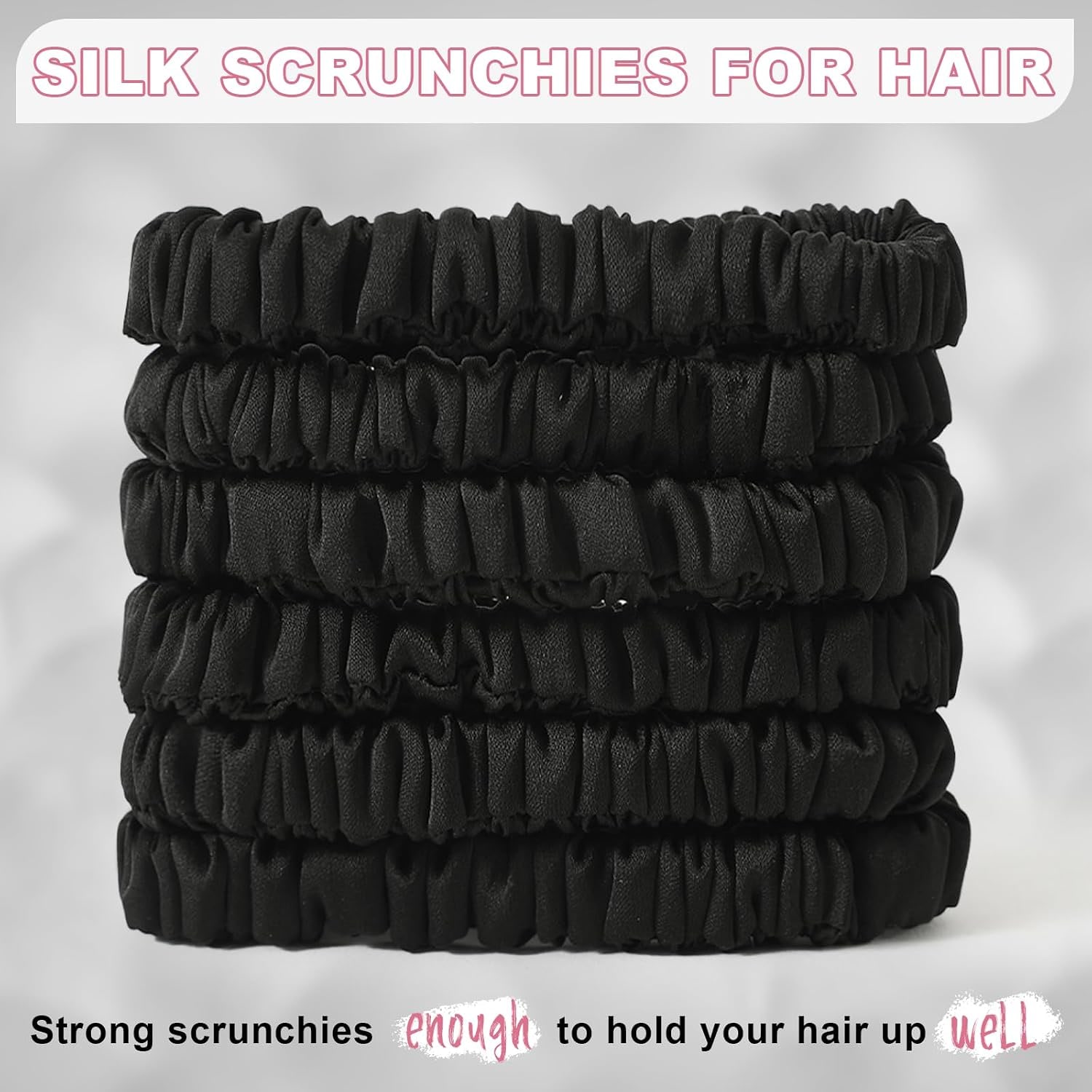
Six is a sensible count. Hair ties go missing. They end up in car doors, gym lockers, and the bottom of handbags. Buying them in a pack means the loss of one is a shrug rather than a problem, and rotating through six spreads the wear so no single tie gets stretched every day.
How to choose between silk ties
If you are comparing packs, a few things are worth checking.
Size matters more than it sounds. A wider, thicker tie distributes pressure over more of the hair and is less likely to leave a mark. A very thin one concentrates tension in a narrow line. These sit at a middle size, about four inches across flat, which is the familiar everyday scrunchie proportion rather than a large decorative one.
Count and color follow from how you live. If you want one tie for special occasions, a single is fine. If you want hair ties that are simply always available, a multipack in a neutral color is the better buy.
Stated specifications are worth reading carefully. Some sellers publish momme weight and silk percentage, and some do not. For this pack, the maker does not state them. What is confirmed is the color, the count, the flat dimensions, and the pack weight. It is better to know that than to assume a figure that was never published.
Caring for them
Silk is not fragile, but it is particular. The routine is short.
Hand wash in cool water with a mild detergent made for delicates. Swirl rather than scrub. Rinse until the water runs clear. Do not bleach, and do not wring the tie out, because twisting stresses both the silk and the elastic inside it. Press the water out between a folded towel, reshape the tube with your fingers, and lay it flat to dry. Keep it away from radiators, hot windowsills, and the dryer, since heat is what shortens the life of elastic more than anything else.
Between uses, store them somewhere they will not meet a zipper, a hook, or velcro. A small drawer or pouch is plenty. Do not leave them stretched over a brush handle or a doorknob, because elastic that sits extended slowly stops wanting to come back.
How often to wash depends on how you use them. A tie that goes to the gym needs washing more often than one that only holds an evening bun. Having six makes this easy, since you can wash two or three at a time and still have ties in rotation.
The short version
Six black silk hair ties, each about 4.02 by 3.94 inches flat, 0.63 ounces for the whole pack. Silk is smooth, so hair slides over it with less friction than cotton or a bare elastic, which makes taking a ponytail down easier.
Find your number of wraps in the first few days: fewer for thick hair, more for fine hair. Hand wash cool, lay flat to dry, keep them away from zippers. Black goes with everything, and six means you will have one when you need one.
Orders ship from US warehouses in 3 to 7 working days, free USA-wide over $150 and $20 under that. Returns are accepted within 14 days of delivery on unused, unwashed items.