
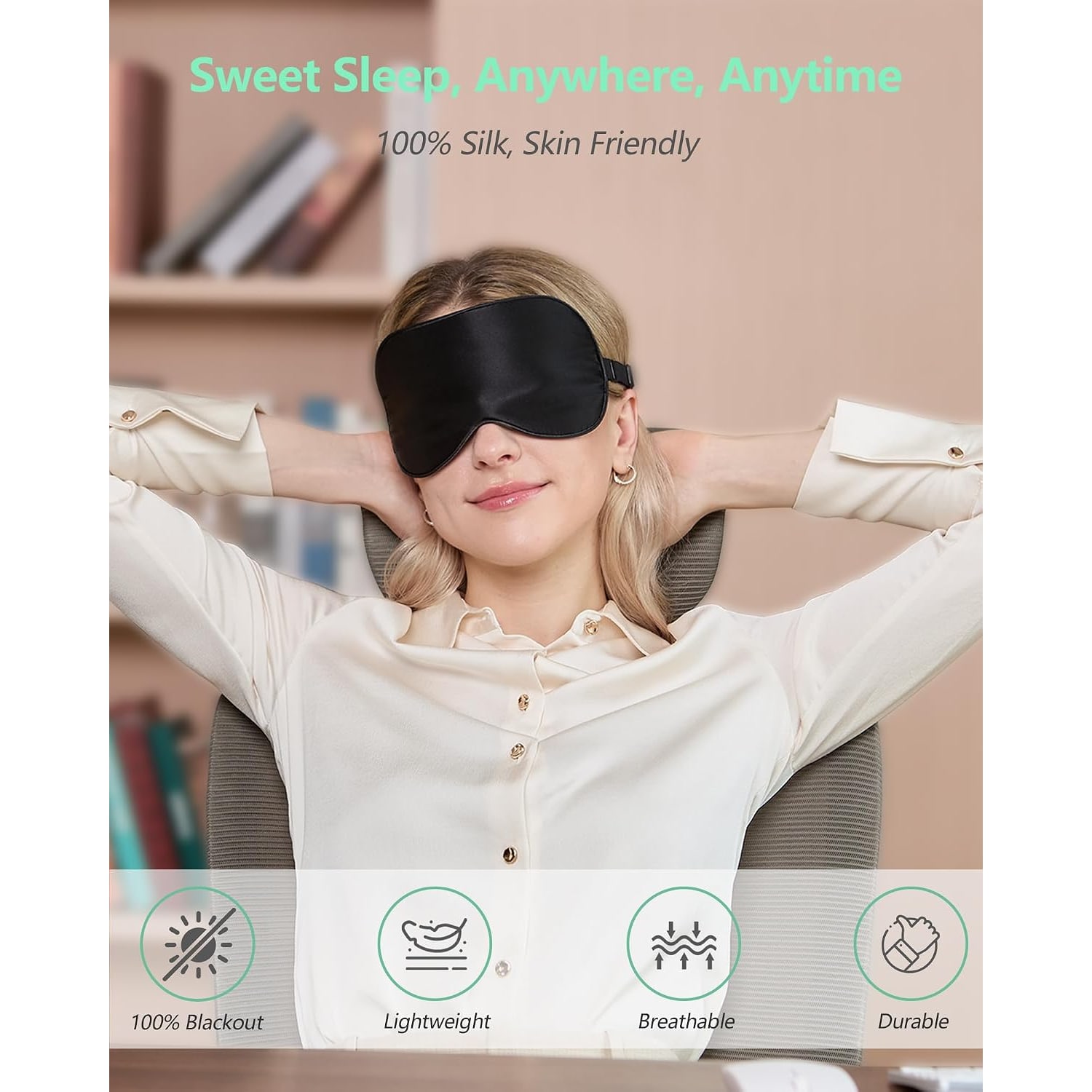
The complete guide
How to Choose a Silk Sleep Mask That You Will Actually Keep Wearing
The problem with waking up at 4am
Most people do not lose sleep in one big dramatic block. They lose it in slices. A streetlight through a gap in the curtains. A partner reading. The glow from a charger. An early sunrise in summer that arrives two hours before your alarm. None of those things feel like a crisis on their own, but together they chip away at the stretch of sleep you were counting on.
Light is the main signal your body uses to decide whether it is time to be awake. That is why blocking it is such a simple lever. You are not adding anything, you are taking something away. A sleep mask is the cheapest, smallest tool for doing that, and it works in places where blackout curtains do not, like a plane seat, a hotel room with thin drapes, or a spare bed at a relative's house.
The catch is that a lot of sleep masks are uncomfortable enough that people stop using them. They press on the eyelids, the strap digs in, the fabric drags on the skin, or the whole thing slides off by the middle of the night. A mask that ends up on the floor is not solving anything.
What mulberry silk actually does here
Silk gets talked about a lot, so it is worth being plain about what it does and does not do.
Silk is a very smooth, very light fiber. When your face moves against it, there is less drag than there is against cotton. If you are a side sleeper who turns several times a night, that matters, because the mask is being pushed and dragged across your skin every time you move. A smoother surface means less tugging.
Silk is also light. You can hold a silk mask in your palm and barely register it. For something you are going to wear across your eyes for seven or eight hours, weight is not a minor detail. Heavy masks are noticeable, and noticeable things keep you awake.
What matters most on this particular set is that the silk is on both sides. A surprising number of masks on the market use a nice-looking silk shell and then line the inside with polyester or a cheaper blend. The inside is the side your face spends the night against. Having mulberry silk on the inner face is the difference between a silk mask and a mask that merely looks like one.
Shape beats fabric when it comes to blackout
Here is the thing people get wrong when they shop for the best blackout eye mask. They focus entirely on the fabric and ignore the shape.
A flat rectangle of fabric, no matter how dense, will leak light. It leaks down the sides of the nose, where the face curves away sharply, and it leaks along the cheekbone if the mask is cut too high. It also presses your eyelids flat, which is why some people find flat masks uncomfortable rather than restful.
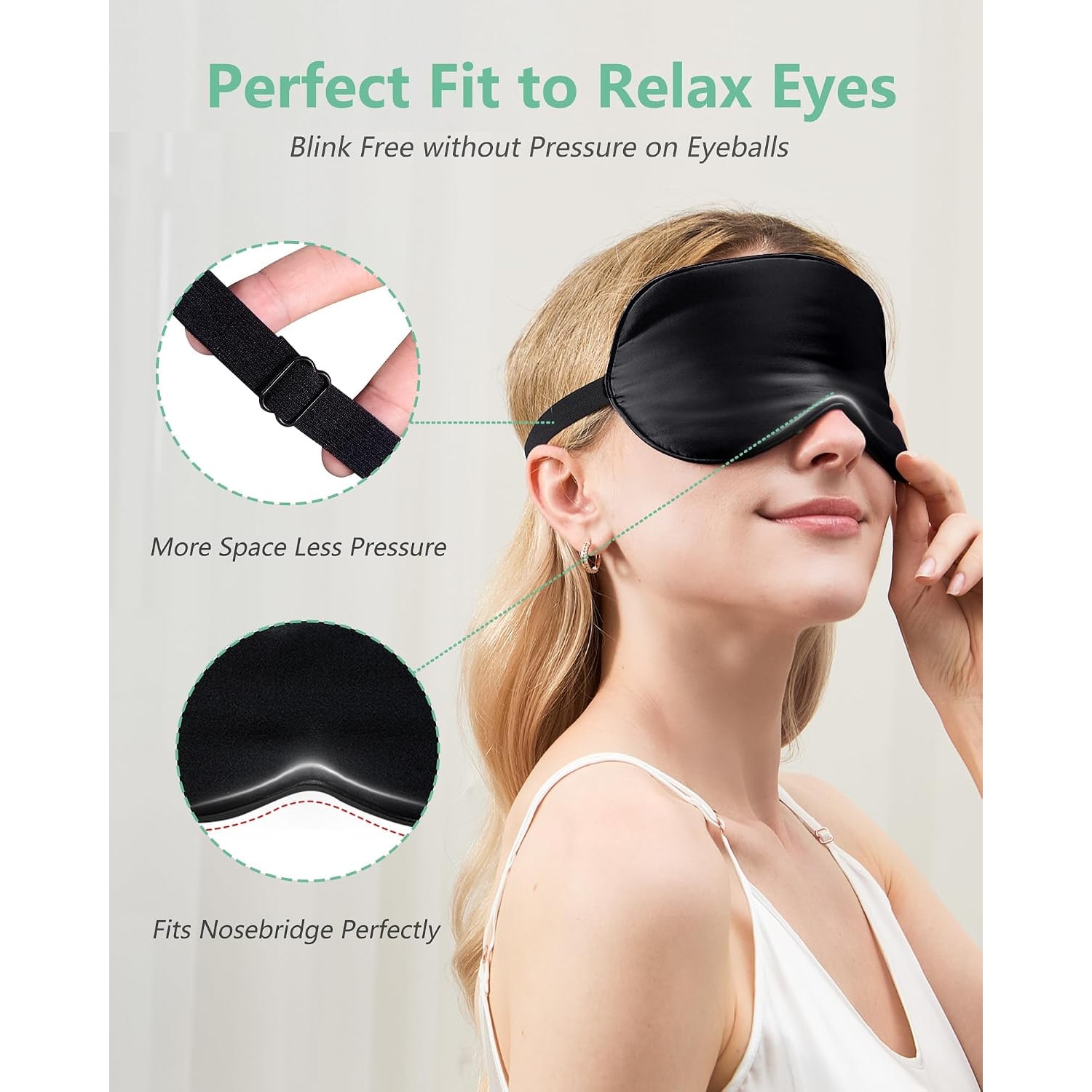
A contoured mask, like the one in this set, is built with depth over the eye sockets. The cover domes outward so there is air between the fabric and your lashes. Two things follow from that. First, you can open your eyes under the mask without the fabric touching them, which some people find much more relaxing. Second, the edges of the mask can sit closer against the brow, the nose and the cheek, because the center is not being pushed forward by your eyelids. Better contact at the edges means better light blocking overall.
The profile of this mask is about 0.62 inches deep, which is the space that does the work.
The strap is the part that decides everything
If the fabric is comfort and the shape is blackout, the strap is retention. It is the part that determines whether the mask is still on your face at sunrise.
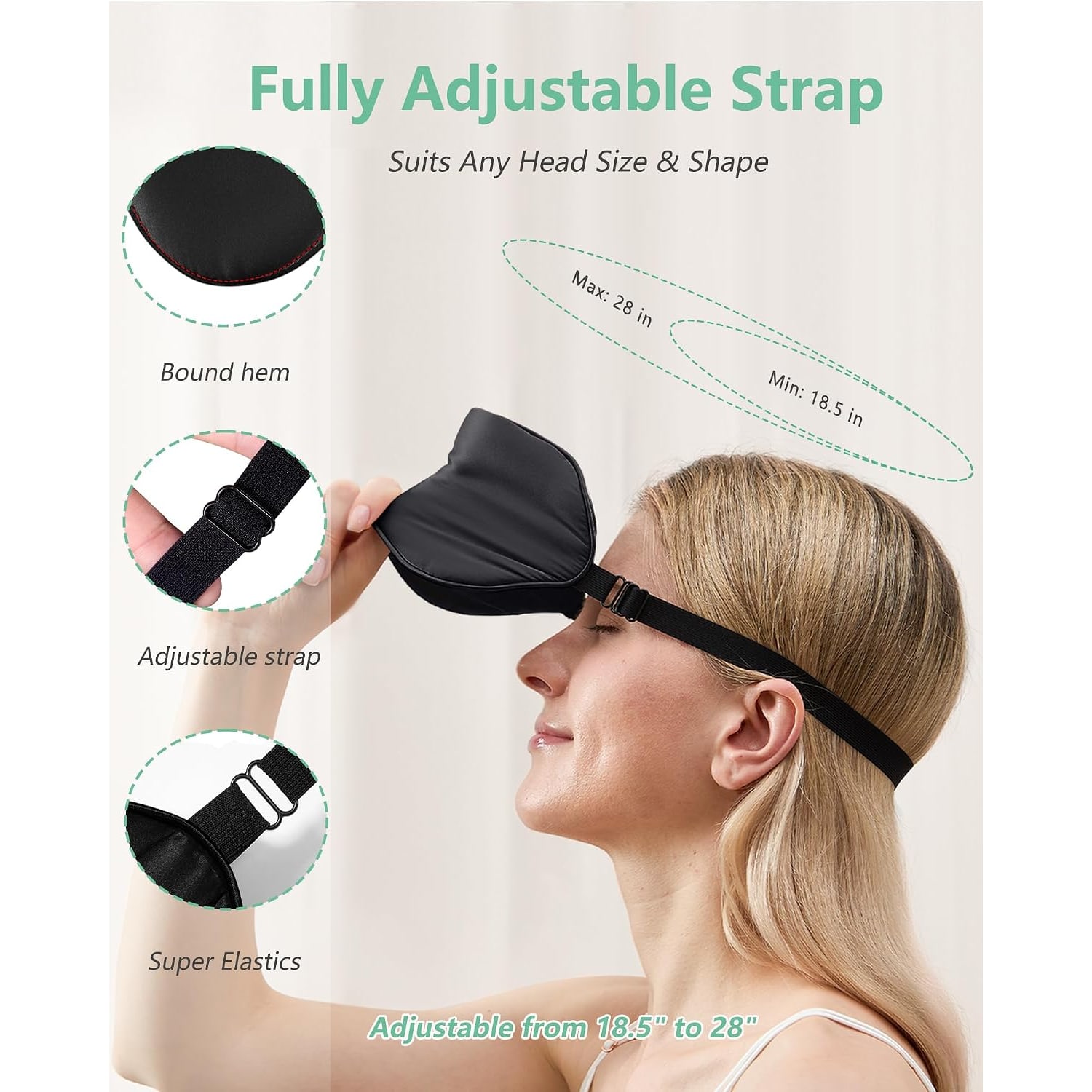
Look for two things. One, it should adjust. Head sizes vary a lot, and a fixed-length strap is a gamble. Two, it should be flat rather than a thin cord. A thin cord concentrates pressure into a narrow line, which is what creates that dent across the temple that some people wake up with.
This set uses a flat elastic strap with an adjuster, so you set the tension yourself. Spend a minute on it the first night. The right setting is the one where you can shake your head gently and the mask does not shift, but you cannot feel the strap pressing. That sounds fussy, but it is a one-time job and it is the main reason people either love a mask or abandon it.
If you have long hair, run the strap below the bulk of it rather than over the top, otherwise it rides up as your hair settles.
Who this suits
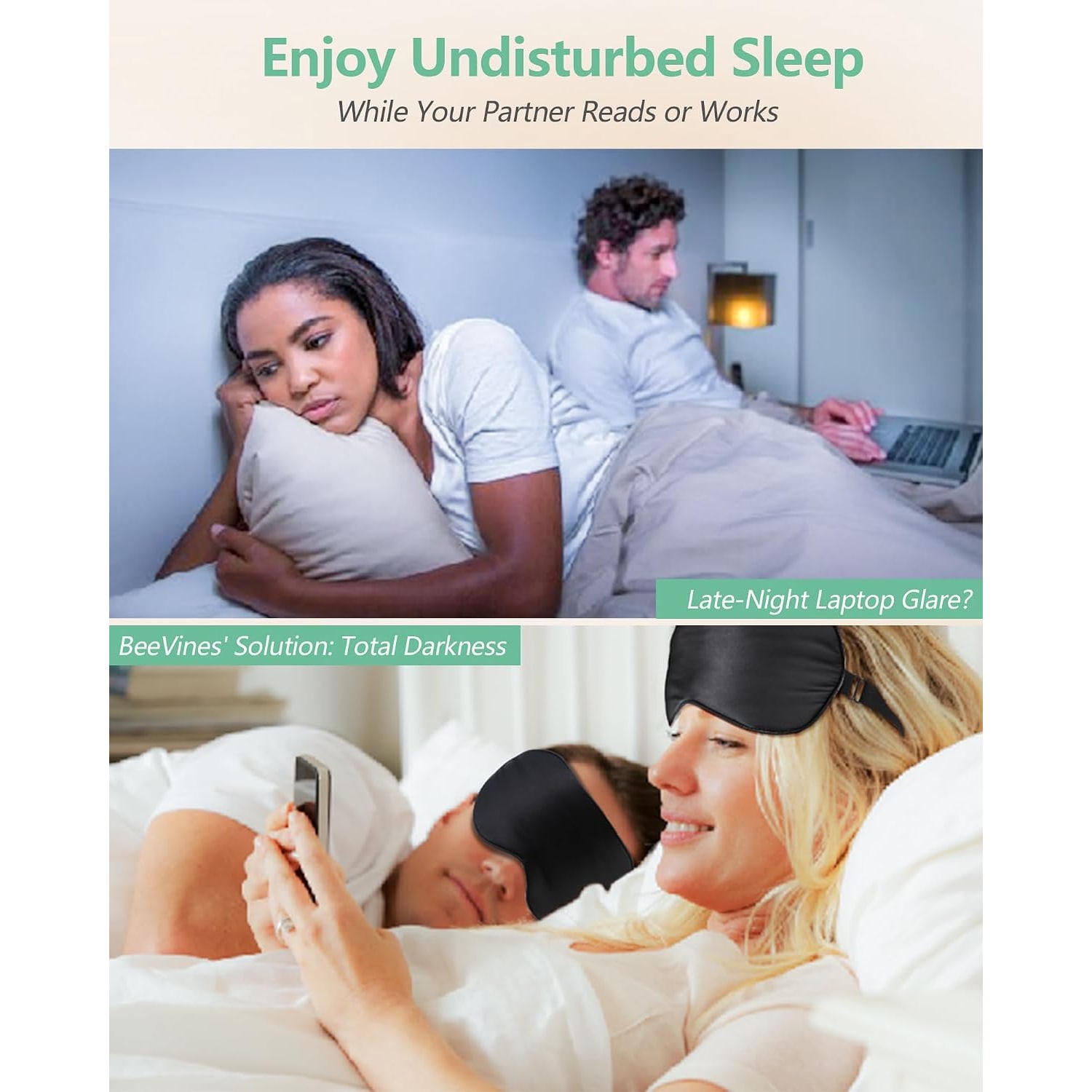
Light sleepers with imperfect curtains are the obvious group. So are people who go to bed at different times than their partner, where one person is reading and the other is trying to switch off.
Travelers are the other big one. A mask is the only blackout option you can realistically carry. It weighs nothing, folds flat, and works on a red-eye flight, a train, or a hotel room where the curtains do not quite meet in the middle. Keeping one mask permanently in your luggage means you never arrive somewhere and realize you left it at home.
Shift workers deserve a mention. Sleeping through daylight is hard, and a mask plus a darkened room is a far better combination than either one alone.
And people who use a short rest in the afternoon, or who meditate, often find a mask helps them settle faster simply because there is less to look at.
Why two masks is the practical choice
Owning a single sleep mask creates a small but real gap. The night you wash it, you do not have one. The trip where you pack it, the mask is not at home. The morning you drop it behind the bed, you are hunting for it at midnight.
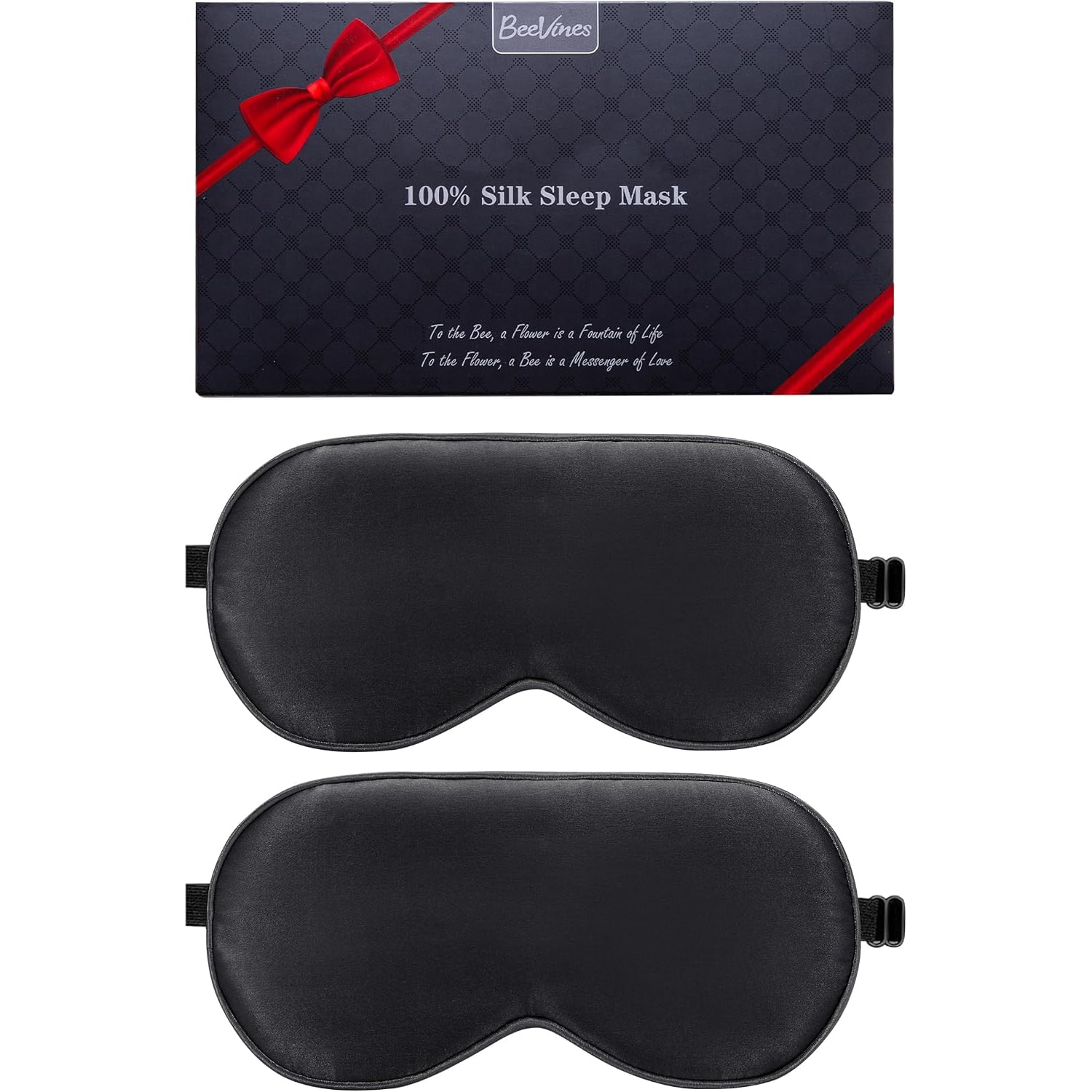
A set of two removes all of that. One stays on the nightstand, the other lives in the bag you travel with. Or one is drying after a wash while the other covers that night. For something you want to use every single night, having a backup is not a luxury, it is just how you make a habit stick.
The fact that both masks here are the same black means there is no second-best one. You are not stuck with the color you did not want.
Looking after them
Silk is not difficult, it is just particular. Wash by hand in cool water with a detergent made for delicate fabrics. Skip bleach entirely. Do not wring it out, because twisting is what damages the fibers. Press the water out between a clean towel instead, then lay the mask flat to dry somewhere out of direct sun.
Hot water is the enemy of elastic, so keep the strap out of it as much as you can. If you need to press the mask, use the lowest silk setting on the iron with a cloth in between, and keep the iron away from the strap.
How often? Every week or two for nightly use is sensible. More often if you wear face products or makeup to bed, since those transfer onto the fabric. This is another place the two pack earns its keep, because one can be drying while the other is in service.
Store them flat or loosely folded rather than crushed into the bottom of a drawer, and they will hold their shape longer.
A few honest limits
A mask blocks light at your eyes. It does not block noise, and it does not help with a room that is too warm. If those are your actual problems, a mask alone will not fix them.
Fit varies with face shape. Deep-set eyes, a high nose bridge, a narrow or very broad face will all interact with the mask slightly differently. That is true of every mask ever made. Give yourself a night or two to adjust the strap before deciding.
We do not quote a momme weight or a country of origin for this set, because the maker does not state them. We would rather leave a gap than fill it with a guess.
The short version
You want silk on both sides, not just the face you can see. You want a contoured cover with depth over the eyes, because shape is what actually blocks light and keeps your lashes free. You want a flat, adjustable strap so you can set the tension yourself and forget about it. And you want a spare, because the night you do not have your mask is the night you remember why you bought one.
This set covers all four. Two black mulberry silk masks, shaped covers, adjustable straps, and a size that disappears into a carry-on. Set the strap on night one, hand wash them gently, and they will do their job quietly for a long time.