
The complete guide
How to Choose a Silk Pillowcase, Simply Explained
The problem with the pillowcase you already own
Most people never think about the case on their pillow. It came with the sheet set, it is cotton, and it gets washed with everything else. That is fine, right up until you notice your hair is a mess in the morning, or you keep waking up because one side of the pillow feels warm and slightly damp.
Cotton is a good fabric, but it has two habits. It grips. Every fiber in a cotton weave has a tiny bit of texture, and when you roll over at two in the morning your hair and skin drag against all of it. And it holds moisture, which is why a cotton case can feel clammy in a warm room.
Silk behaves differently on both counts. The surface is far smoother, so things slide instead of catching. And it feels cool when you first put your face down. That is the whole case for switching, and it is not complicated.
What momme actually means
If you have shopped for silk before, you have seen the word momme and probably skipped past it. It is worth two minutes.
Momme is a weight measurement, specific to silk. The higher the number, the heavier and denser the fabric. Lightweight silk used in scarves might sit around 12 momme. Bedding usually runs between 16 and 25.
This white silk pillowcases standard set of 2 is 19 momme. That number lands in the part of the range most people settle on. Below about 16, silk starts to feel thin and shows wear faster. Above 22, the price climbs steeply and the fabric can feel a little stiff rather than fluid. At 19 you get something with real body that still drapes over a pillow the way silk should.
The listing also gives a 600 thread count. Thread count tells you how many threads sit in a square inch. For cotton it is the headline number. For silk it is secondary, because a very fine thread can produce a high count in a flimsy fabric. When you compare two silk cases, look at momme first and thread count second.
Both sides matter
Here is something that catches a lot of first-time buyers. Plenty of cases sold as silk have a silk face and a cheaper synthetic back. The maker is not necessarily hiding it, but it is easy to miss in a product description.
This set is 100% mulberry silk on both sides. In practical terms that means you can flip your pillow during the night and land on the same surface. It also means the case washes evenly, since two different fibers shrink and dry at different rates.
Mulberry silk, by the way, just refers to silk from silkworms fed on mulberry leaves. It produces a long, even fiber, which is why it is the standard for good bedding.
Size, and why you should measure first
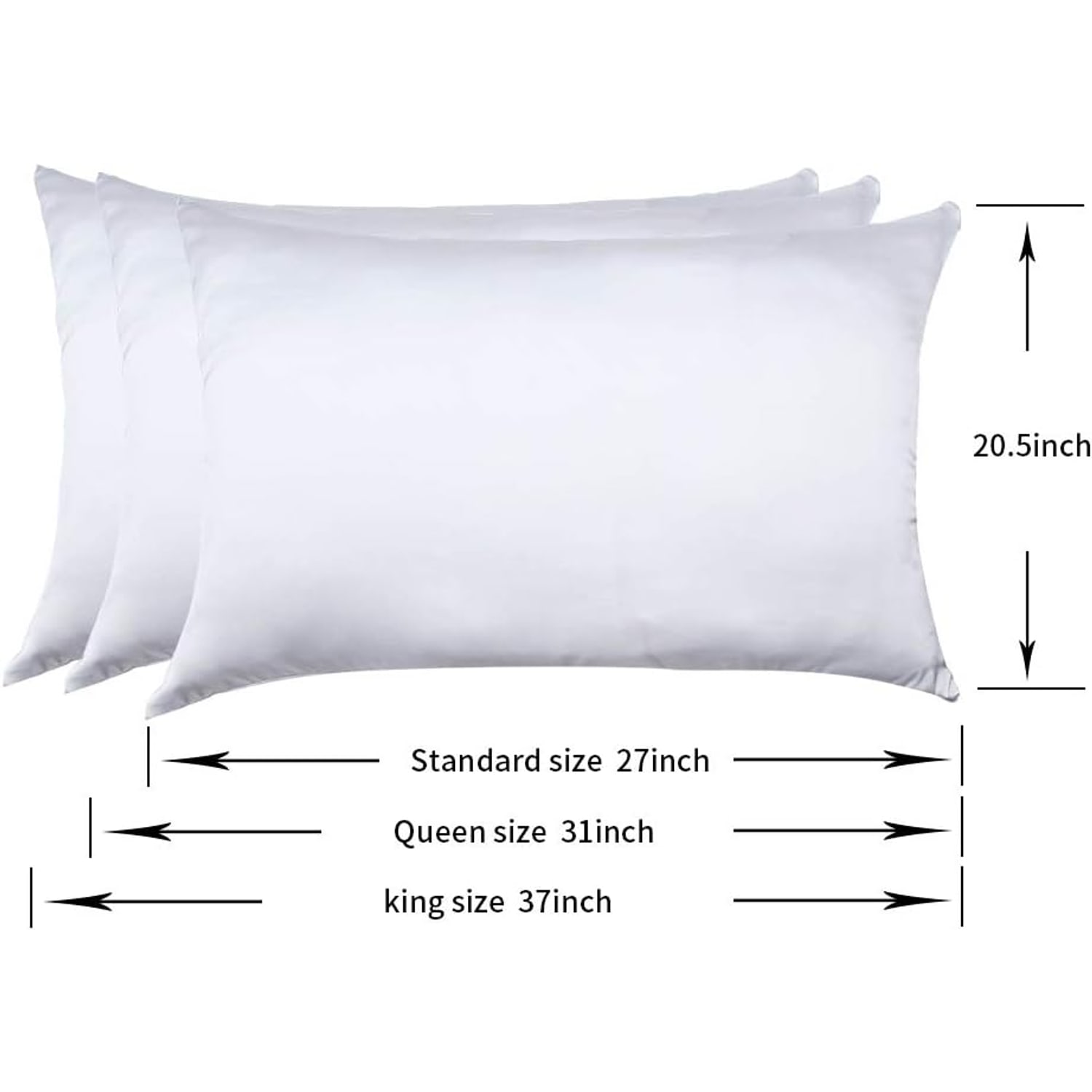
These cases measure 25.98 inches long by 20.08 inches wide. That is cut for a standard US pillow, which is normally 20 by 26 inches.
The other common sizes are queen at 20 by 30 inches and king at 20 by 36 inches. People often assume their pillow matches their mattress. It frequently does not. Plenty of queen beds are made up with two standard pillows.
So before you order, pull the case off your current pillow and lay the pillow flat. Measure it edge to edge. If it comes in around 26 inches long, this standard size silk pillowcase set is the right call. If it is 30 inches, look for queen.
One more thing worth checking is depth. A flat down pillow slips into a case easily. A thick memory foam or contoured pillow takes up much more room, and a case cut for standard dimensions can end up stretched tight. If your pillow is unusually deep, size up.
The closure makes more difference than you think
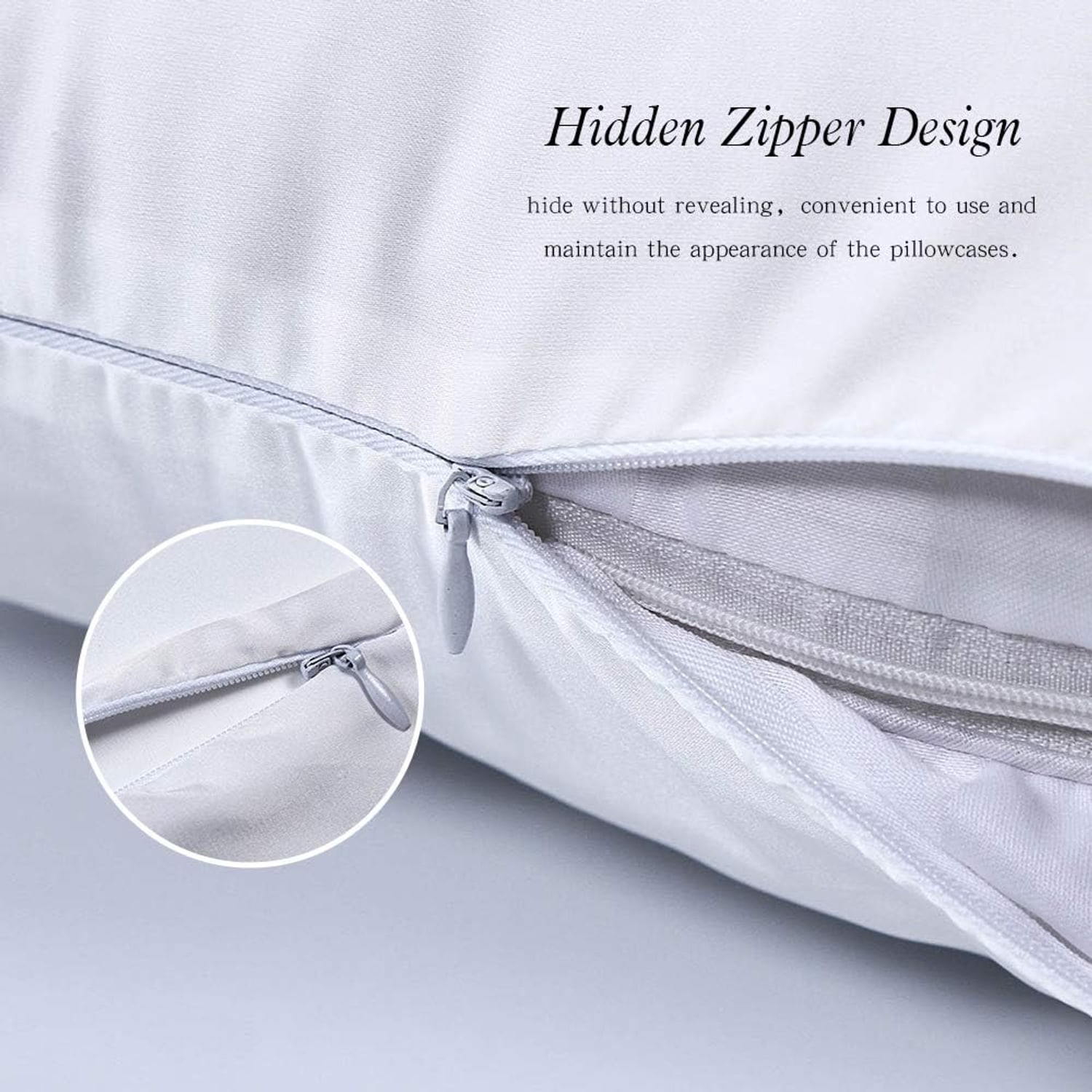
This set uses a hidden zipper. It sounds like a small detail. It is not.
The alternative is an envelope closure, where the fabric folds over itself at one end. Envelope cases are cheaper to make and they work well enough, but pillows tend to creep out of them. You wake up with the case bunched at one end and bare pillow at the other.
A zipper holds everything in place. The pillow stays fully enclosed from the night you put it on until the day you take it off to wash. The zipper here is hidden, sitting along an edge and out of the way, so it does not interrupt the smooth white surface. It also means the case holds its shape better over months of use, since the fabric is not being tugged out of position every night.
Who this suits
If you sleep hot, silk is worth trying. It feels cool on first contact and the listing describes the fabric as breathable.
If you have long hair, the low friction surface is the main draw. Hair slides over silk rather than catching the way it does on cotton. It will not transform your hair, but overnight tangling tends to be less of a fight. Pair it with a loose braid and you will notice the difference most on the second or third morning.
If you simply like how good bedding feels, that is reason enough. A pure silk pillowcase is one of the few upgrades you notice every single night without having to think about it.
If you want something you can throw in the machine on a hot wash with towels, silk is not your fabric. Be honest with yourself about that before buying.
Caring for silk without the fuss
Hand wash only. That is the care instruction given, and it is not an unreasonable one.
The routine is simple. Fill a basin with cool water, add a small amount of detergent made for delicates, and swirl the case through for a few minutes. Do not scrub, do not soak for an hour, and do not use bleach. Rinse in clean cool water.
Getting the water out is where people go wrong. Do not wring or twist. Lay the case flat on a dry towel, roll the towel up, and press. That removes most of the moisture without stressing the fibers.
Then dry flat or hang in a shaded, airy spot. Direct sun will dull the finish and can yellow white silk over time. Skip the dryer entirely, since heat is the quickest way to ruin a good case.
If it needs pressing, use the coolest iron setting and work on the reverse side. Most of the time silk comes out of a gentle wash looking fine without any ironing at all.
Because this is a set of two, you can keep one on the bed while the other dries. That rotation is the easiest way to make hand washing feel manageable rather than a chore.
Why white
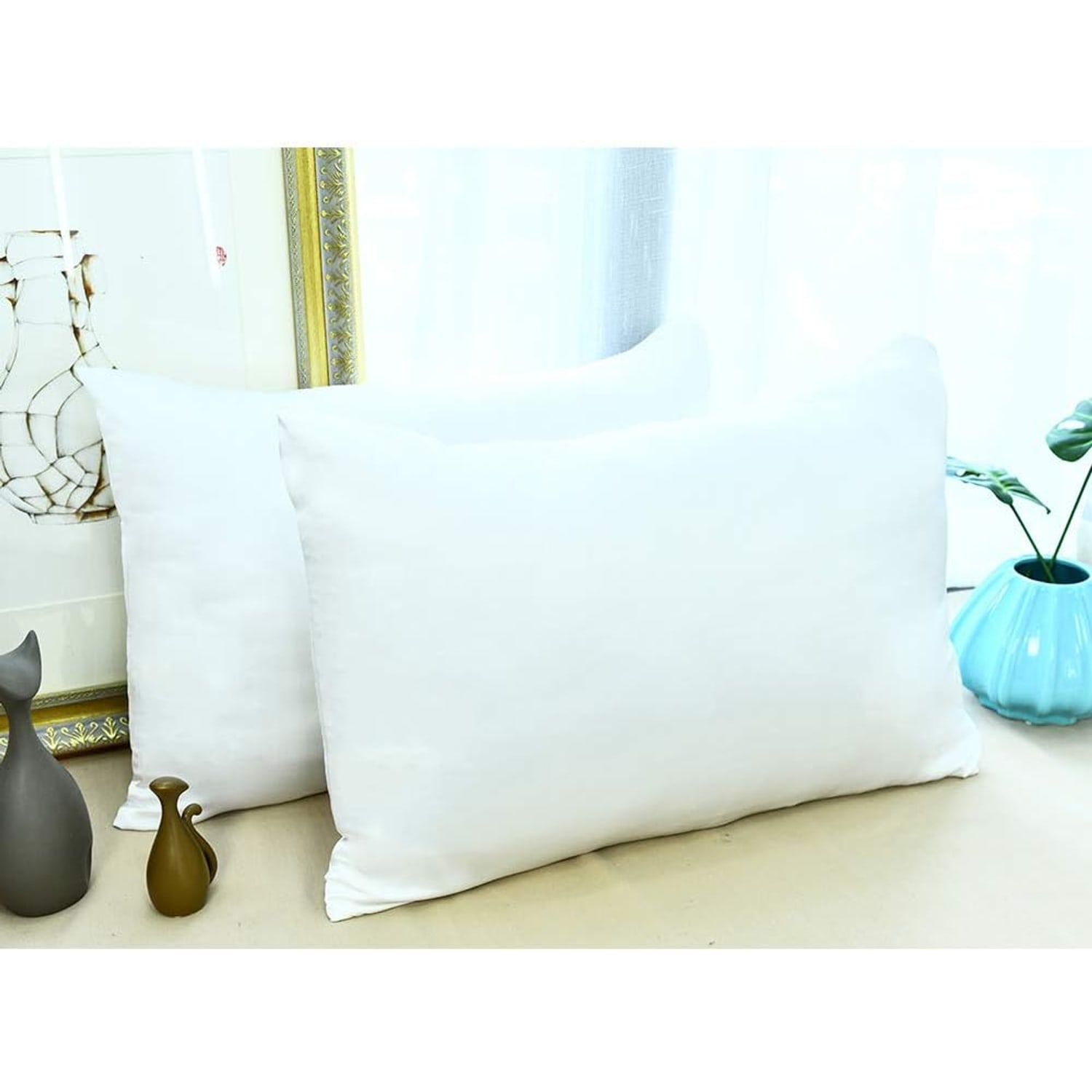
Solid white is the most flexible color in bedding. It sits with linen sheets, with patterned duvets, with a dark wooden headboard or a pale upholstered one. Nothing clashes with it.
It also makes matching simple later. If you add a queen case for the center of the bed or pick up a second pair for a guest room, white is white. You do not need to chase a specific dye lot or a discontinued shade.
The trade-off is that white shows marks. Take off makeup before bed, keep hair oils and heavy night creams in mind, and wash on a regular schedule. Treated sensibly, white silk stays bright for a long time.
The short version
This is a pair of standard size cases in 100% mulberry silk, 19 momme, 600 thread count, closed with a hidden zipper and finished in plain white. Each measures 25.98 by 20.08 inches.
Measure your pillow before ordering. Hand wash in cool water, never tumble dry, and keep it out of direct sun. Do that and you have a mulberry silk pillowcase set that holds up for years rather than months.