
The complete guide
How to Choose and Wear a Large Square Silk Scarf
The problem with most scarves
Most scarves end up in a drawer. They are either too small to do anything interesting with, too heavy for anything but January, or printed in a color that only works with one coat. You buy them with good intentions and then forget them.
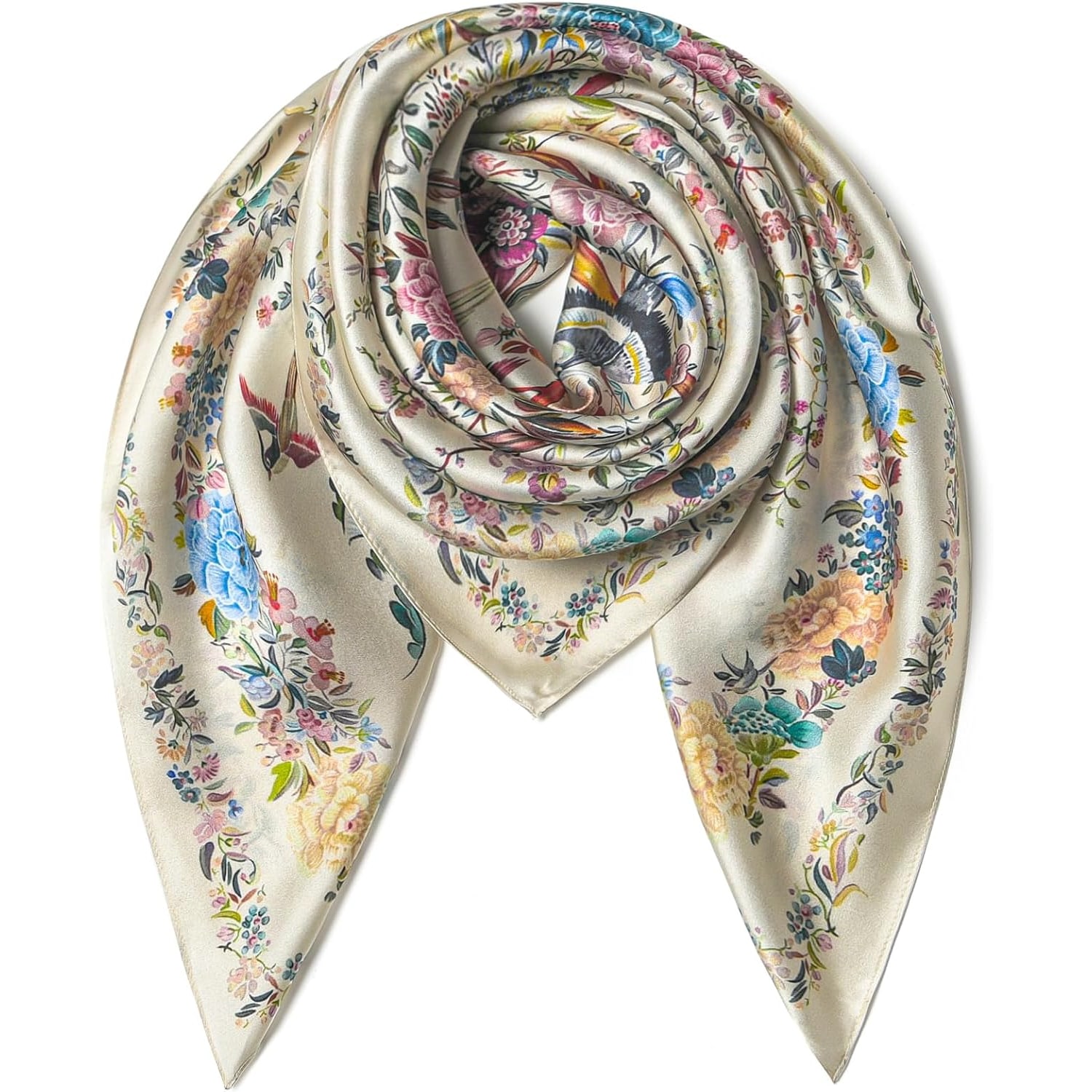
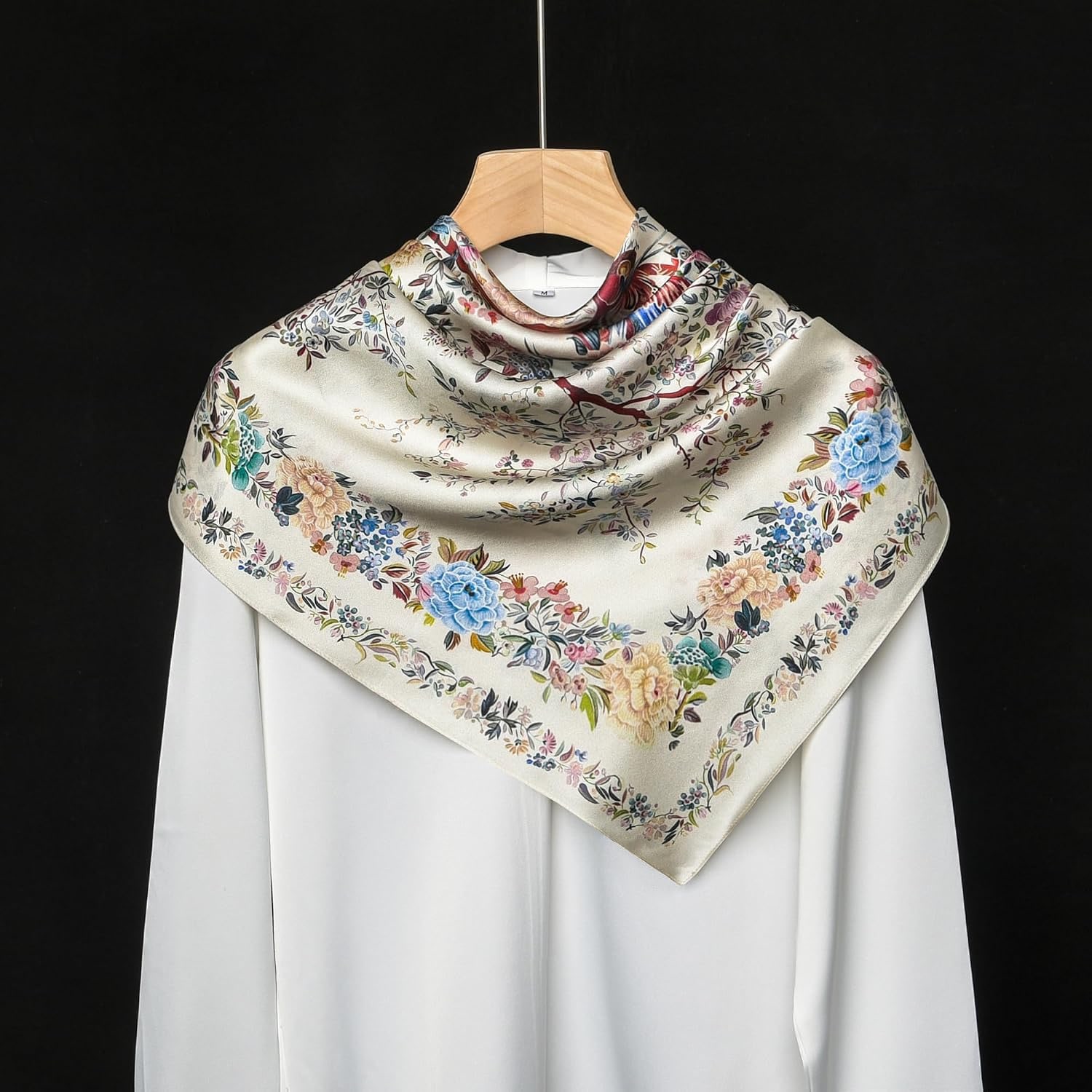
A large square in light silk solves a lot of that in one go. The size means it can genuinely cover your head, not just perch on it. The fiber means you can wear it in July as easily as in October. And a milky white ground sits quietly next to almost anything already hanging in your closet, which is the real test of whether a scarf gets used.
This guide walks through what makes a square silk scarf worth owning, how to pick one, the handful of ways to tie it, and how to keep it looking good for years.
What mulberry silk actually is
Silk is a protein fiber spun by silkworms. Mulberry silk is the type produced by worms fed exclusively on mulberry leaves, and it yields a long, unbroken filament. That length matters. Long filaments can be reeled and woven into a smooth, even cloth with very few joins, which is why mulberry silk has that cool, slippery hand instead of the slightly fuzzy feel of shorter staple fibers.
Two practical results follow. First, the surface is smooth, so hair and skin slide over it with less friction than over cotton. Second, the fiber breathes. Silk does not trap heat the way a tight knit does, so the same scarf can give light sun cover in summer and a thin warm layer in fall.
This scarf is listed as 100% mulberry silk with a print on one side. The maker does not state a momme weight, which is the number silk shops use to describe fabric thickness. What is clear from the construction is that it belongs in the light, fluid end of the range: a scarf you roll and knot, not one you fold into a thick scarf for snow.
Why 35 inches is the sweet spot
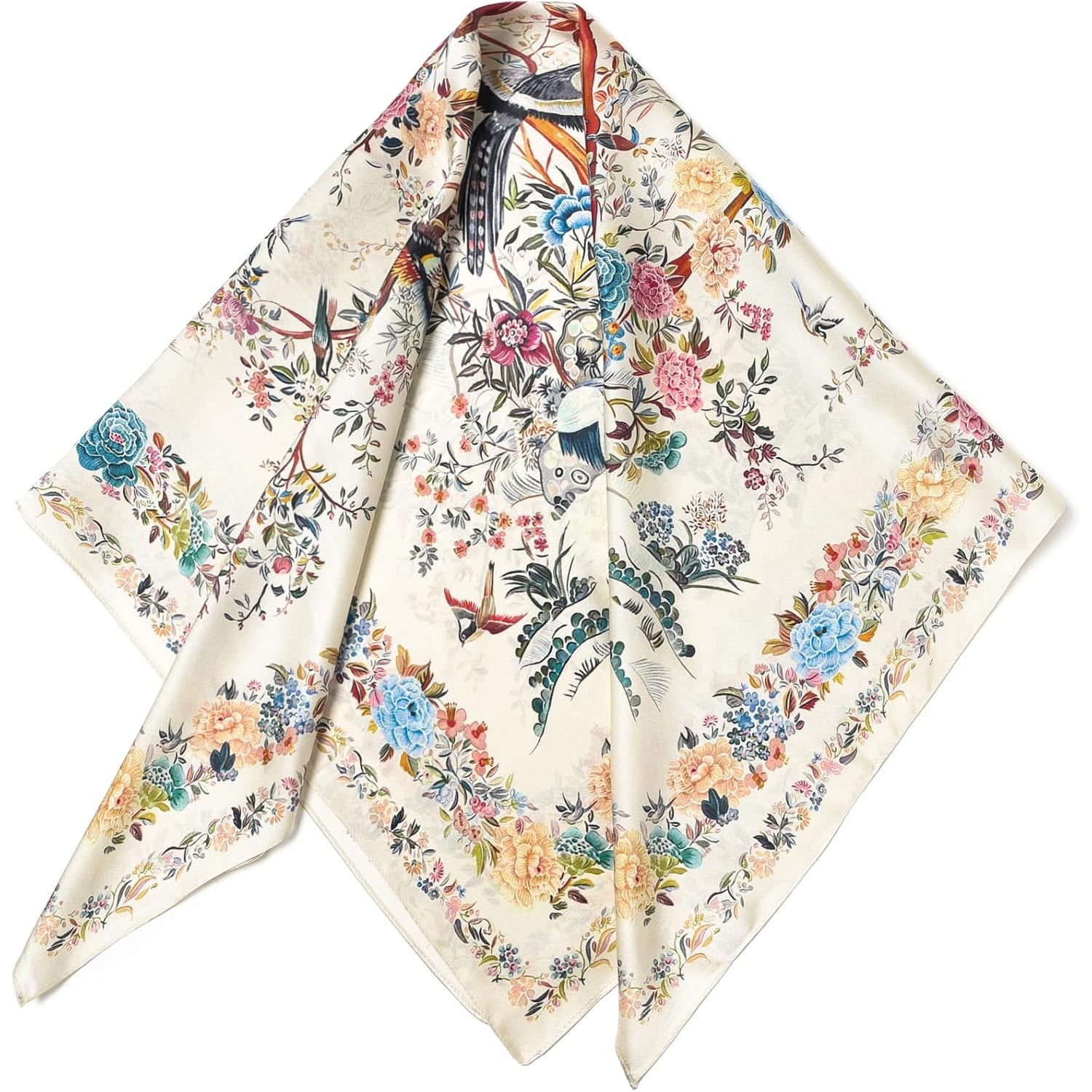
Square silk scarves come in roughly three sizes. Small squares around 21 inches are neck-only. Very large squares, 45 inches and up, become shawls and need a confident wearer. The middle ground, around 35 x 35 inches (88 x 88 cm), is the most versatile.
At that size you can:
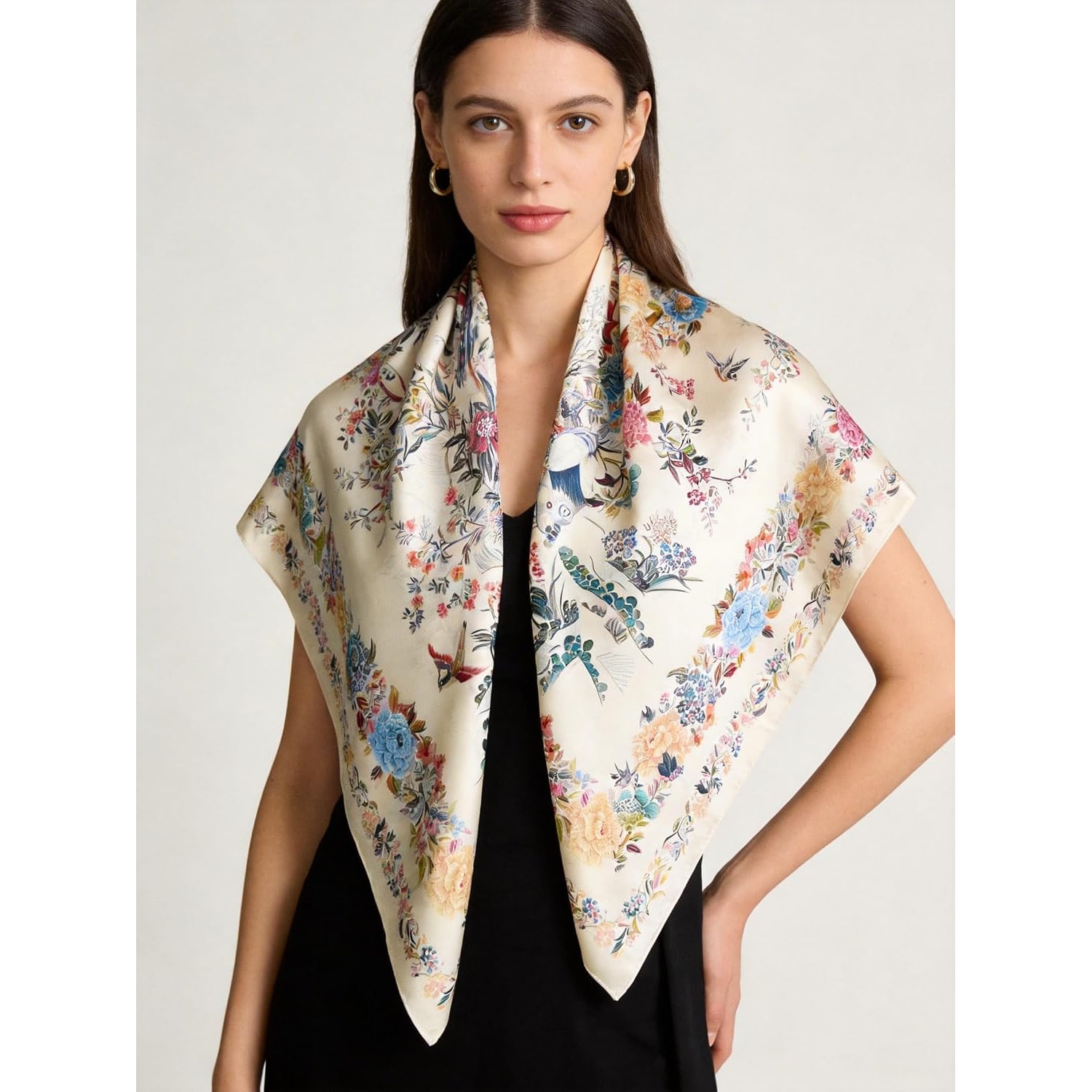
- open it fully and tie under the chin, with enough drape to cover the back of the head
- fold it to a triangle for a bandana or a classic headwrap
- roll it into a long band for a neck knot, a belt or a ponytail wrap
- drape it over the shoulders of a sleeveless dress
A smaller square does only the last two of those, and badly. If you are comparing options and want the best large square silk scarf for everyday use, the 35 inch measurement is the number to look for.
Who it suits
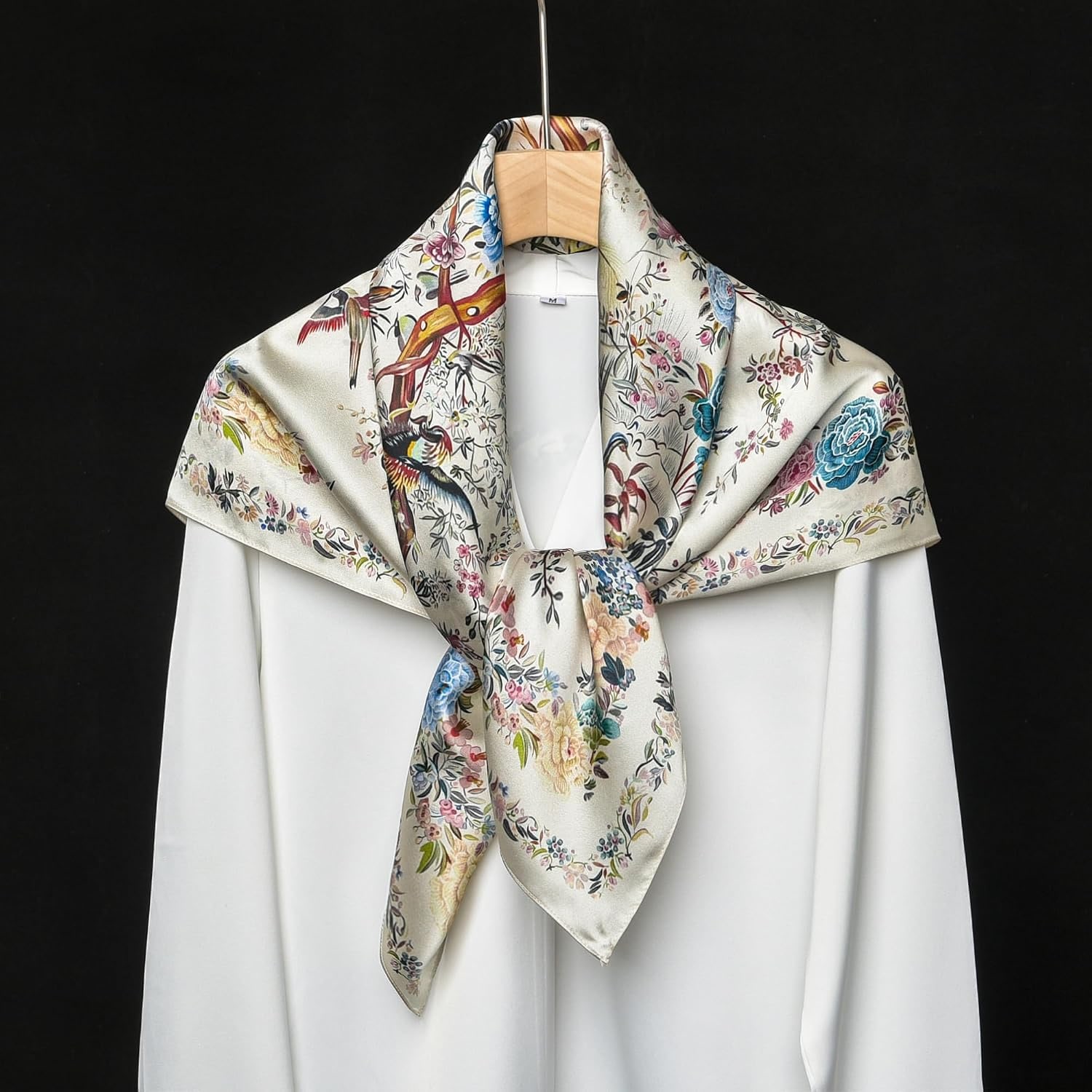
This one is easy to place. It suits someone who wants an accessory that changes an outfit without changing the outfit. A plain white shirt and jeans with a silk square at the neck looks considered. The same shirt and jeans without it looks like a Tuesday.
It also suits people who travel light. A scarf this size folds to the size of a paperback, weighs almost nothing, and covers your head in a church, on a windy ferry, or on a flight where the air conditioning is set to arctic.
If you wear your hair in protective styles or just want less friction at night, a best silk hair scarf in this size gives you enough fabric to wrap properly rather than having to stretch a small square. And if you are shopping for someone else, the boxed presentation and the lack of any sizing decision makes it a low-risk gift.
How to choose between scarves
A few things separate a scarf you wear from one you do not.
Fiber content. Look for 100% silk stated plainly. Blends and polyester imitations can look similar in a photo but feel warmer against the skin and do not drape the same way. This scarf is listed as 100% mulberry silk.
Shape. Squares are more flexible than long rectangles. A square can become a rectangle by rolling, but a rectangle can never become a square. If you are only going to own one, make it square.
Base color. A neutral ground does most of the work in making a print wearable. Milky white sits well next to navy, black, denim, camel and olive. A scarf with a strong colored ground will tie you to a narrower set of outfits.
Print placement. A single-side print keeps the fabric light. If you want the pattern equally strong on both faces you need a double-sided print, which is heavier and usually costs more. For a scarf you knot, the single side is rarely noticed.
Four ways to tie it
Start with two and add more as you get comfortable.
The neck knot. Fold the square into a triangle, then roll from the long edge toward the point until you have a band about two inches wide. Wrap it once around the neck, tie a loose knot slightly off-center, and tug the tails to even them up.
The headwrap. Fold into a triangle, place the long edge across the forehead with the point hanging at the back, bring the two ends behind your head, cross them over the point, and tie at the nape or bring them forward and tie on top. Tuck the point under the band.
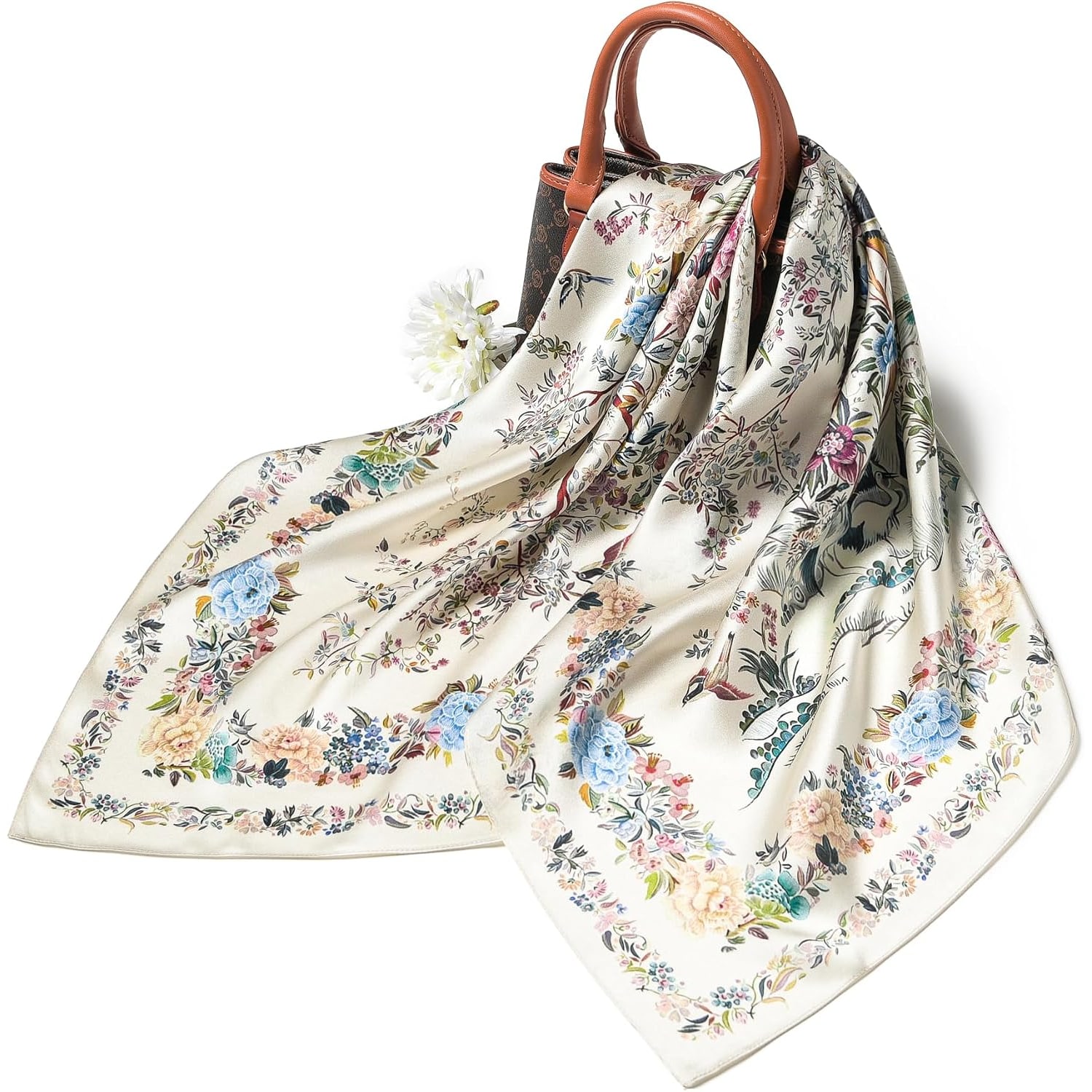
The bag tie. Roll the scarf thin, loop it once around the handle near the base, and tie a small bow. Keep the knot clear of metal hardware.
The belt. Roll lengthwise, thread through the loops, and knot at the front or side. Over a shirt dress with no loops, just tie at the natural waist and let the tails fall.
Looking after it
Hand wash only, and it takes less time than you think. Fill a basin with cool water, add a small amount of detergent made for delicates, and swish the scarf for a minute or two. Do not soak it for long and do not scrub. Rinse in clean cool water until no suds remain.
Never wring silk. Lay it flat on a towel, roll the towel up, and press. Then dry flat or hang in shade. Direct sun fades printed silk faster than almost anything else.
If it needs pressing, use the lowest heat, work on the reverse, and put a thin cotton cloth between the iron and the silk. A slightly damp scarf presses better than a bone-dry one.
Store it folded loosely or rolled, in the gift box or a drawer. Keep it away from rough jewelry clasps, velcro and anything with a hook. If you get a pull, do not cut it. Ease the thread back through to the reverse with a blunt needle and smooth the area flat.
One more note on color. Printed silk can give up a little surface dye the first time it is washed. Wash it on its own in cool water that first time and dry it promptly, and you will not have a problem after that.
The short version
A 35 inch square in 100% mulberry silk is about as useful as an accessory gets. The size covers your head, wraps your hair, belts a dress and dresses up a bag. The fiber breathes in summer and adds a thin layer in fall. The milky white ground means it does not fight with what you already own.
Hand wash it in cool water, keep it out of the sun, and roll it rather than folding it when you pack. It arrives boxed, which makes the gifting decision easy if it is not for you.