
The complete guide
How to Choose a Silk Bonnet That Actually Stays On
The problem with waking up to wrecked hair
You go to bed with your hair looking fine. You wake up with it flattened on one side, frizzed on the other, and a curl pattern that has given up entirely. If you have spent money and time on a wash day, that is genuinely irritating.
The cause is friction. Over six or eight hours you turn, shift and press your head into the pillow dozens of times. Cotton bedding has texture. Cotton fibers have grip. Every one of those movements drags hair across that surface, roughs up the outer layer of each strand, and pulls at the shape of a curl. Do that nightly and you notice it.
A bonnet is the simple fix. It puts a smooth surface between your hair and everything else. The catch is that most bonnets fall off before morning, or they are made of thin synthetic satin that goes shiny and limp after a few washes. That is where the specifics start to matter.
What momme actually tells you
Silk is sold by momme, written as mm but pronounced "mummy". It is a weight measurement. A higher number means more silk per square yard, which means a denser, heavier fabric.
For context, very light silk for scarves sits around 12 to 16 momme. Sleepwear and pillowcases usually land between 19 and 25. This bonnet is 22 momme, which puts it comfortably in the substantial range.
What does that feel like in the hand? Heavier silk has a bit of weight to it. It falls into soft folds instead of floating. The sheen is muted and deep rather than glassy. And practically speaking, denser fabric takes more washes before the fibers start to thin out at stress points.
If you have only ever worn a drugstore satin cap, the difference is obvious the first time you pick one up. There is nothing wrong with lighter silk, but at 22 momme you are buying something built to be used rather than looked at.
Grade, and why 6A keeps coming up
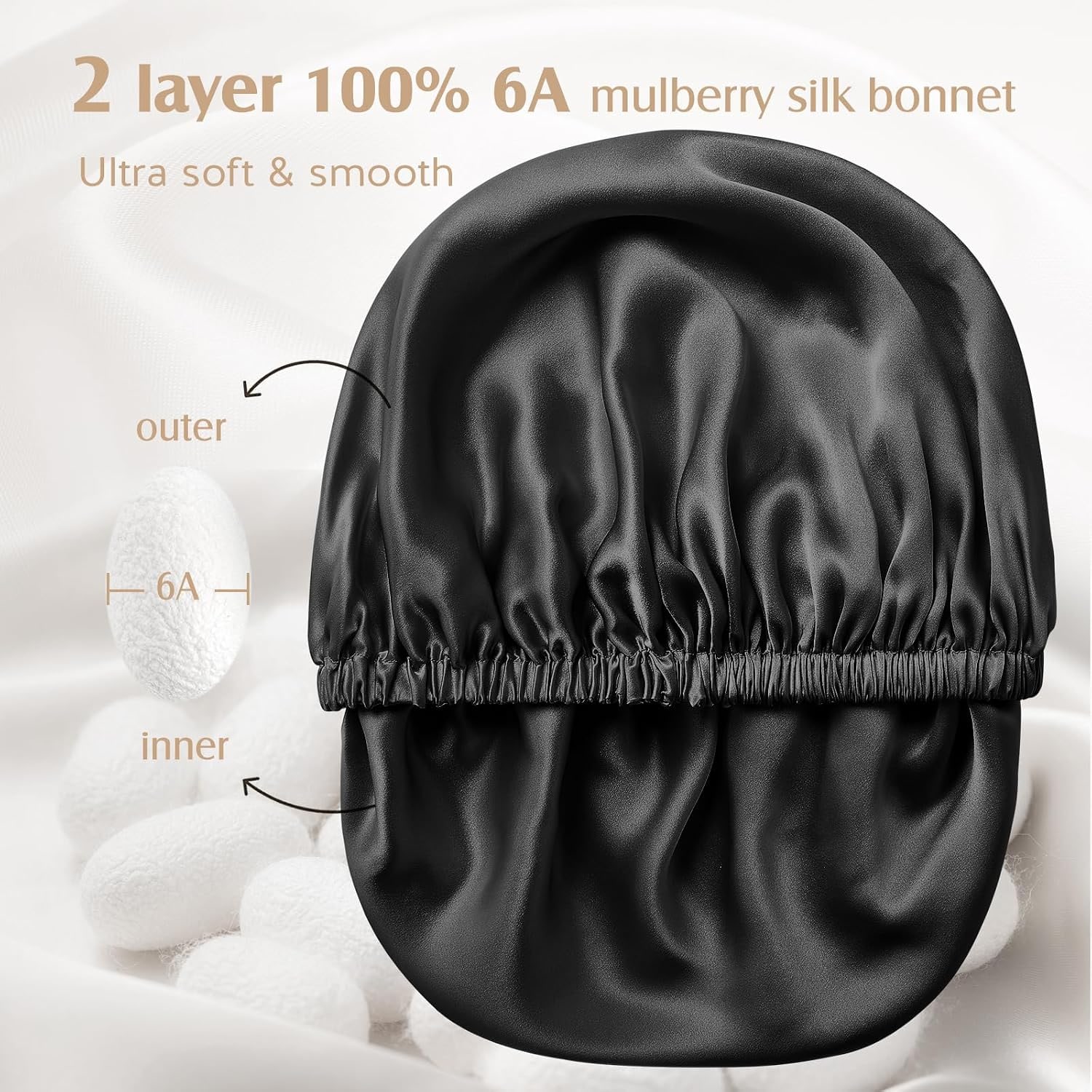
Raw silk is graded before it is woven. The scale runs through A, 2A, 3A and up to 6A, which is the top tier. Grading looks at how long the silk filaments are, how even they are in thickness, and how free of defects.
Longer, more uniform filaments spin into a smoother yarn. Smoother yarn makes a smoother fabric with fewer slubs and a more consistent surface. That is the whole story. It is a description of raw material quality, not a certification from an outside body, so treat it as useful information rather than a seal of approval.
A 6A grade mulberry silk bonnet at 22 momme is, broadly, the specification people land on when they want silk that performs rather than silk that just sounds nice on a label.
The double layer question
A lot of bonnets described as silk are silk on the outside and something else on the inside. That is backwards, since the inside is the part touching your hair.
This one is built from two layers of the same mulberry silk. Inside and outside are identical. That makes it reversible, so you can flip it and your hair still rests against silk either way.
One thing worth knowing up front. When the bonnet is new, those two layers often sit pressed flat against each other, and it genuinely feels like a single piece of fabric. People sometimes assume they have been shortchanged. Hold the edge and knead the fabric gently between your fingers, working around the opening, and the inner layer separates out. After that it stays easy to pull apart.
The second layer is not only about surface contact. It adds a little structure, so the cap holds its shape over your hair rather than collapsing flat against your scalp.
Fit is what makes or breaks it
Here is the honest truth about sleep caps. The fabric does not matter at all if the thing ends up on the floor at two in the morning.
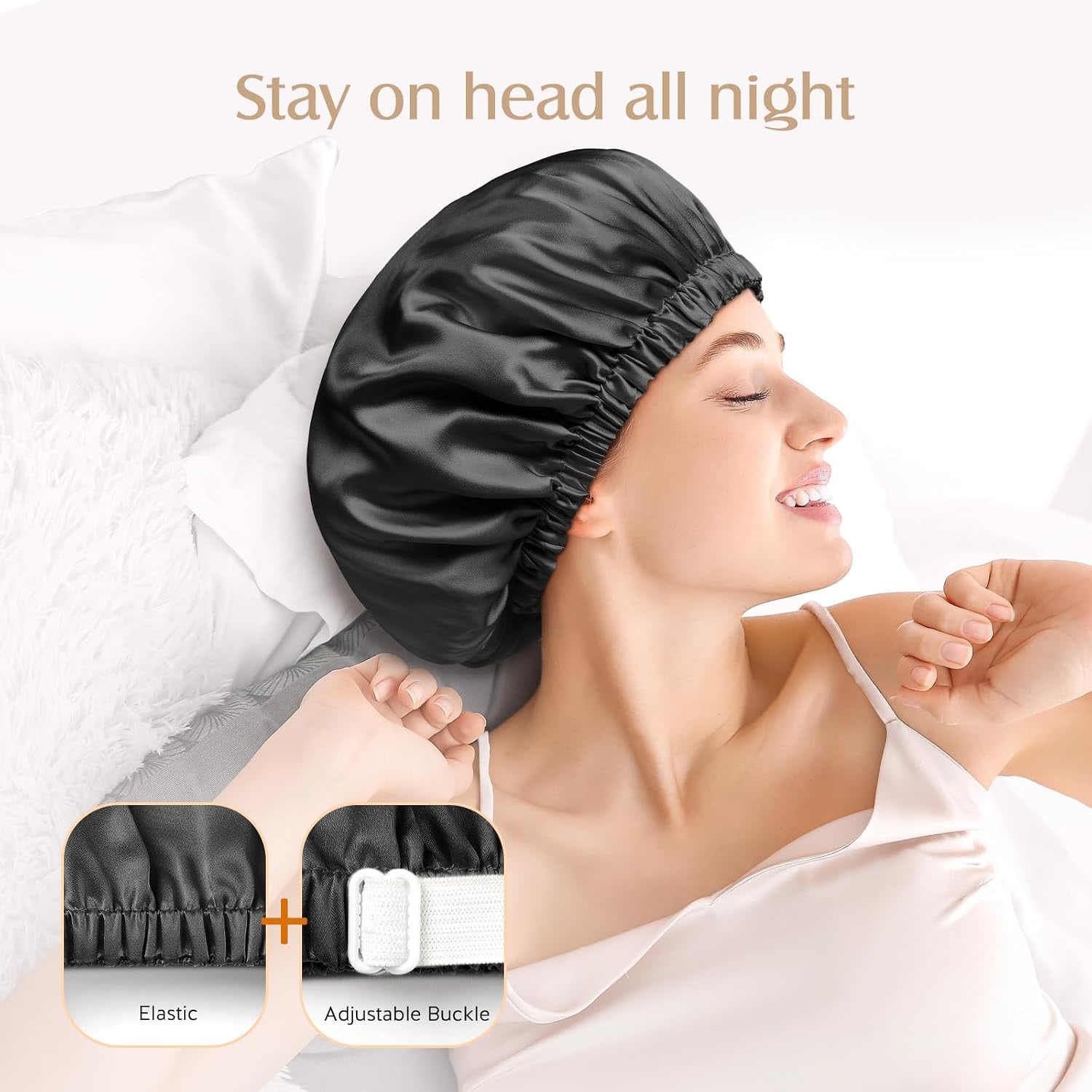
Fixed elastic is the usual culprit. It is either too tight, in which case it leaves a mark and gives you a headache, or too loose, in which case it migrates off your head. Heads vary a lot, and one piece of elastic cannot suit everyone.
This cap uses an elastic band fitted with a sliding buckle. You pull the band through to tighten, ease it out to loosen, and then leave it. You set it once, and from there it is yours.
Finding your setting takes a couple of nights. Start snug enough that the cap does not shift when you shake your head gently, but loose enough that you cannot feel pressure on your forehead. If you wake with a line across your skin, back it off a notch. If you wake with the cap around your neck, take it in.
Size and hair length
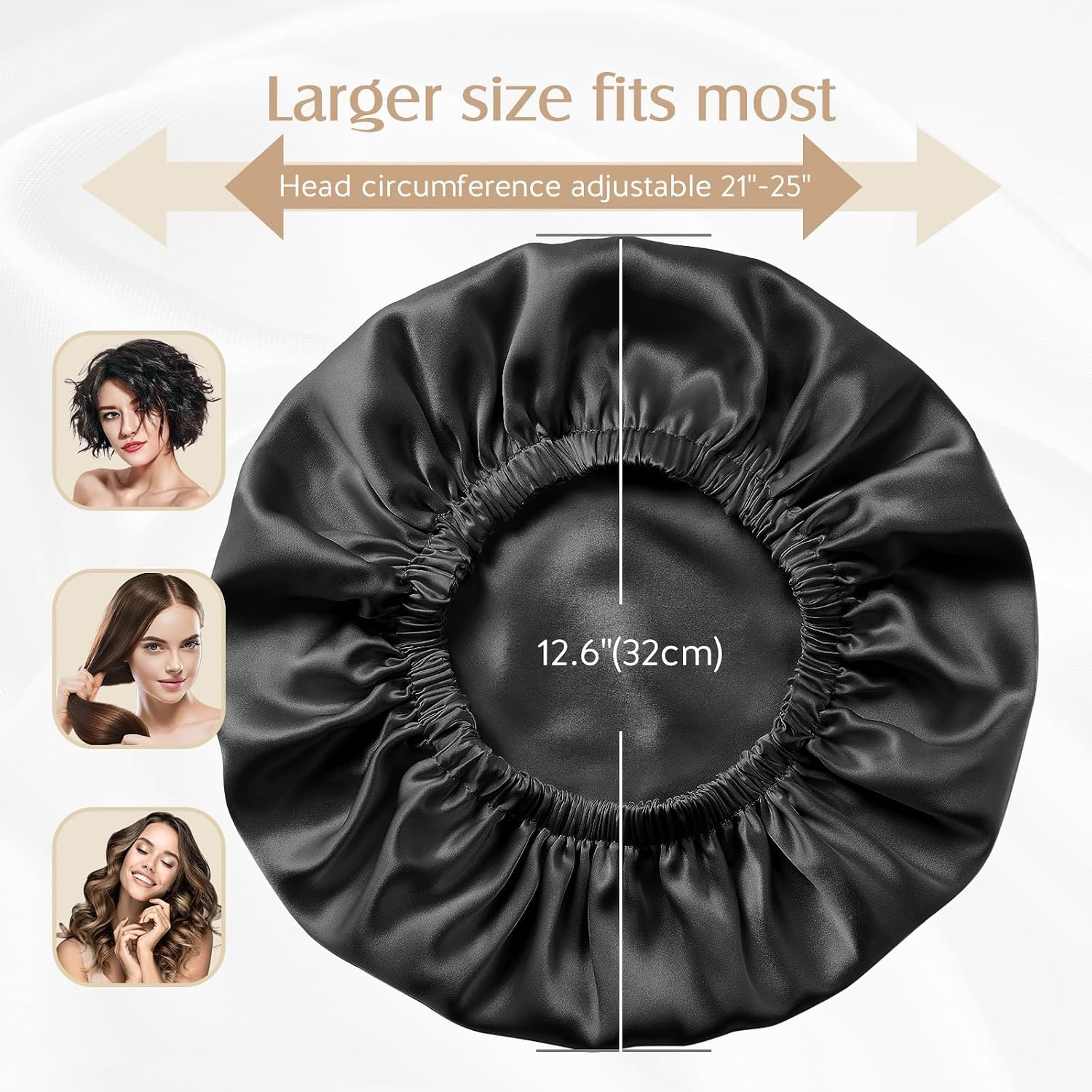
The cap is 12 inches across. That is a standard sort of size for short and medium hair, and it handles most everyday lengths without a struggle.
Long or very thick hair needs a bit of thought. The usual approach is to loosely coil your hair on top of your head, sometimes called pineappling, before putting the cap on. This both fits more hair in and keeps lengths from being crushed. If you have a lot of volume, hold the 12 inch measurement against the bundle of hair you need to tuck up and judge from there. The maker does not publish a stretched maximum circumference, so your own measurement is the better guide.
For braids, locs or protective styles, the same rules apply. Gather, coil, tuck, adjust the band.
Living with silk
Silk is not difficult, it just dislikes three things. Heat, harsh detergent and rough handling.
Hand washing in cool water with a detergent made for silk or delicates is the gold standard. Swirl it, do not scrub it. Never wring it out, since twisting stresses the fibers. Lay it flat in a towel, press the water out, then dry flat or hang it somewhere shaded with decent airflow.
A machine is fine if you are careful. Mesh bag, cold water, delicate cycle, gentle detergent, and absolutely no dryer. Heat is the fastest way to ruin silk.
Wash every week or two for most people. More often if you use rich oils or creams, since those build up in the fibers and dull the fabric. If it needs pressing, use the lowest silk setting with a cloth between the iron and the silk, though hanging it to dry usually sorts out any creases.
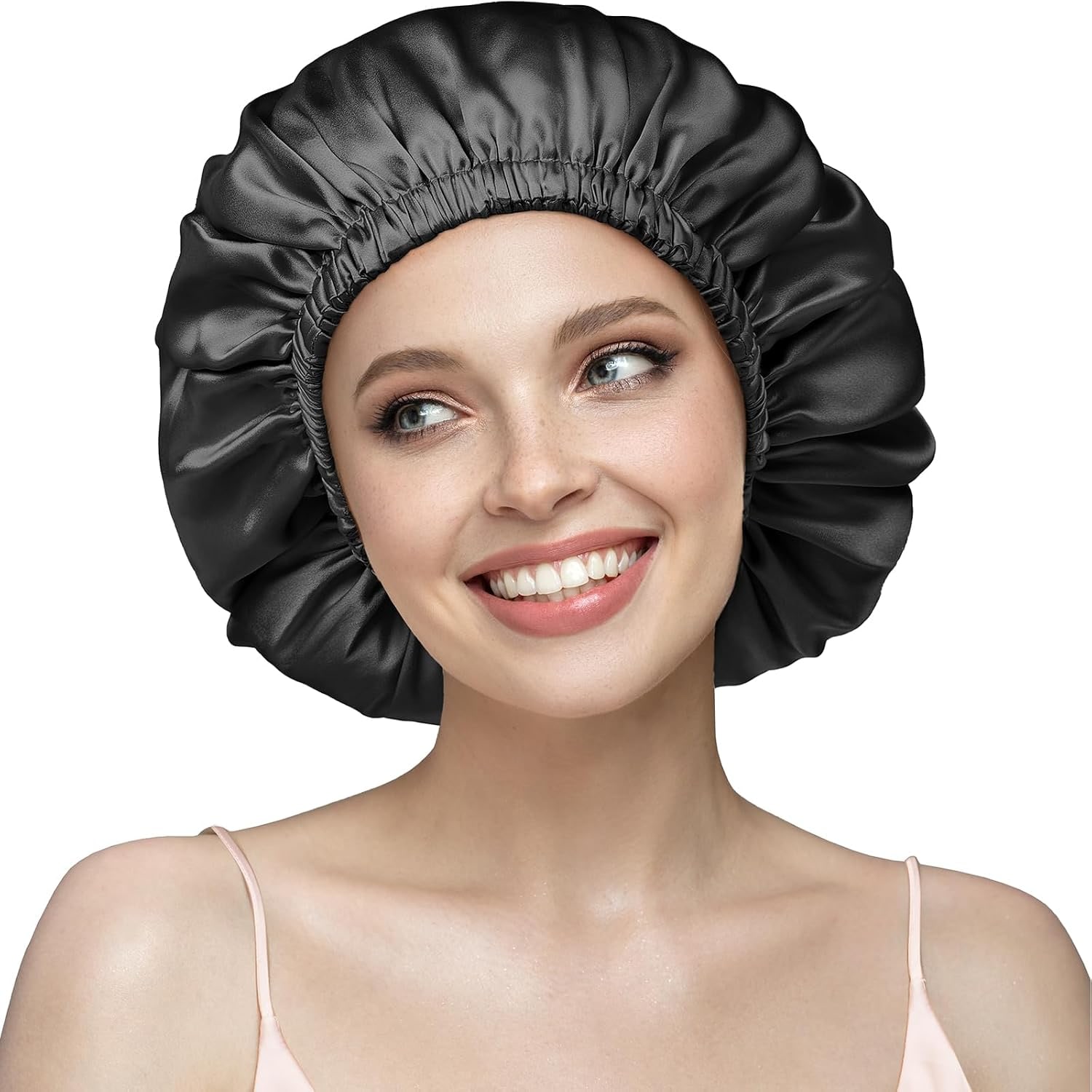
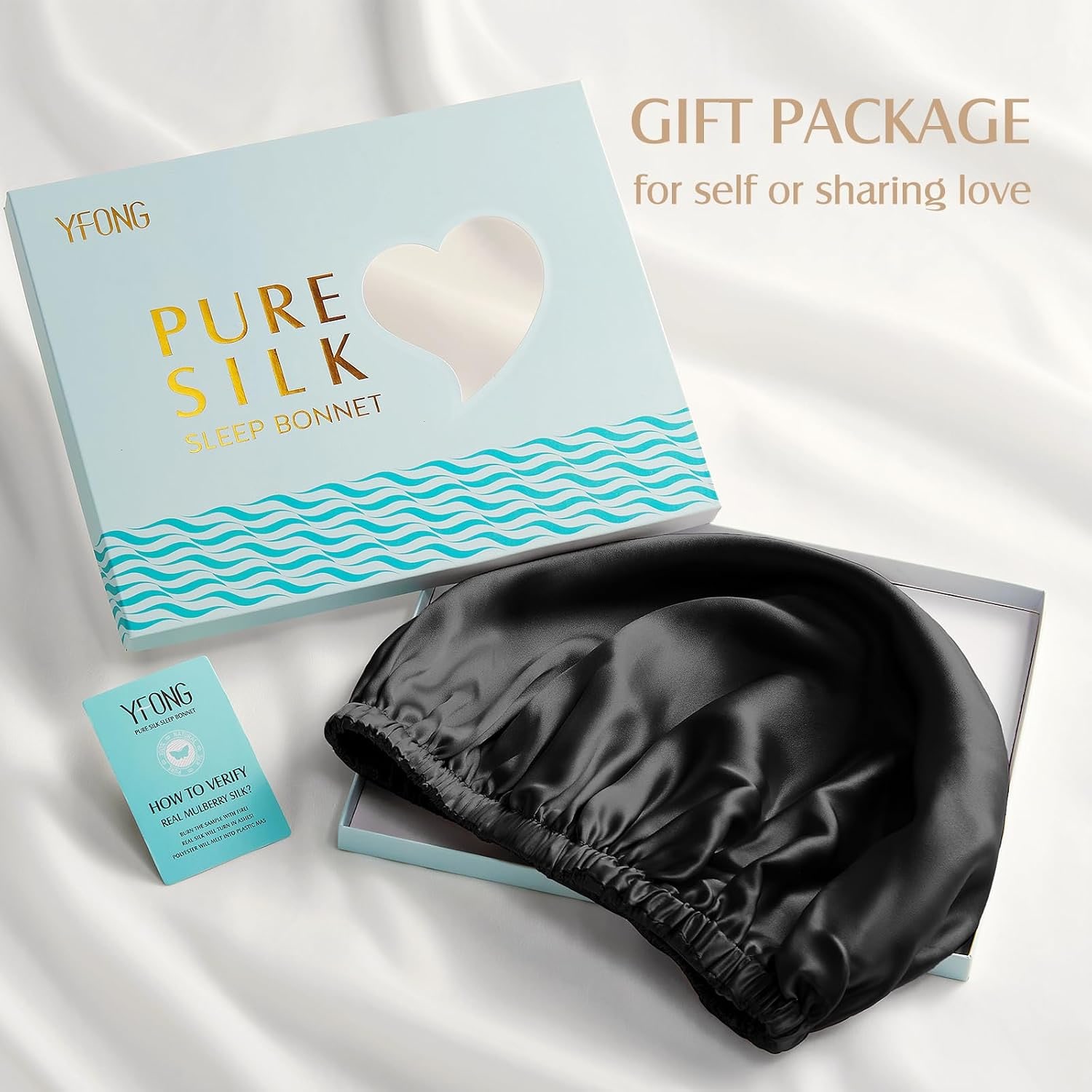
Black silk holds its color well as long as you keep it out of direct sun and away from bleach. The dark shade also hides the small marks of ordinary use, which is part of why a black silk sleep cap is such a practical everyday choice.
Who it suits
Anyone who wants their hair to look the same in the morning as it did at bedtime. That covers curls that lose definition overnight, blowouts you want to stretch an extra day, braids and locs that fray against bedding, and fine hair that tangles easily.
It also suits travelers. At about 5.64 ounces it folds into nothing and goes in a carry-on without taking up space, which is handy when hotel bedding is a mystery.
And because it arrives in a gift box with an adjustable band, it works as a present even when you do not know someone's head size.
The short version
Look for silk, not satin. Check the momme, since 22 sits in the range built to be used rather than babied. Make sure both layers touching your hair are actually silk, not a silk face over a synthetic lining. And above all, buy something adjustable, because the finest silk in the world does nothing for you if the cap is on the pillow instead of your head.
This one covers all four. Hand wash it, keep it out of the dryer, and it should see you through a long stretch of good mornings.