

The complete guide
How to Choose a King Silk Pillowcase, Momme, Weave and Fit
The problem with waking up rearranged
Most people meet their pillowcase for about a third of their lives and never think about it. Then one morning you catch yourself in the mirror with a crease running down one cheek and hair that has gone in four directions, and you start to wonder whether the fabric has something to do with it.
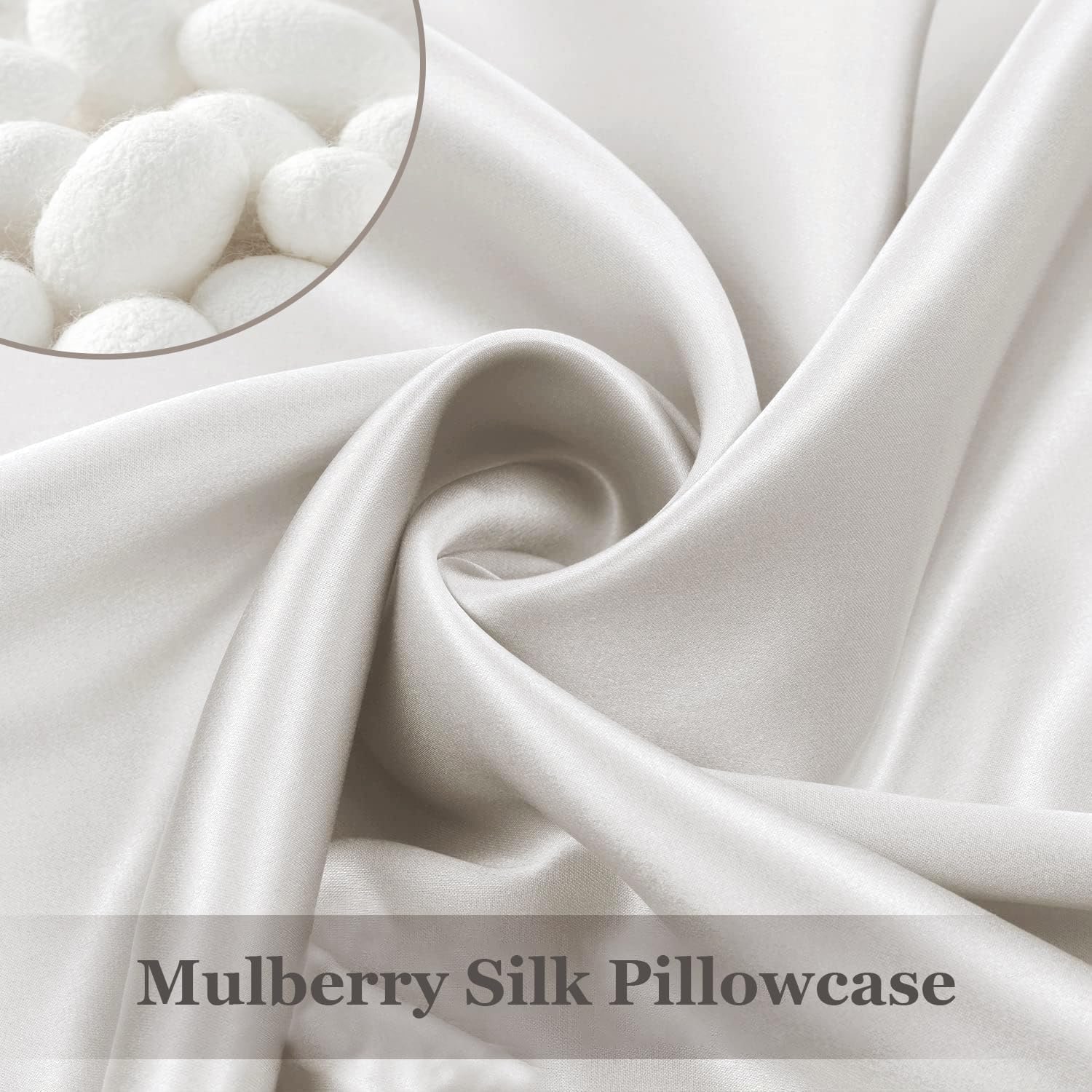
It does, at least mechanically. Cotton is a staple fiber, which means it is spun from short fibers that stick out slightly from the yarn. Multiply that across a whole pillow surface and you get a fabric with grip. Every time you turn your head, that grip pulls a little at hair and presses into skin. Silk is a filament fiber, one long continuous strand, so the woven face is far smoother. Hair and skin slide instead of catching. That is the whole idea, and it is a material fact rather than a promise about how you will look.
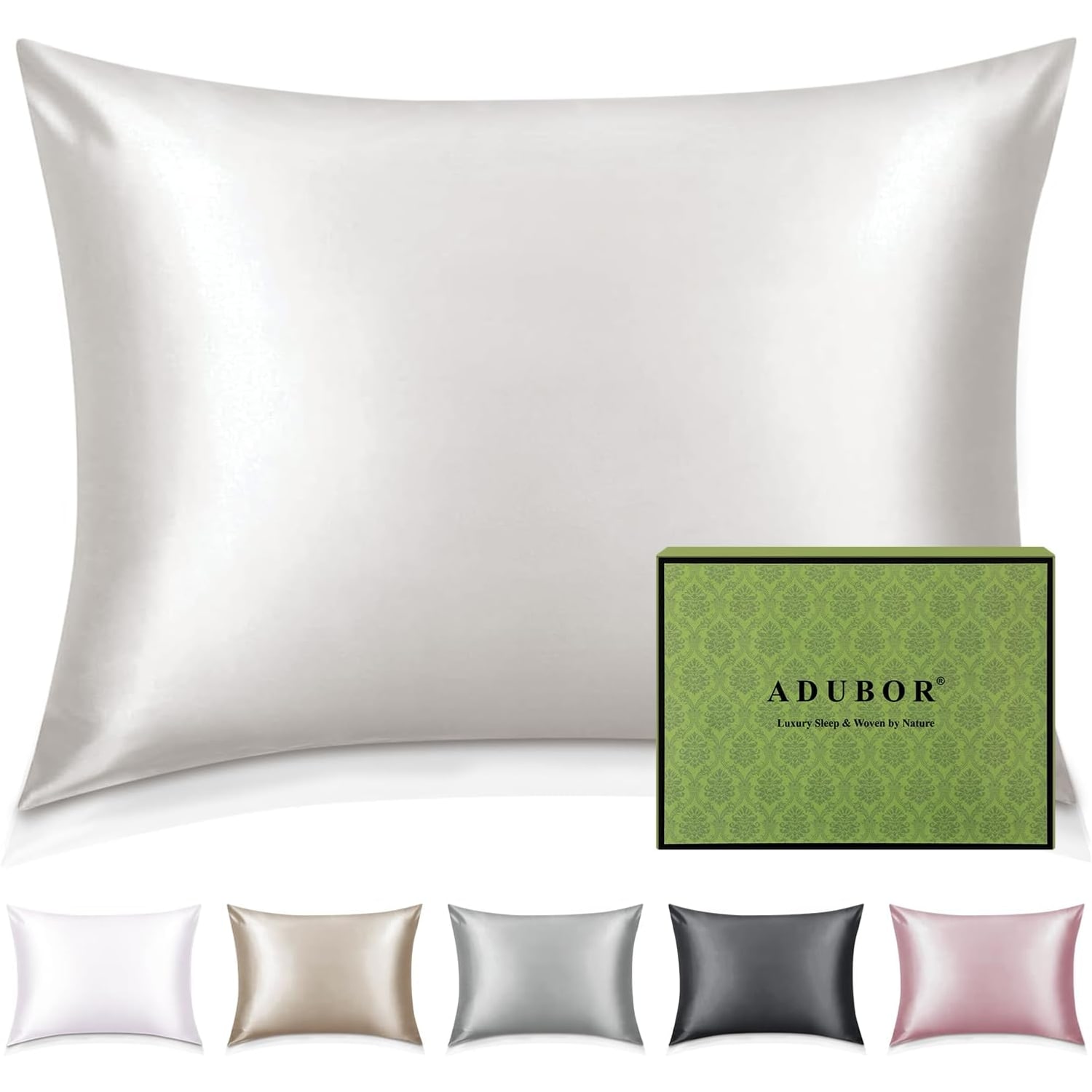
A king mulberry silk pillowcase like this one takes that idea and sizes it for a bigger bed. If you sleep on a 20 x 36 inch pillow, a standard case is a daily annoyance, so getting the size right is the first decision.
What momme actually tells you
If you only learn one piece of silk vocabulary, make it momme. It is the traditional measure of silk weight, written as mm but pronounced "mummy," and it tells you how heavy a given length of fabric is. Higher momme means more silk per square inch.
For bedding, anything below about 16 momme starts to feel thin. It can be lovely to the touch straight out of the packet, but it is more fragile and shows wear sooner. Around 19 to 22 momme is where most quality bedding sits. Above 25 momme you are into fabric that is beautiful but heavy, and it is used more often for garments than pillowcases.
This case is 22 momme. That puts it at the top of the usual bedding range. In the hand it has weight to it, drapes rather than floats, and does not go translucent when you hold it up. In practice, a 22 momme silk pillowcase is a good balance between feeling substantial and staying cool.
Thread count, grade and what to ignore
The listing gives a 900 thread count and a Grade 6A silk. Both are worth understanding, mostly so you know how much weight to give them.
Thread count on silk is a different animal to thread count on cotton. Silk filaments are extremely fine, so you can pack a lot more of them into a square inch. A 900 thread count silk pillowcase sounds enormous compared to a 400 count cotton sheet, but they are not measuring comparable things. Use thread count as a rough indicator of a dense weave, then go back to momme for the real comparison.
Grade 6A refers to the raw silk itself. Silk is graded by the length and evenness of the filament reeled from the cocoon, and 6A is the top sorting grade commonly used for bedding. Longer, more uniform filaments make a smoother fabric with fewer visible flaws. It is a trade grade, not a third-party certification, so treat it as a description of the raw material rather than an audit.
Why both sides matter
Here is a detail that separates a good case from a cheap one. A lot of silk pillowcases are silk on the face and cotton or polyester on the back. The maker saves money, the photo still looks right, and the label can still say silk.
The trouble shows up at two in the morning when you flip the pillow. Suddenly you are on cotton again. A both sides silk pillowcase avoids that entirely. This one is silk on both faces, so it does not matter which way the pillow lands.
There is a second benefit, which is wear. If only one side gets used, that side thins out while the other stays new. With silk on both sides you can rotate the case the way you would rotate a mattress and spread the wear over a longer life.
Getting the size right
US pillow sizes run standard at 20 x 26 inches, queen at 20 x 30 inches and king at 20 x 36 inches. This is a king, listed at 20 x 36 inches, with a flat measurement of 31.5 inches long by 15.75 inches wide. Flat measurements always read smaller than the finished fit because the fabric stretches over a filled pillow.
Before you order, take a tape measure to your actual pillow rather than trusting what the packet said when you bought it. Pillows compress over the years, and a pillow sold as king can measure closer to queen after a few seasons. If yours is genuinely 36 inches long, this is the case you want. If it is shorter, a king case will bunch at the closed end and look baggy.
Depth matters too. A very plump or thick pillow fills a case more completely and can make the zipper feel tight. A flatter pillow leaves room at the sides, which is harmless but looks slightly loose.
Living with the zipper
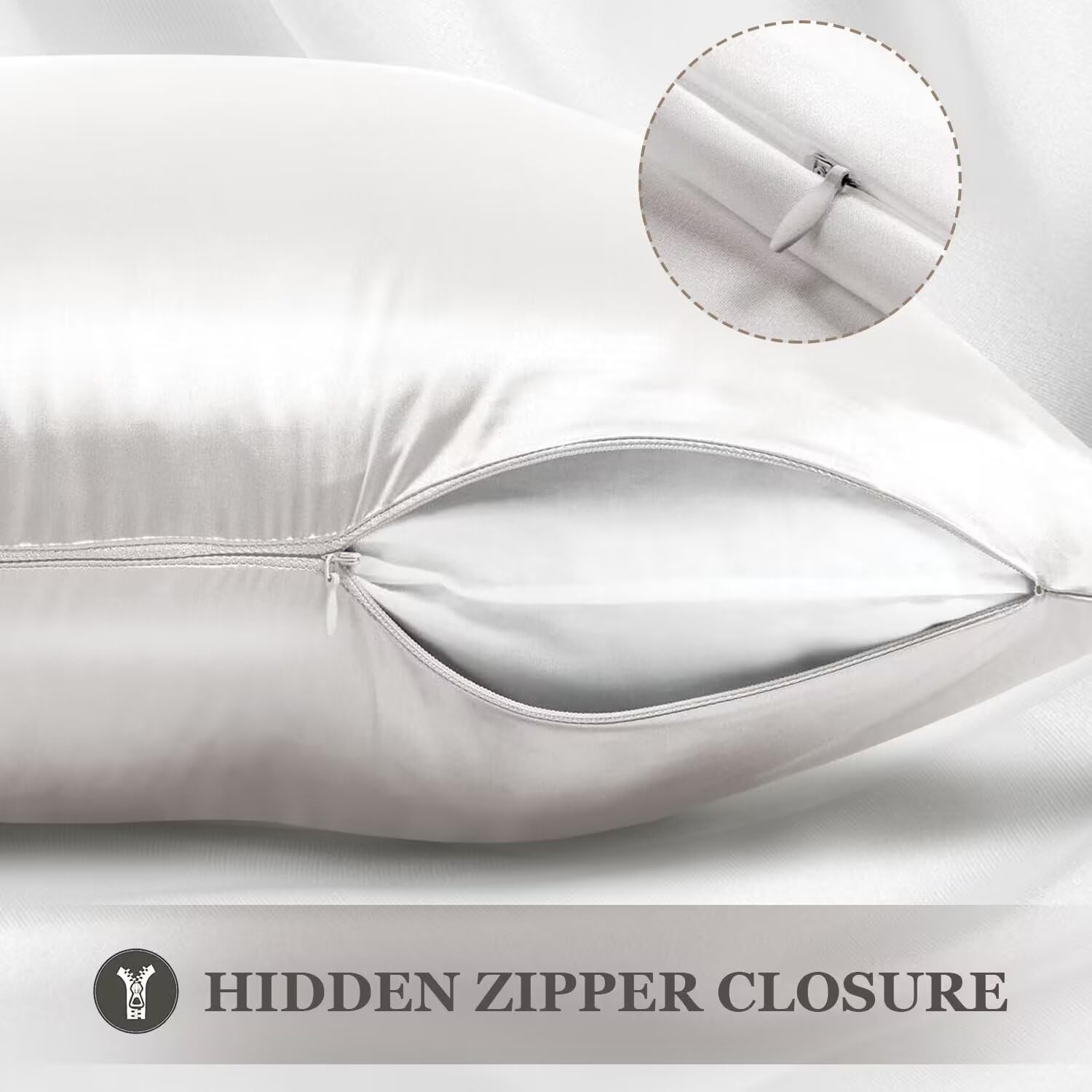
The closure here is a hidden zipper at the end of the case. Compared with an envelope flap, a zipper holds a king pillow more securely, and a king pillow is long enough that a flap tends to creep open as you move.
Two small habits keep a zipper happy on silk. Close it before every wash so the metal teeth cannot catch the fabric in the water. And when you insert the pillow, feed it in squarely rather than forcing a corner, since the stress on a half-open zipper is what bends sliders.
The ivory question
Color is personal, but ivory white is one of the easier choices to live with. It is a warm off-white, not the blue-leaning optic white you get on hotel cotton. Under a bedside lamp it reads as soft cream, which flatters the room more than a hard white does.
It also plays well with other neutrals. Linen, oatmeal, stone, pale gray and natural cotton all sit beside it comfortably. If your bedding is bright white, an ivory silk pillowcase will read as a deliberate layer rather than a mismatch, as long as you are happy with that contrast.
Care, honestly
Silk is not difficult, it is just different. The care instructions here are hand wash only or dry clean, and that is the route to follow.
For hand washing, use cool water and a detergent made for silk or wool. Swirl the case gently rather than scrubbing, rinse until the water runs clear, then press the water out between two towels. Never wring it. Hang or lay it flat to dry somewhere out of direct sun, because sunlight is harder on silk than almost anything else.
Skip the dryer entirely. Heat makes silk brittle over time. If you want to press it, use the lowest iron setting with the case inside out and slightly damp, keeping the iron moving.
Wash every one or two weeks under normal use, more often if you use heavy night creams or hair oils that transfer to the fabric. Two cases in rotation makes this much easier to keep up with, which is why many people buy a pair.
Who this suits
It suits anyone sleeping on a genuine king pillow who wants a smoother surface than cotton. It suits people with long hair who are tired of finding it knotted in the morning. It suits warm sleepers, since a breathable silk pillowcase feels cool to the touch when you lie down.
It also makes a solid gift. It arrives in a gift box, so there is no wrapping to do, and a luxury silk bedding item is the kind of thing people enjoy receiving but rarely buy for themselves.
It is less suited to anyone who wants to throw bedding in a hot machine wash and forget about it. If low-maintenance is your priority above all else, cotton sateen will give you a smoother-than-average face with none of the hand washing.
The short version
This is a king size pillowcase in 100% pure mulberry silk, 22 momme, Grade 6A, woven at a 900 thread count, silk on both sides, in a warm ivory white. It fits a 20 x 36 inch pillow, closes with a hidden zipper at the end, and comes in a gift box.
Check your pillow measurements first, wash it by hand in cool water, keep it out of the dryer and the direct sun, and it will stay smooth for a long time. If it turns out not to be right, send it back unused and unwashed within 14 days of delivery and we will sort it out.