

The complete guide
How to Choose a Silk Sleep Mask That Actually Stays Put
The problem with most sleep masks
Almost everyone who buys a sleep mask buys the same one first. It is a small padded oval with a thin elastic strap, usually sold at an airport. It works for about forty minutes. Then you roll onto your side, the strap bites into the back of your ear, and you wake up at three in the morning pushing it onto your forehead.
The second problem is light. A small mask covers the eyes but not much else. Light gets in two places: along the bottom edge beside the nose, and up around the brow when the mask shifts. If you sleep during the day, or your bedroom faces a streetlight, those two gaps are the difference between resting and lying there annoyed.
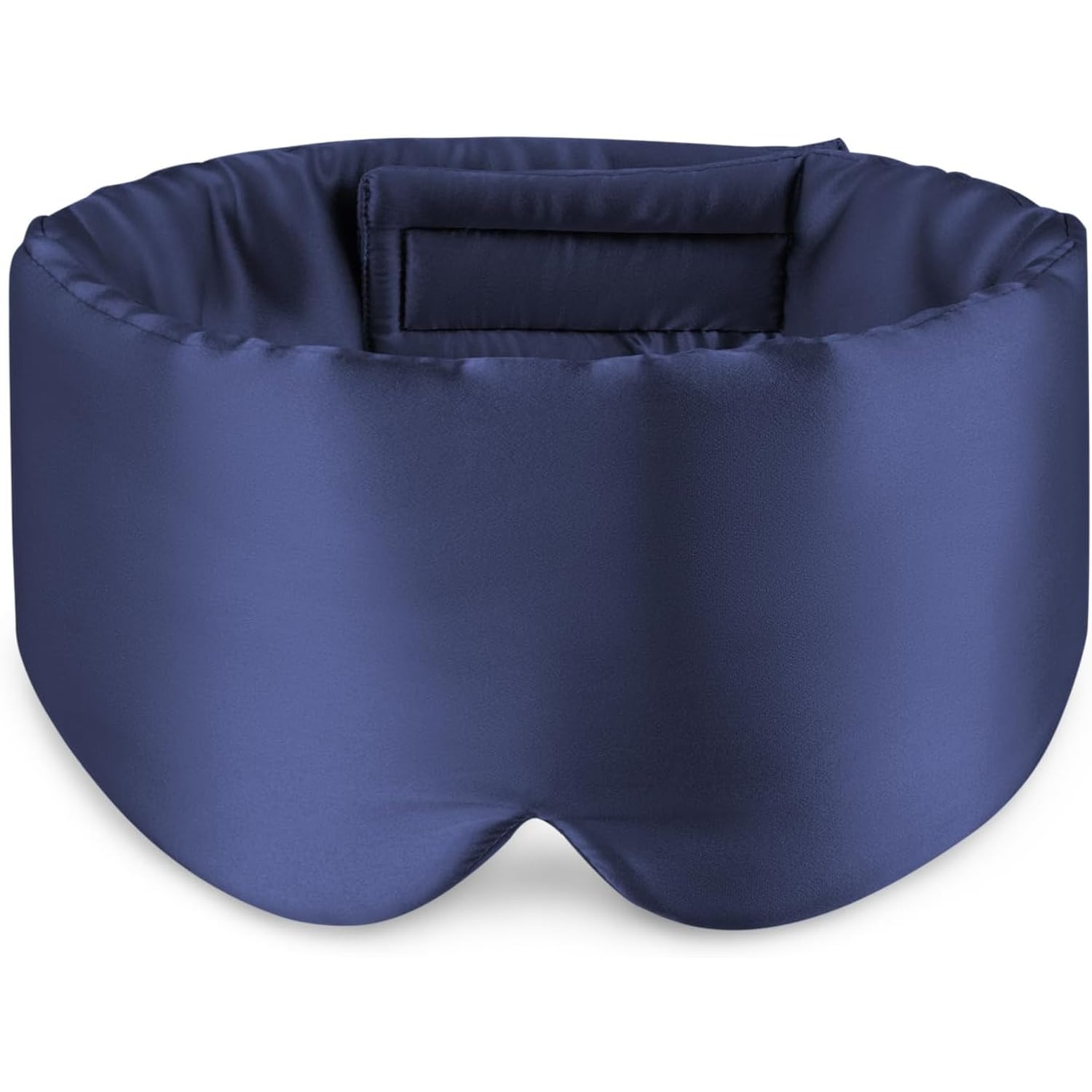
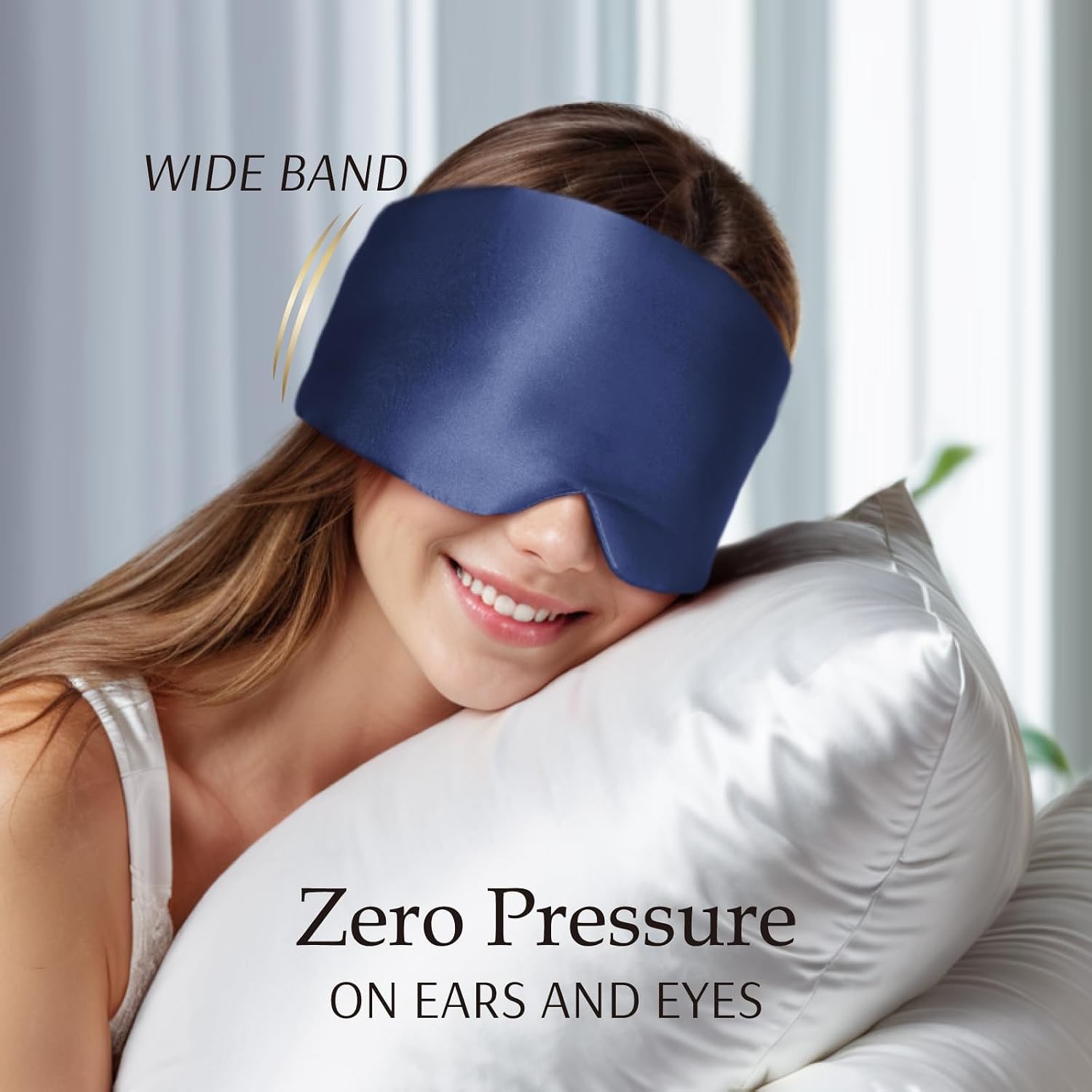
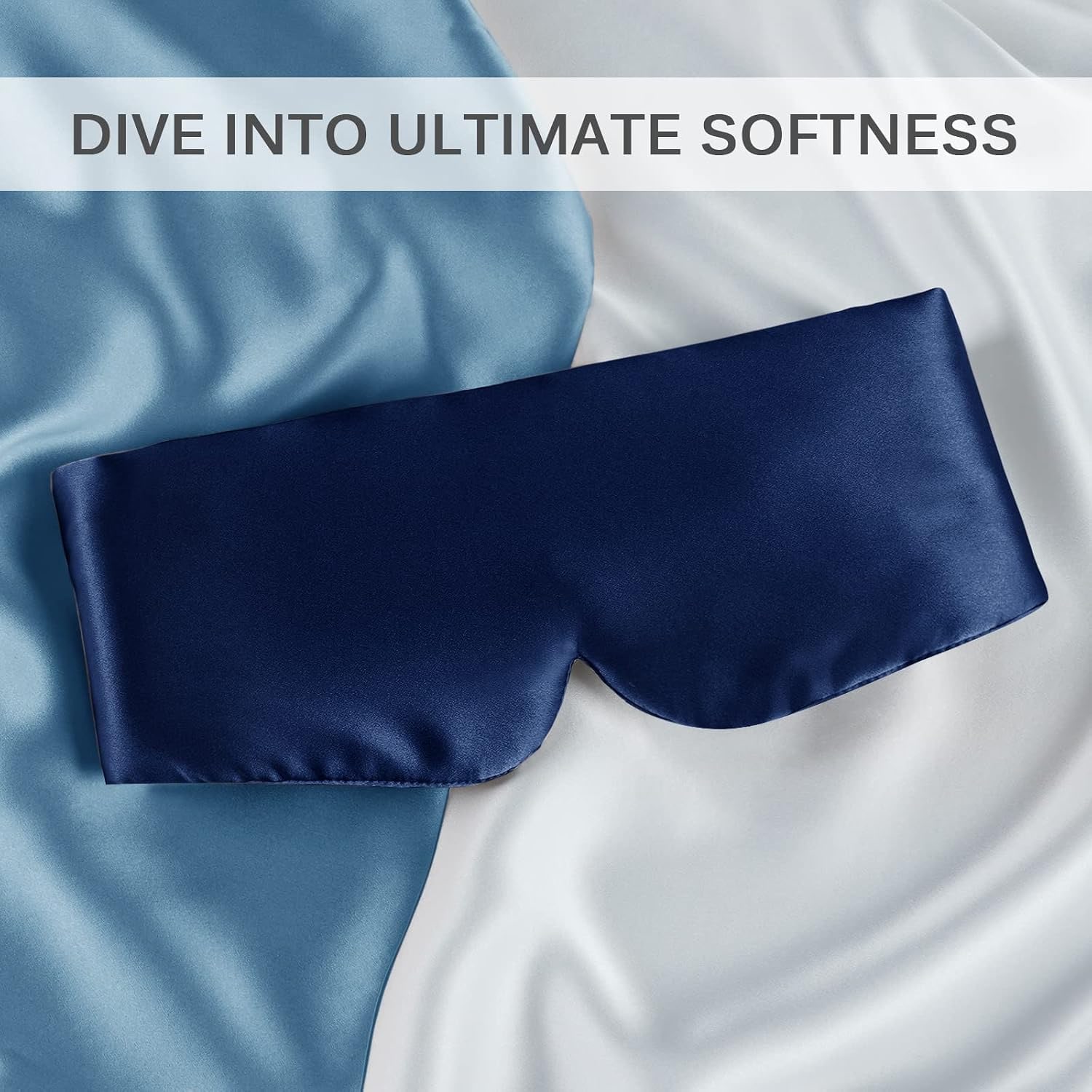
A dark blue silk sleep mask with an ear band is built around both complaints. The eye panel is bigger, so there is more fabric sitting against your face and less chance of a gap. And the thin strap is gone, replaced by a wide band that continues out from the eye shade and over the ears.
How the ear band changes things
Picture the pressure. A quarter-inch elastic carrying the full tension of the mask concentrates that force into a narrow line. Lie on your side and your own head weight presses that line into the cartilage of your ear. It is a small thing that becomes a big thing after a few hours.
Widen the band and the same tension spreads across several inches of fabric. Nothing digs in. The band also sits over the outer ear rather than behind it, so there is a soft layer between your ear and the pillow.
Two side effects come with that design. The first is a small drop in room noise. Covering the outer ear with silk is not soundproofing and nobody should buy this expecting silence, but it does muffle the edges of sounds like traffic or a fan. The second is more practical. If you wear earplugs, the band holds them in. Foam plugs famously creep out while you sleep, and a band over the top keeps them seated.
What 19 momme silk actually means
Silk is measured in momme, not thread count. The number tells you how heavy the fabric is for a given area. Lower numbers are thin and floaty, higher numbers are dense and substantial. For eye masks and pillowcases, most quality silk sits somewhere between 16 and 25 momme.
At 19 momme you get a fabric with enough body to hold its shape and block light properly, but not so heavy that it feels stiff on your face. It is a sensible middle. Thin silk sags and lets light through the weave. Very heavy silk costs more and can feel warm.
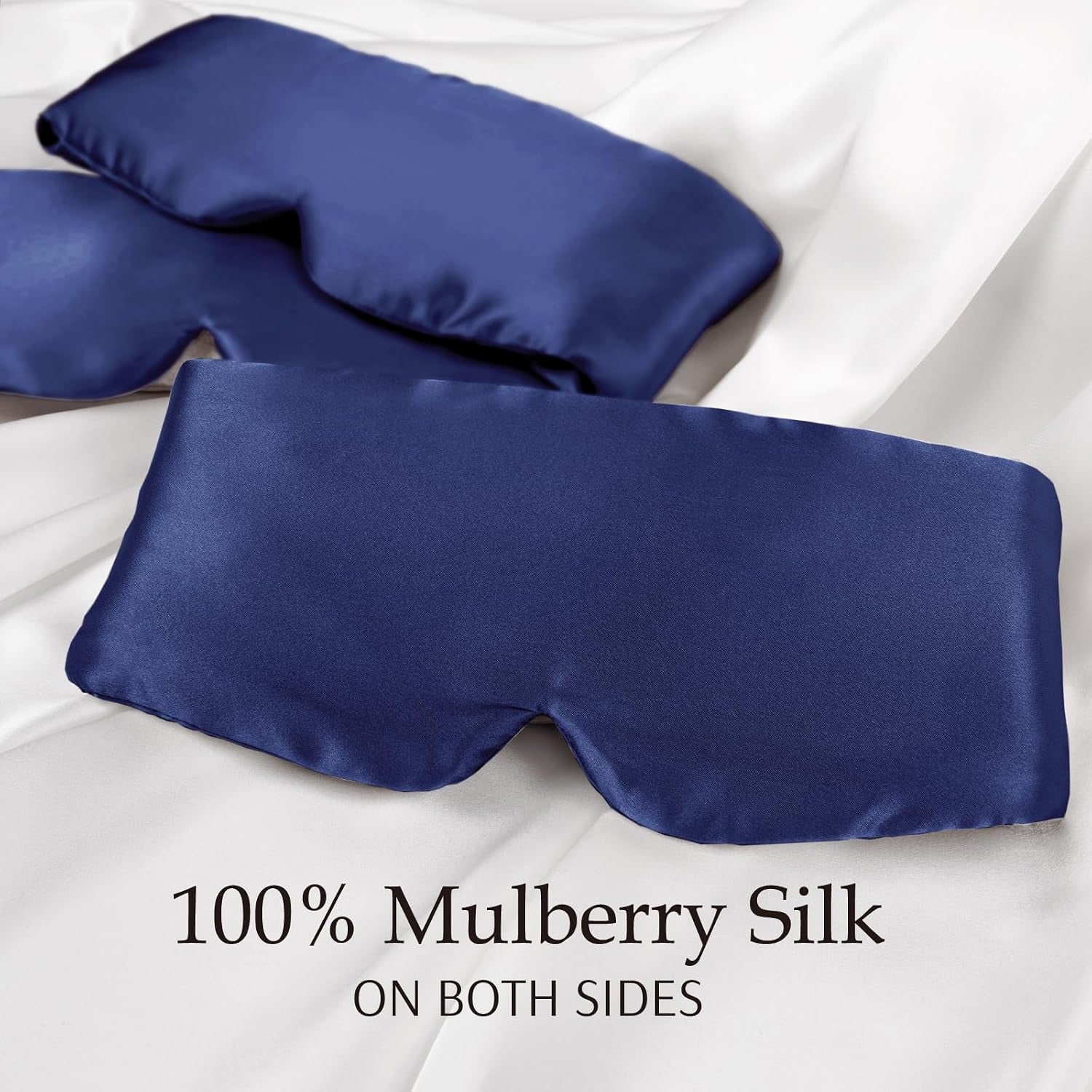
This mask uses 100% mulberry silk on both faces. That matters more than it sounds. Plenty of masks advertise silk and deliver it only on the outer side, with a polyester lining against your skin. If the silk is on both sides, the surface actually touching your face is the smooth one.
Silk is noticeably smoother than cotton, so skin and hair slide over it instead of catching. It also feels cool when you first put it on, which some people find helps them drift off faster on warm nights.
Who this suits
Side sleepers are the obvious group. If you have ever woken with a red line across your ear, the band design solves exactly that.
Shift workers and anyone who sleeps while it is light outside are the second group. Daytime sleep is harder than night sleep, and the single biggest fix is proper darkness. A larger panel with a nose cut gets you closer to real blackout than a small oval ever will.
Travelers come next. Cabin lights stay on, window shades go up at the wrong moment, and the person beside you reads for three hours. Something that packs into a few cubic inches and weighs 2.4 ounces earns its spot in the bag.
It also works well for people who use earplugs regularly, and for anyone who finds standard masks too tight. Because this one is cut larger, it tends not to feel clamped on.
Getting the fit right
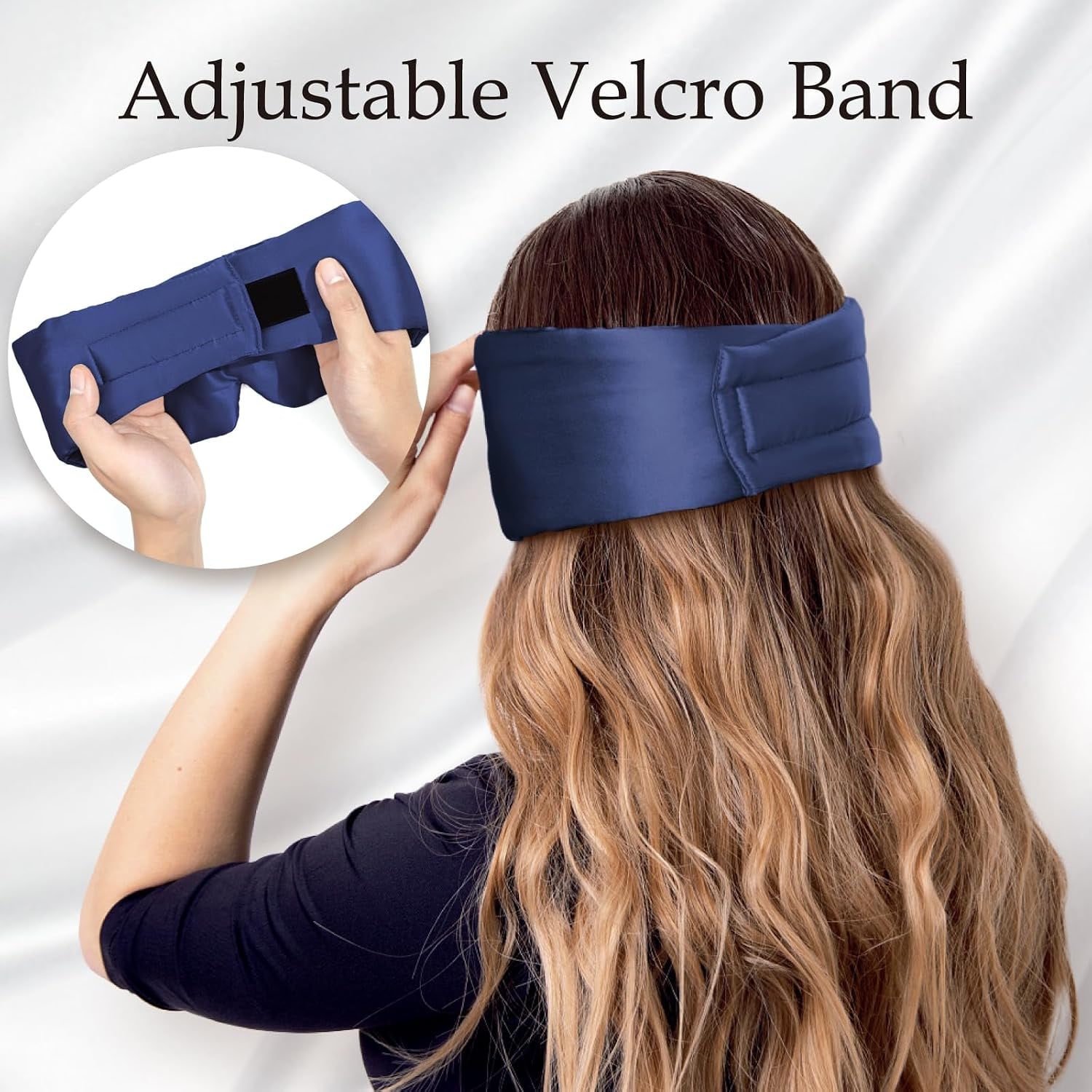
The closure is long and adjustable, so spend a minute on the first night setting it properly rather than pulling it on and hoping.
Start loose. Put the mask on with the nose cut sitting on the bridge of your nose, not above or below it. Settle the band so it covers your ears evenly on both sides. Then tighten in small increments until the light disappears, and stop there. The common mistake is overtightening on the theory that tighter means darker. Past a certain point it does not, it just gives you a headache and a crease on your forehead.
If you still see light beside your nose, the mask is probably sitting too high. Slide the whole thing down a few millimeters so the nose cut hugs the bridge properly. That usually fixes it.
For flights, go one notch tighter than you would at home. You move more in a seat, and a slightly firmer hold stops the mask traveling up your forehead when you shift.
Looking after silk
Silk lasts a long time if you treat it gently, and wears out quickly if you do not. The rules are simple.
Hand wash in cool water with a detergent made for delicates. Regular laundry powder is too harsh, and anything with bleach or enzymes will dull the fabric. Swish it rather than scrubbing, rinse until the water runs clear, then press the water out between the folds of a towel. Never wring silk. Twisting breaks fibers and leaves permanent creases.
Dry it flat, away from direct sun and radiators. Heat is the enemy of both silk and the elastic in the closure. Skip the dryer entirely.
If it needs pressing, use the coolest iron setting, work on the reverse side, and keep the iron off the closure. Most of the time a flat dry leaves it smooth enough that pressing is unnecessary.
Wash every week or two with nightly use. If you apply creams or oils at bedtime, wash more often, since residue builds up in the weave and makes the silk feel less slippery over time.
A note on expectations
A sleep mask is a tool, not a cure. It blocks light and it feels pleasant on the skin. It will not fix a noisy neighbor, a late coffee or a difficult week. What it does do, reliably, is remove one variable from the list of things keeping you awake.
Quality shows up in small places with these. Panel size. Whether both faces are real silk. Whether the nose is contoured or cut flat. Whether the strap is a thin band of elastic or something wide enough to rest on. Those details are the whole difference between a mask you use every night and one that ends up in a drawer.
The short version
This is a dark blue mulberry silk sleep mask, 19 momme on both faces, with an eye panel cut larger than standard and a wide band that extends over the ears instead of a thin strap. The nose is contoured to close the gap where light usually gets in, and the closure is long and adjustable so you set the tension yourself.
It suits side sleepers, daytime sleepers, earplug users and travelers particularly well. It packs down to a couple of inches and weighs 2.4 ounces. Hand wash cool, dry flat, keep it away from heat, and it will stay smooth for a long time.
If you have given up on sleep masks because the strap always ruined it, this is the design worth trying next.