

The complete guide
Silk Pillowcase Buyer's Guide: Momme, Sizing and Everyday Care
The problem with waking up rumpled
Most people never think about the surface they spend a third of their life pressed against. You buy a pillow, you throw a cotton case on it, and that is the end of the decision. Then you notice things. Hair that looked fine at bedtime is frizzed and tangled at seven in the morning. One side of your face has a crease across it that takes twenty minutes to settle. Your pillow feels warm by two a.m. and you flip it.
Cotton is a lovely fiber, but it has texture. Under a microscope the weave looks like rows of tiny ridges, and those ridges grip. Every time you turn your head, hair and skin drag across them. Over seven hours that adds up to a lot of small tugs.
Silk sits at the other end of the scale. The fibers are long and smooth, the surface is slick, and things slide across it instead of catching. That is the simple, unglamorous reason silk pillowcases became popular, and it is also why a heavier silk behaves better than a thin one.
What momme actually tells you
If you have shopped for silk at all you have seen the word momme, usually written with a number in front of it. It is the Japanese unit the silk trade has used for a long time, and it measures weight rather than weave. A higher momme number means more silk per square yard.
Here is a rough map. Silk around 12 to 16 momme is light. It is cheap to produce, it feels slippery, and it is thin enough that you can often see the pillow through it. Sixteen momme makes acceptable bedding but it wears out faster, because there is simply less fiber there to take the abrasion of weekly washing.
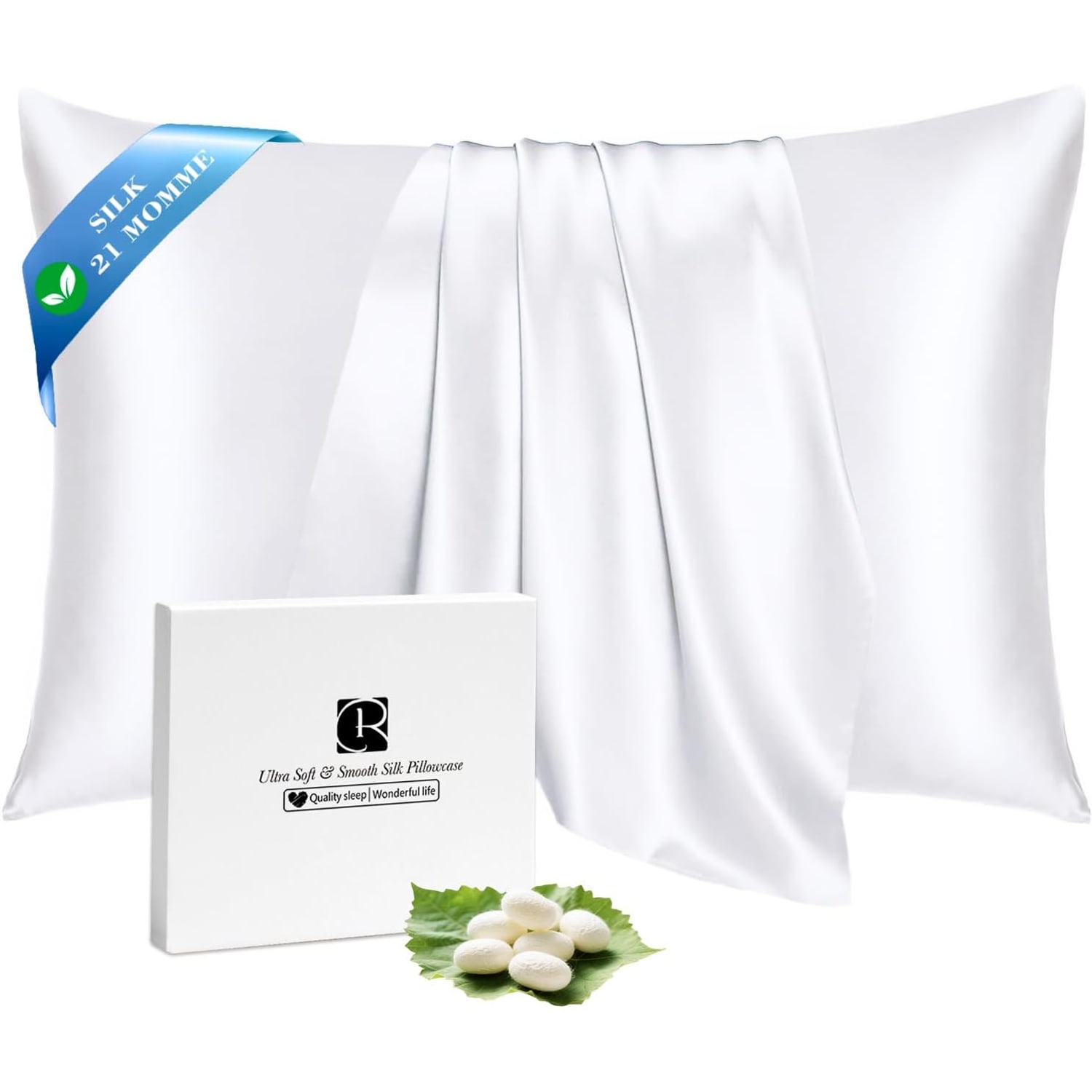
Nineteen to 22 momme is the band most people settle on for pillowcases. The fabric has heft. It drapes down over the edge of the pillow instead of clinging to it. It survives a machine wash cycle without looking tired after a month. This pillowcase sits at 21 momme, right in that practical middle.
Push much past 25 momme and the silk becomes very dense, quite expensive, and some sleepers find it less breathable. For a case you actually use every night, the 21 momme range is a sensible place to land. The 600 thread count on top of that describes how tightly the weave is packed, which contributes to the even, uninterrupted surface.
Why size is not a detail
Pillowcases get sold in three US sizes and the numbers are worth memorizing. Standard is 20 by 26 inches. Queen is 20 by 30. King is 20 by 36. This case is a king at 36 by 20 inches, around 91 by 51 cm.
People buy the wrong size more often than you would think, usually because they assume their bed size and their pillow size match. They often do not. Plenty of queen beds have king pillows on them for the extra width, and plenty of king beds use two standard pillows plus a bolster.
Measure the pillow, not the mattress. Lay it flat, run a tape along the long edge, and buy to that number.
Getting it right matters for two reasons. A case that is too small keeps the fabric under constant tension, and seams fail where tension lives. A case that is too big lets the pillow slide around inside, which creates folds that press into your face. The best king size silk pillowcase for you is the one that matches your actual pillow with a little breathing room and no more.
Closures, and why the zipper matters
Silk pillowcases come with three common closures. An envelope flap folds over the open end. A plain open end has nothing at all. A zipper closes it properly.
Open ends are the cheapest to make and the worst to live with on silk, because silk is slippery and the pillow walks out of it. Envelope closures are better, though a king pillow with real loft can still push its way free.
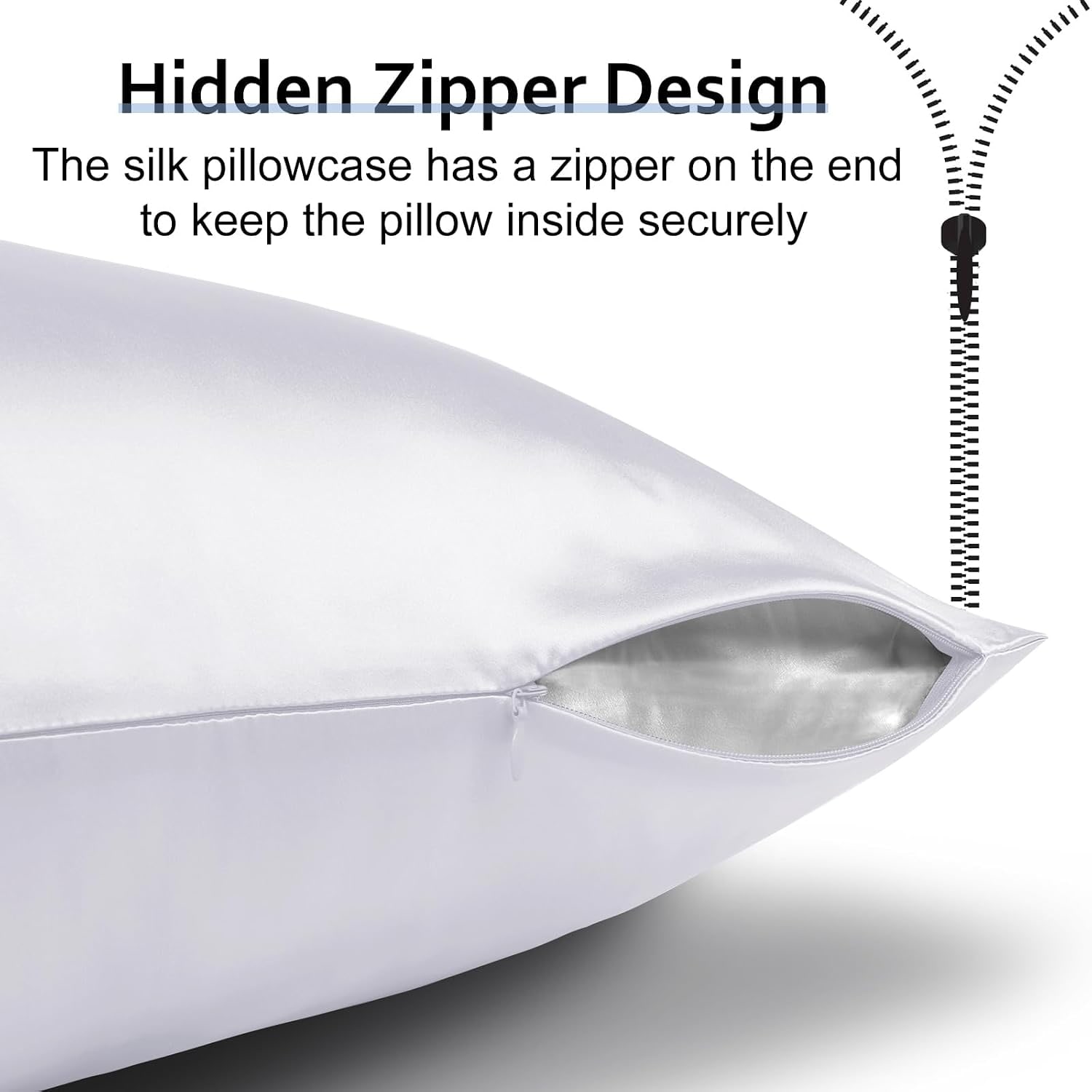
A hidden zipper, which is what this case uses, solves the problem. The zipper sits inside the seam so the metal or nylon teeth do not meet your skin, and the pillow stays where you put it. It also means the case keeps a neat, flat profile when the bed is made, with no flap of fabric sticking out at one end.
If you have ever hunted for the best silk pillowcase with zipper closure, this is the reason why. It is not a luxury feature. It is the part that keeps everything else working.
Who this suits
Side sleepers get the most obvious benefit, because they spend the whole night with one cheek in contact with the fabric. Anyone with long hair tends to notice a difference too, since long hair is what catches and twists against a cotton weave.
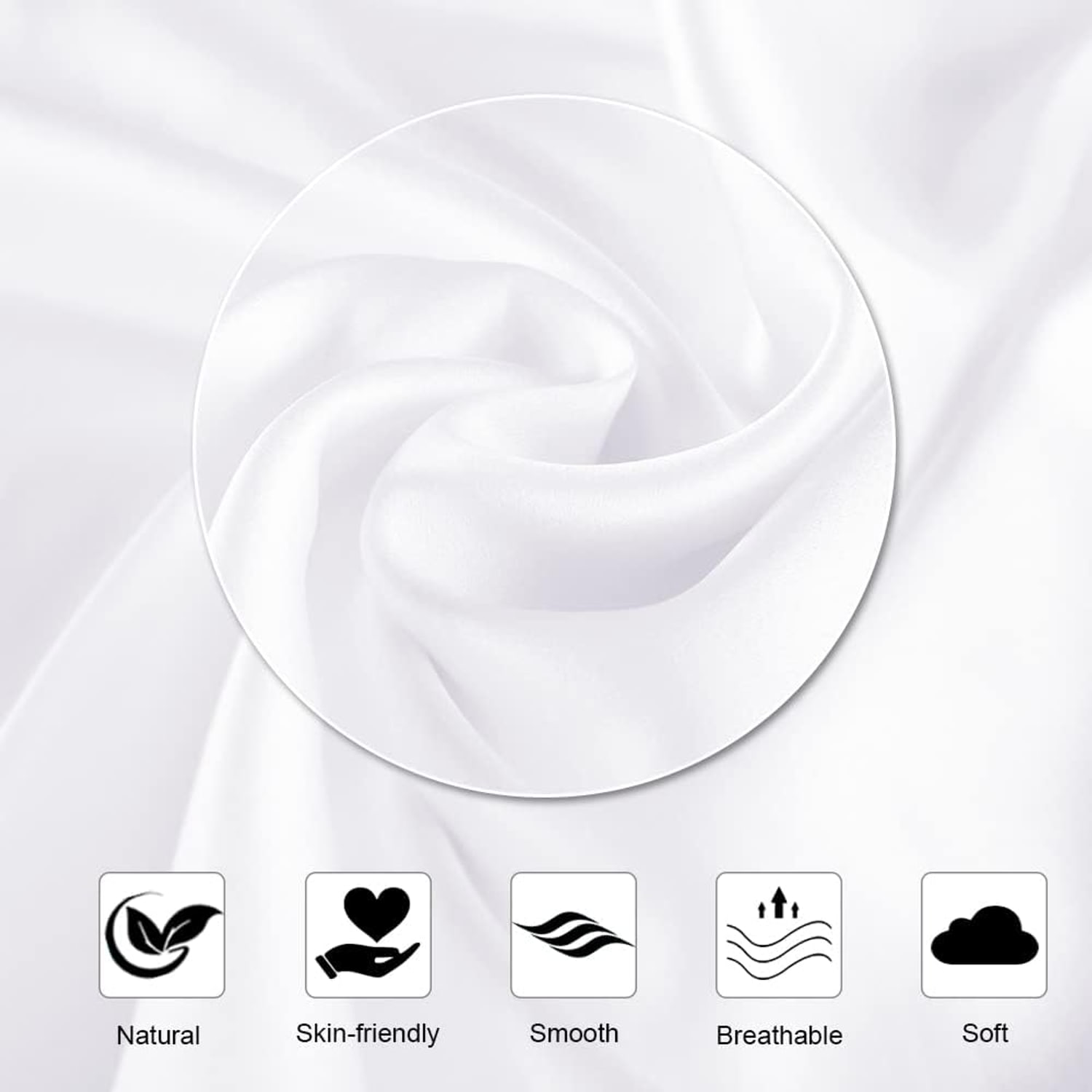
Hot sleepers are the other group worth mentioning. Silk is a natural protein fiber and it breathes, and the maker describes this one as breathable and cooling. If you are someone who flips the pillow looking for a cold patch, a silk surface may stop that habit.
And then there are people who just like how it looks. Pure white silk next to matte cotton or linen gives a quiet contrast, a little sheen without any pattern competing for attention. If you are building the best white silk pillowcase look for a mostly white bed, a solid case like this is the straightforward way to do it.
Choosing between options
When you are comparing silk cases, work through four things in order.
First, confirm the fiber is actually silk and not satin. Satin is a weave, not a material, and most satin pillowcases are polyester. They look similar on screen and feel quite different in use.
Second, check the momme. If a listing does not state it, that is usually because the number is low.
Third, check the size against your pillow, in inches, not against your bed.
Fourth, look at the closure. Zipper, envelope or nothing at all will change your daily experience more than the marketing copy will.
Price tends to follow momme and size. A king at 21 momme uses considerably more silk than a standard at 16, so expect the numbers to reflect that.
Living with silk
Silk has a reputation for being fussy that it does not entirely deserve. This case is machine washable.
Use cold water on the gentle cycle. Put the case inside a mesh laundry bag so it does not wrap itself around a zipper or a button somewhere else in the drum. Use a mild detergent made for delicates, and skip anything with enzymes, brighteners or bleach. Fabric softener does silk no favors either, since it leaves a film that dulls the natural luster.
Air drying is best. Lay it flat or hang it somewhere out of direct sun, because sunlight is hard on silk over time. If you need to use a dryer, keep it on the lowest or no heat setting and pull the case out while it is still slightly damp.
Ironing is optional. A cool iron on the reverse side, applied while the fabric is a little damp, gives a smooth finish. Do not hold a steamer against the face of the silk.
Wash weekly, the same as the rest of your bedding. If you use hair oils or rich night creams, more often is better, since those products sit on the surface.
With that routine, a 21 momme case will hold up for a long time. The best machine washable silk pillowcase is simply one you are willing to actually wash.
The short version
This is one king size pillowcase, 36 by 20 inches, in 100% mulberry silk at 21 momme with a 600 thread count weave. It is pure white, solid, with a hidden zipper in the seam.
Buy it if your pillow is a true king and you want a smoother surface for hair and skin than cotton gives. Measure the pillow before you order. Wash it cold and gentle, keep bleach and softener away from it, and let it air dry.
Everything else about silk is detail. The size and the momme are the two numbers that decide whether you end up happy with it.