
The complete guide
How to Choose a Silk Scrunchie That You Will Actually Wear
The small annoyance nobody mentions
Hair ties are one of those things you buy without thinking, lose constantly, and never really evaluate. Then one day you pull a bare elastic out of a ponytail, hear that small ripping sound, and look at the two or three strands left wrapped around the band. It is a tiny irritation. It happens every single day.
The problem is friction. A thin rubber elastic grips the hair shaft directly and holds on when you try to remove it. A cotton-wrapped band is better, but cotton fibers are short and slightly rough under a microscope, so they still drag. Add a tight wrap, a long day, and hair that is already dry at the ends, and you get snagging, kinked ponytail dents and more breakage than you want.
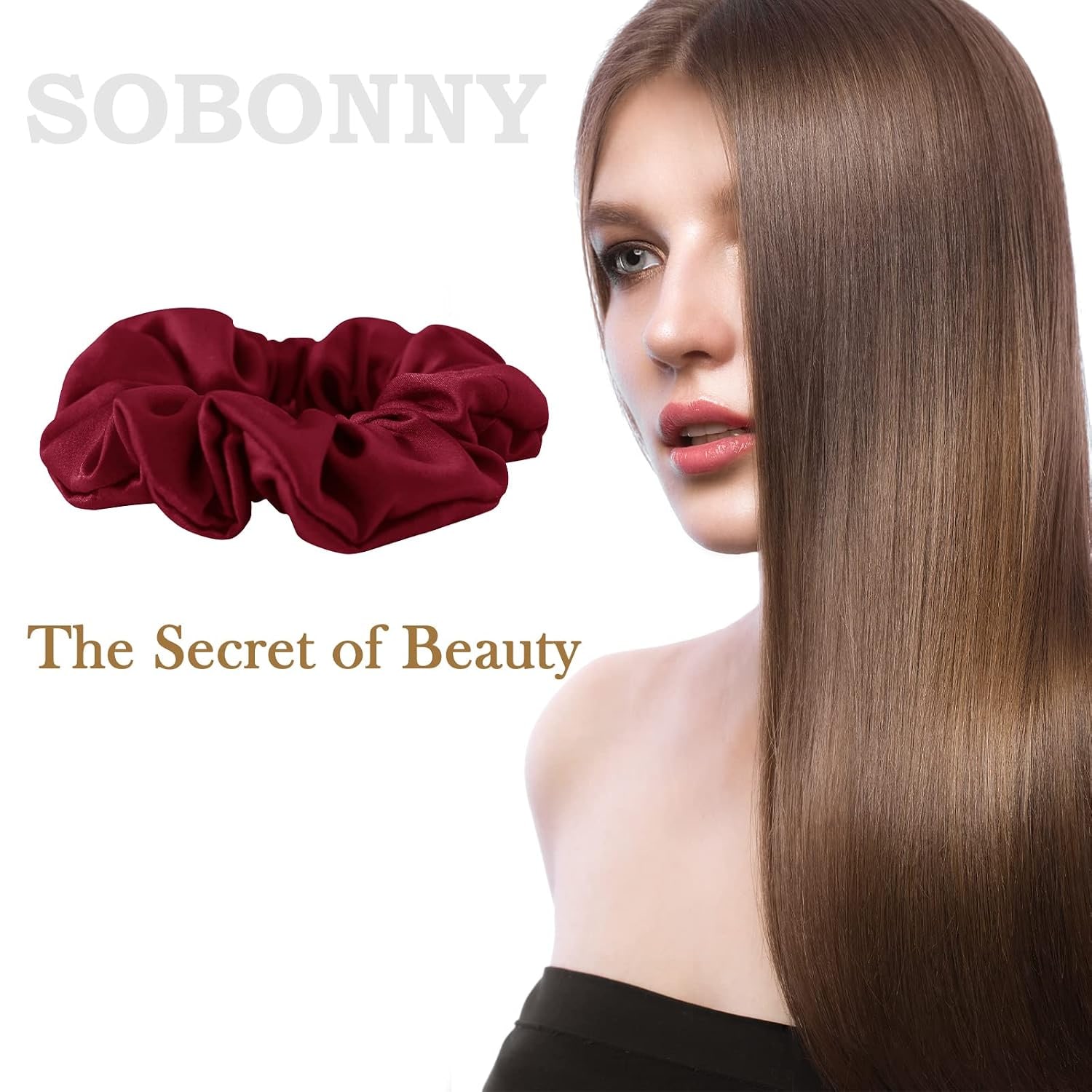
Silk changes the surface your hair rubs against. Mulberry silk fibers are long, smooth and even, which is exactly why silk pillowcases took off for the same reason. Your hair slides over the fabric instead of catching on it. You notice it most in the moment you take the scrunchie out, because it tends to come away in one easy motion.
What mulberry silk actually means
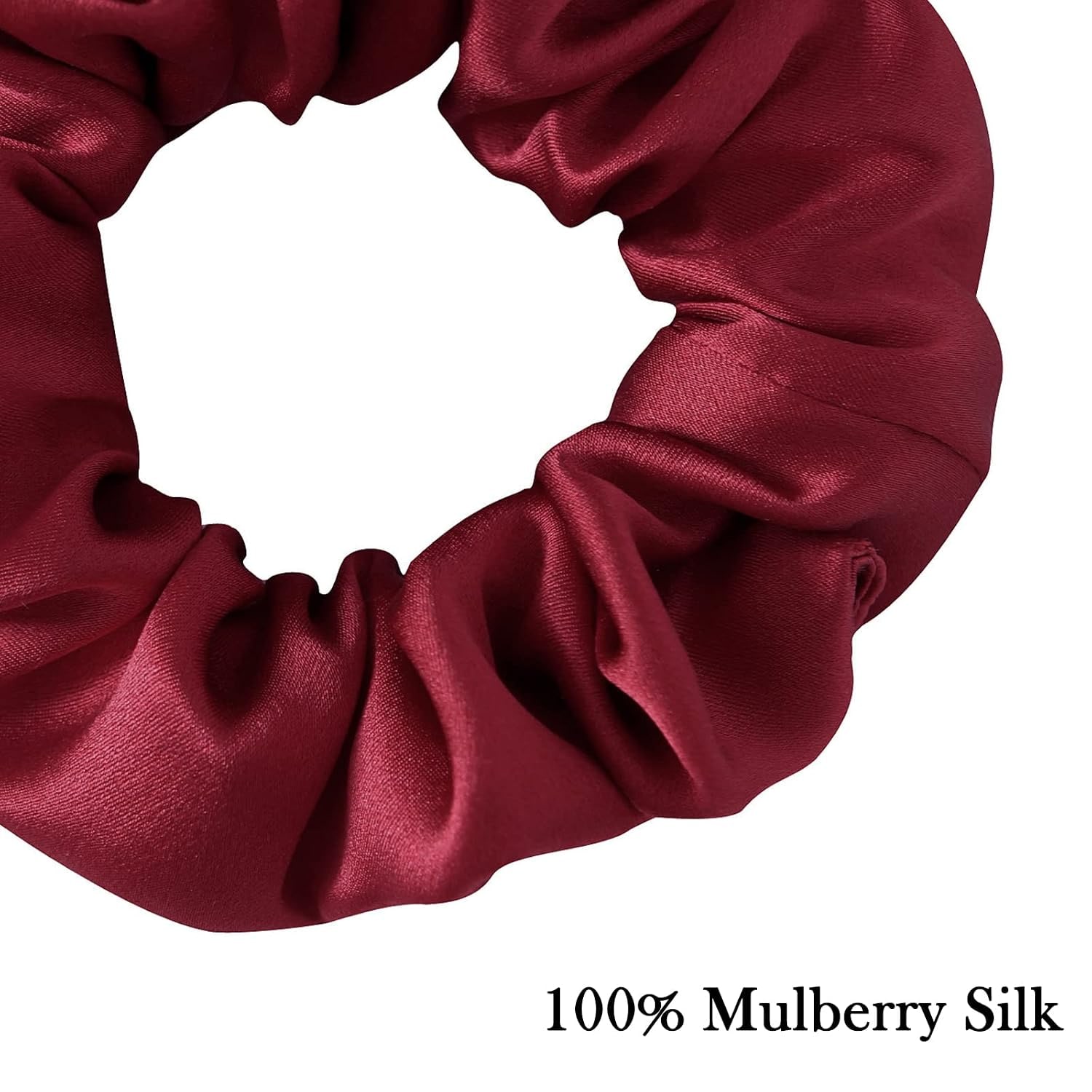
Not all silk is the same. Mulberry silk comes from silkworms raised on a diet of nothing but mulberry leaves. That controlled diet produces a cocoon with long, uniform filaments, and long filaments mean a fabric with very few joins and a consistently smooth surface. Wild silks are coarser and more textured, which has its own charm in a scarf but is not what you want wrapped around your hair.
This scrunchie's outer fabric is 100% mulberry silk. The band inside is a covered elastic, which is standard for any scrunchie, since silk itself has no stretch. The silk forms a soft tube around that elastic, so your hair only ever touches the silk.
One thing worth flagging. Shoppers often ask about momme weight, which is the unit used to describe silk density, a bit like thread count for cotton. The momme weight here is not stated, so we are not going to guess at a number.
Silk or satin, and why it matters
This trips people up constantly, so it is worth being clear. Silk is a fiber that comes from a silkworm. Satin is a weave structure, and most satin sold in hair accessories is woven from polyester.
Polyester satin is smooth and cheap, and it is a genuine improvement on a bare elastic. But it is plastic. It does not breathe, it holds heat against your scalp, and it tends to feel slightly slippery rather than soft. Mulberry silk is a natural protein fiber. It stays cool against the skin, it has a drape and weight that polyester cannot quite match, and the hand feel is different the moment you touch it.
If you are weighing up satin vs silk scrunchie options, the honest answer is that satin does part of the job for less money and silk does the whole job and feels better doing it.
Who it suits
Pretty much everyone, which is unusual for a hair product. But the details differ by hair type.
If you have thick or heavy hair, the appeal is the wide fabric body. A thin elastic concentrates all the tension in a narrow line, which is where you get the dent and the sore patch after a few hours. A scrunchie spreads that load across a broader surface. One or two wraps is usually enough.
If your hair is fine, your worry is the opposite. Will it hold? Yes, you just wrap it more times, three or four depending on length. The upside is significant, because fine hair is the most prone to snapping and the least forgiving of rough handling.
Curly and textured hair tends to get on well with silk for a different reason. Rough fabrics catch in the curl pattern and disturb it. A smooth surface does not grab in the same way, so you keep more definition when you take it out.
Getting the color right
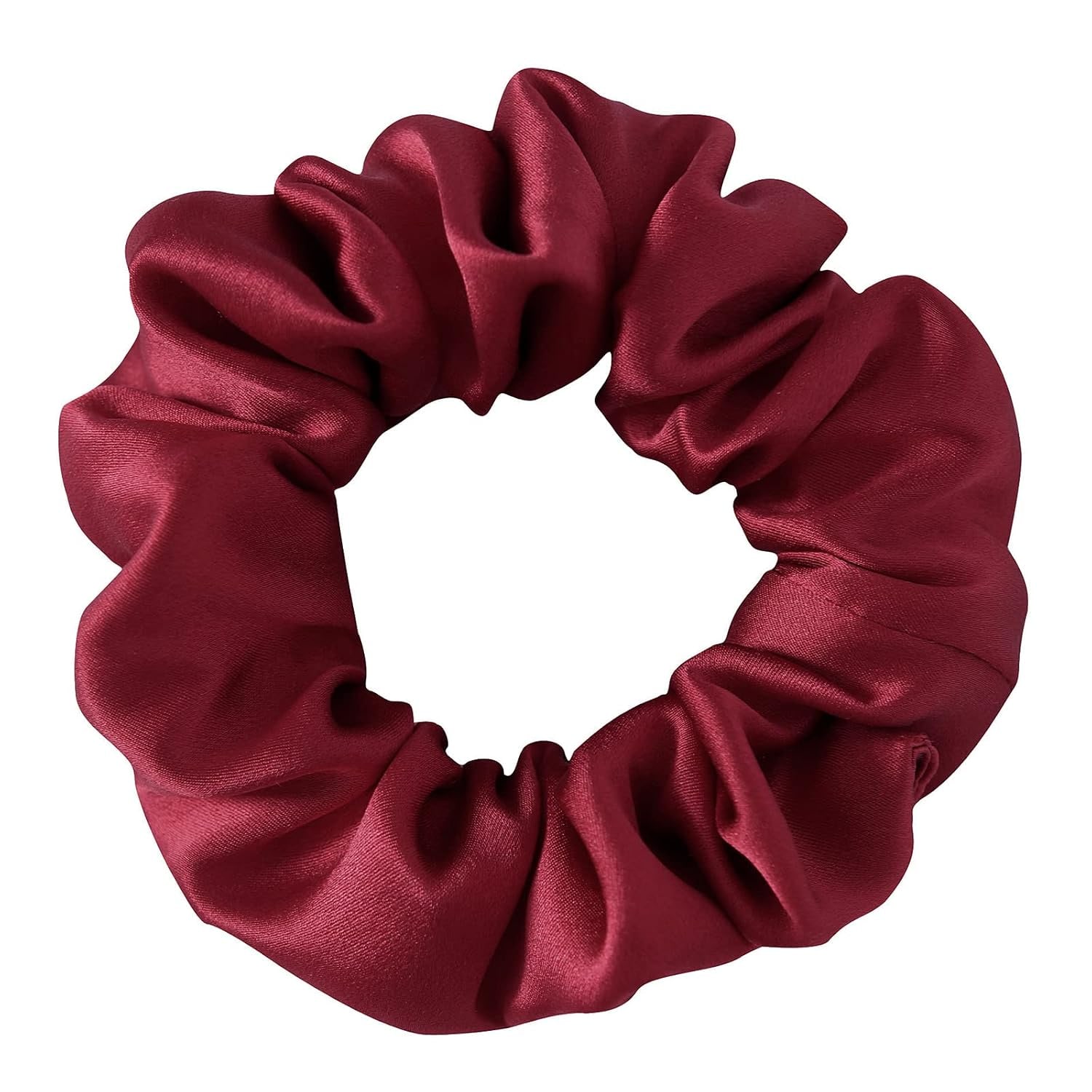
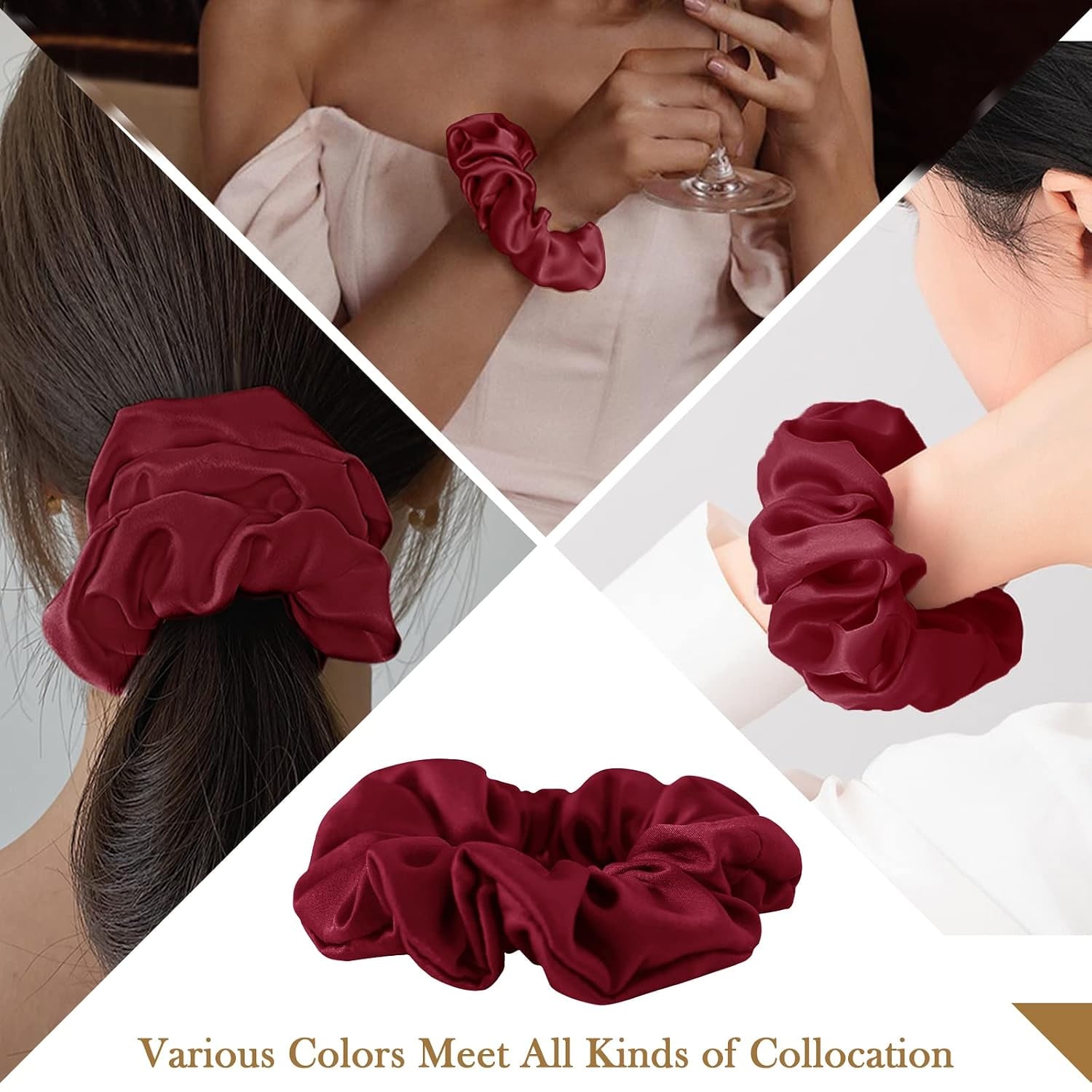
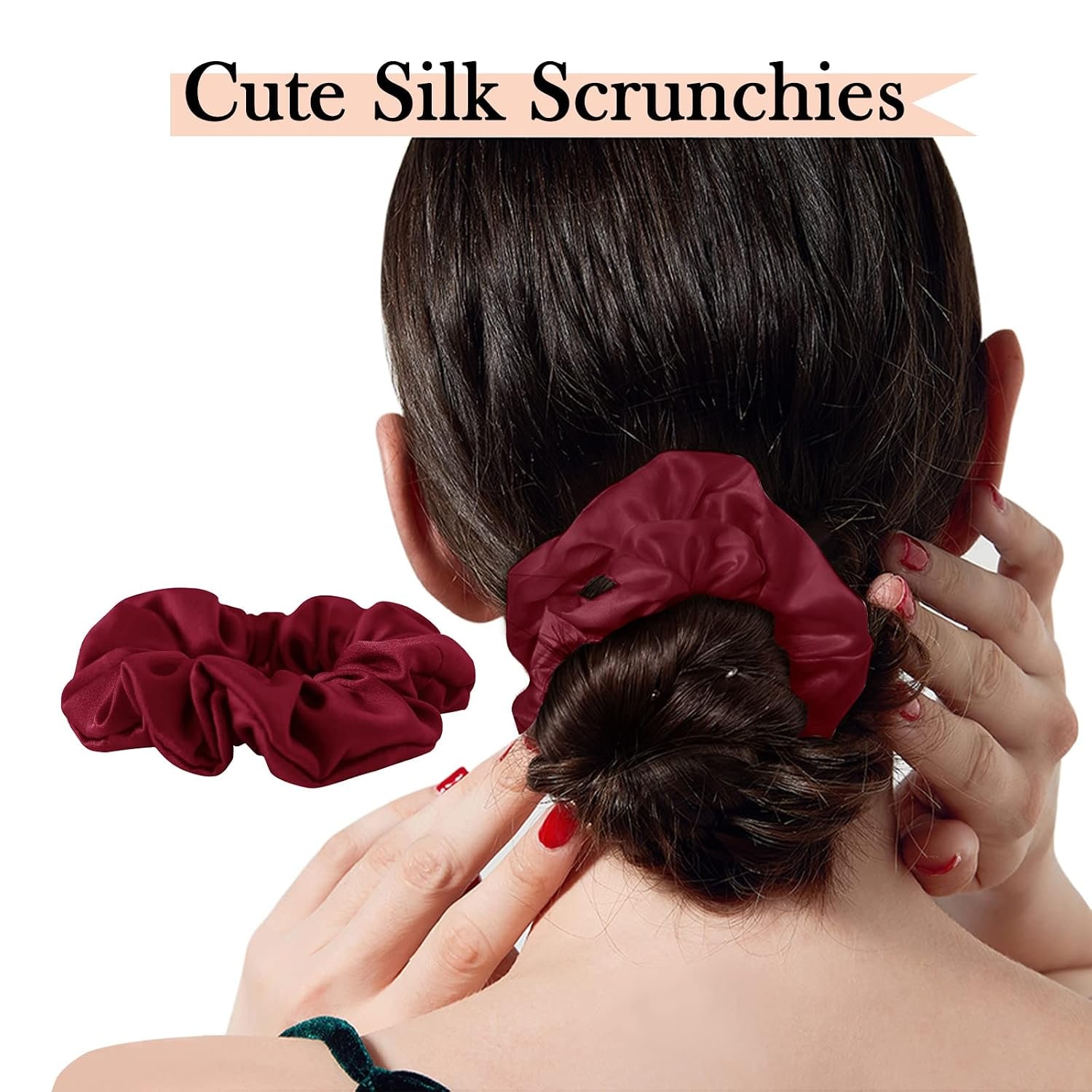
Wine red is one of the more useful shades to own. It is dark enough to look intentional and warm enough to be flattering, and it does not fight with the clothes most people actually wear. Against black or dark brown hair it reads as a deliberate accent. Against blonde, auburn or gray it gives contrast without looking costumey.
It also crosses between settings. A bright neon scrunchie belongs at the gym. A burgundy one works at the gym, at the office, at dinner, and at a wedding if you are wearing your hair up. That versatility is why people wear a shade like this far more than the bright colors that come free in a multi-pack.
This is also the argument for buying single scrunchies rather than sets. Everyone who has bought a five-pack knows the pattern. You love one, you use two, and three sit in the drawer for years. Picking one color at a time means every scrunchie you own is one you will reach for.
Wearing it day and night
For daytime, treat it like any other tie but resist the urge to pull it as tight as you would an elastic. The point of a wider band is to hold without squeezing, and the hold comes from the number of wraps rather than the tension.
For sleeping, the common approach is a loose bun on the top of the head, sometimes called a pineapple, or a soft braid tied off at the end. Keep both loose. Tight hair overnight is uncomfortable with any material, and a silk tie does not change that. What silk does change is the surface your hair presses against for eight hours. If you are already sleeping on a silk pillowcase, a silk scrunchie is the obvious partner.
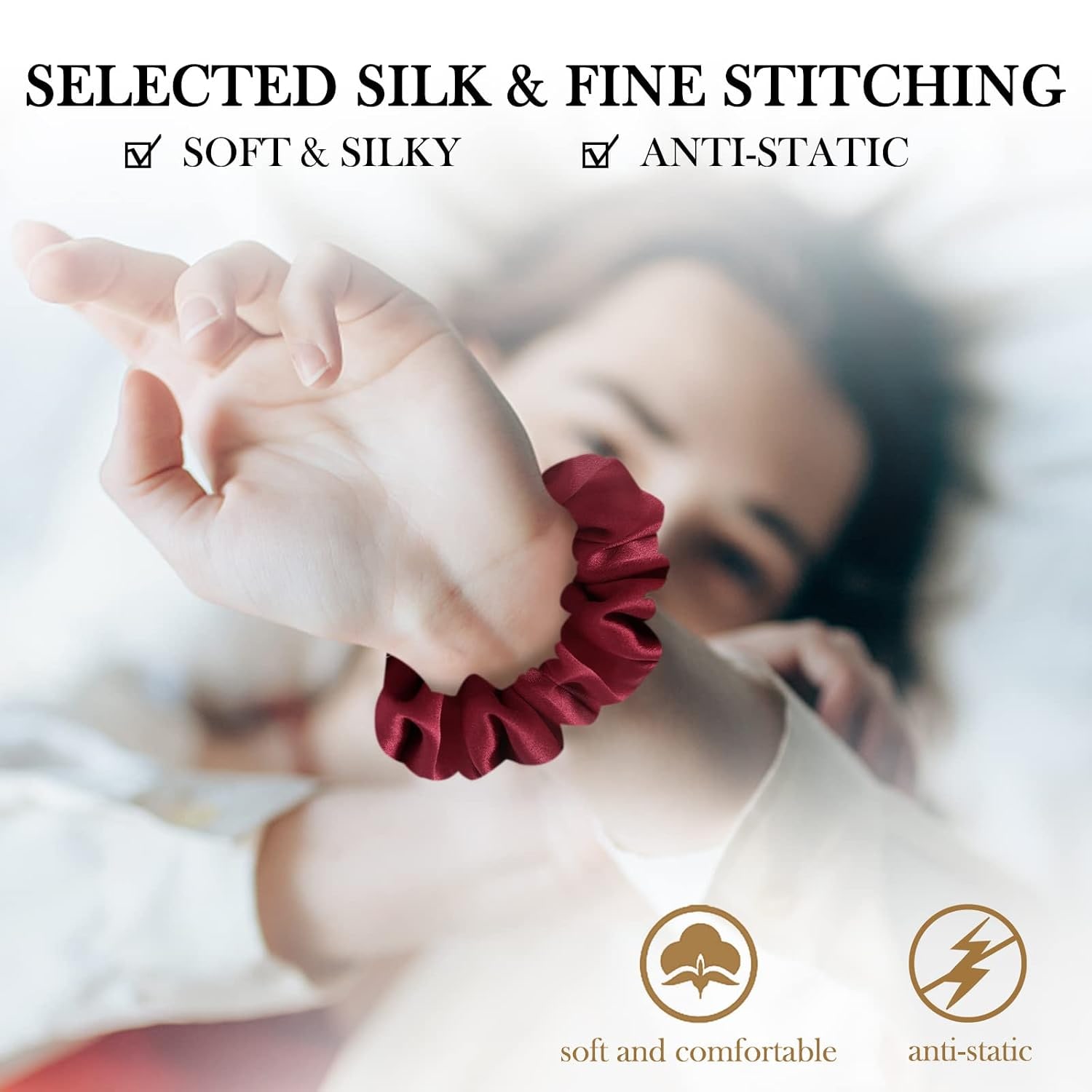
Wearing it on your wrist is fine, and a lot of people do it all day. Silk is far kinder to skin than a tight rubber band that leaves a red groove.
Looking after it
Silk is not fragile, but it is particular. The rules are simple enough to remember.
Hand wash in cool water with a mild detergent formulated for delicates. Swish it gently, do not scrub, and never wring or twist. Press the water out with a towel and lay it flat to dry somewhere out of direct sun and away from heaters. Skip the washing machine, skip the dryer, skip bleach entirely.
If it ever needs pressing, use the coolest iron setting with a cloth between the iron and the silk. Most of the time it will not need it, since silk relaxes as it dries flat.
Wash it every week or two with regular wear, more often if you use hair oils, dry shampoo or styling products, or if it goes to the gym with you. Clean silk stays soft. Silk left with product buildup starts to feel stiff and dull, and nobody enjoys wearing it after that.
The short version
A silk scrunchie is a small upgrade that you notice every day. The fabric is smoother than cotton, so hair slides over it instead of snagging, and the wide soft body spreads pressure rather than digging into one line. This one is 100% mulberry silk in a deep wine red, sold on its own rather than buried in a pack of colors you will not use.
It suits thick hair, fine hair and curls, works for a ponytail or a bun, sits comfortably on the wrist, and looks right in nearly any setting. Hand wash it cool, lay it flat to dry, and it will keep its softness and its color for a long time. If you are buying your first one, or buying for someone else, wine red is the shade that gets worn.