

The complete guide
Silk Pillowcase Buyer's Guide, How to Choose Momme, Size and Closure
The problem with waking up looking like you fought your pillow
Most people blame their hair, their skin or their sleep position for how they look at 7am. The pillowcase rarely gets a thought. It should.
Cotton feels soft to the hand, but under a microscope the weave is a field of tiny ridges. Every time you turn over, hair and skin drag across those ridges. Over a full night, that adds up to a lot of small pulls and presses. It is why long hair ends up tangled at the nape, why one cheek carries a crease pattern for the first hour of the day, and why some people's hair looks flat on one side and wild on the other.
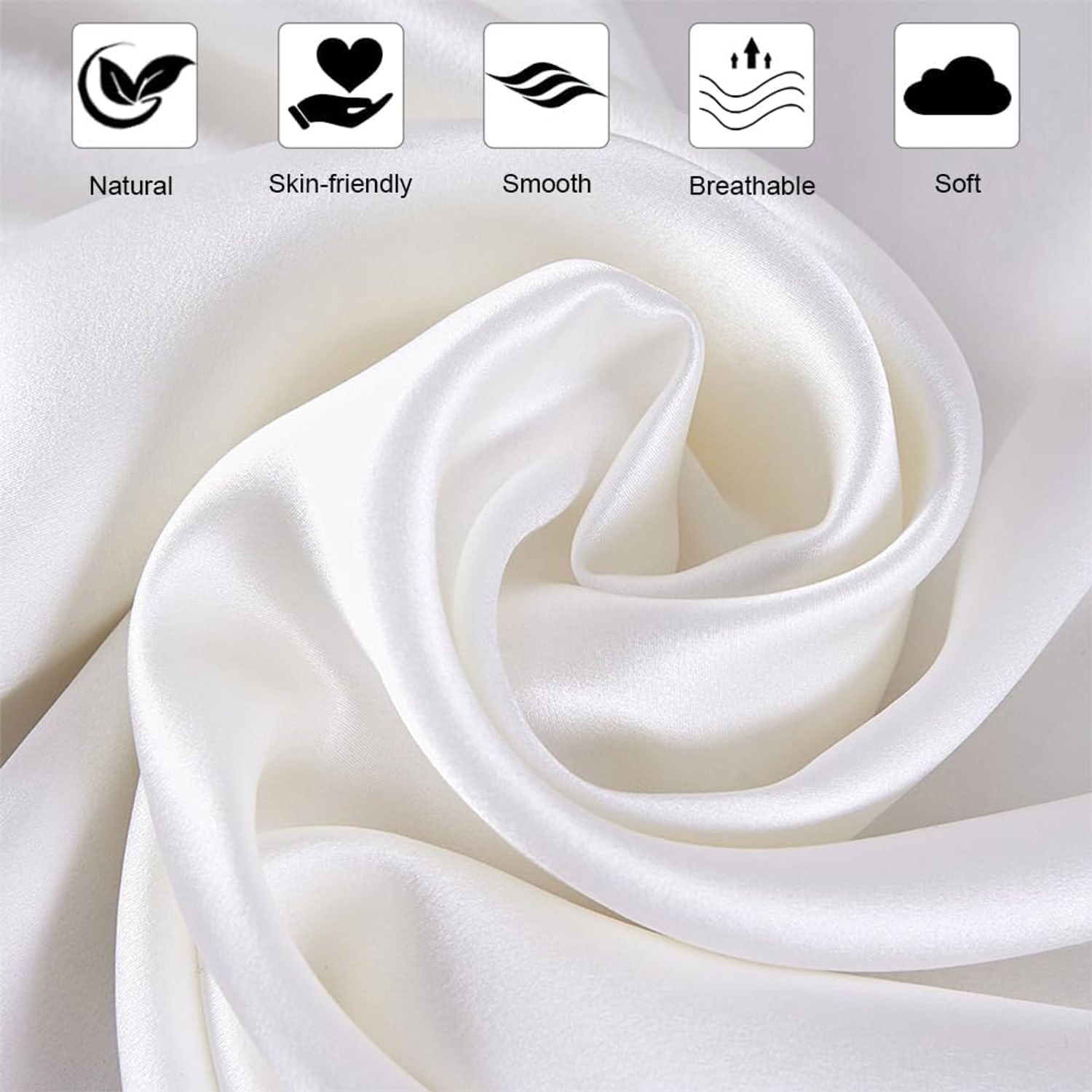
Silk changes the surface, not the sleeper. The fiber is a continuous protein filament rather than a short staple spun into yarn, so the finished cloth is smoother. Hair slides instead of catching. Skin rests on the fabric rather than gripping it. That is the whole mechanism, and it is a material fact about how the fabrics behave, not a promise about what will happen to you.
How momme actually works
Momme is the number that matters most when you compare silk, and it is the one most listings bury.
Think of it as the weight class of the fabric. Cotton uses thread count, wool uses microns, silk uses momme. The higher the number, the heavier and denser the cloth. Lightweight silks around 12 to 16 momme are used for scarves and linings. They are lovely to look at but thin, and on a pillowcase they wear through at the seams faster than you would like.
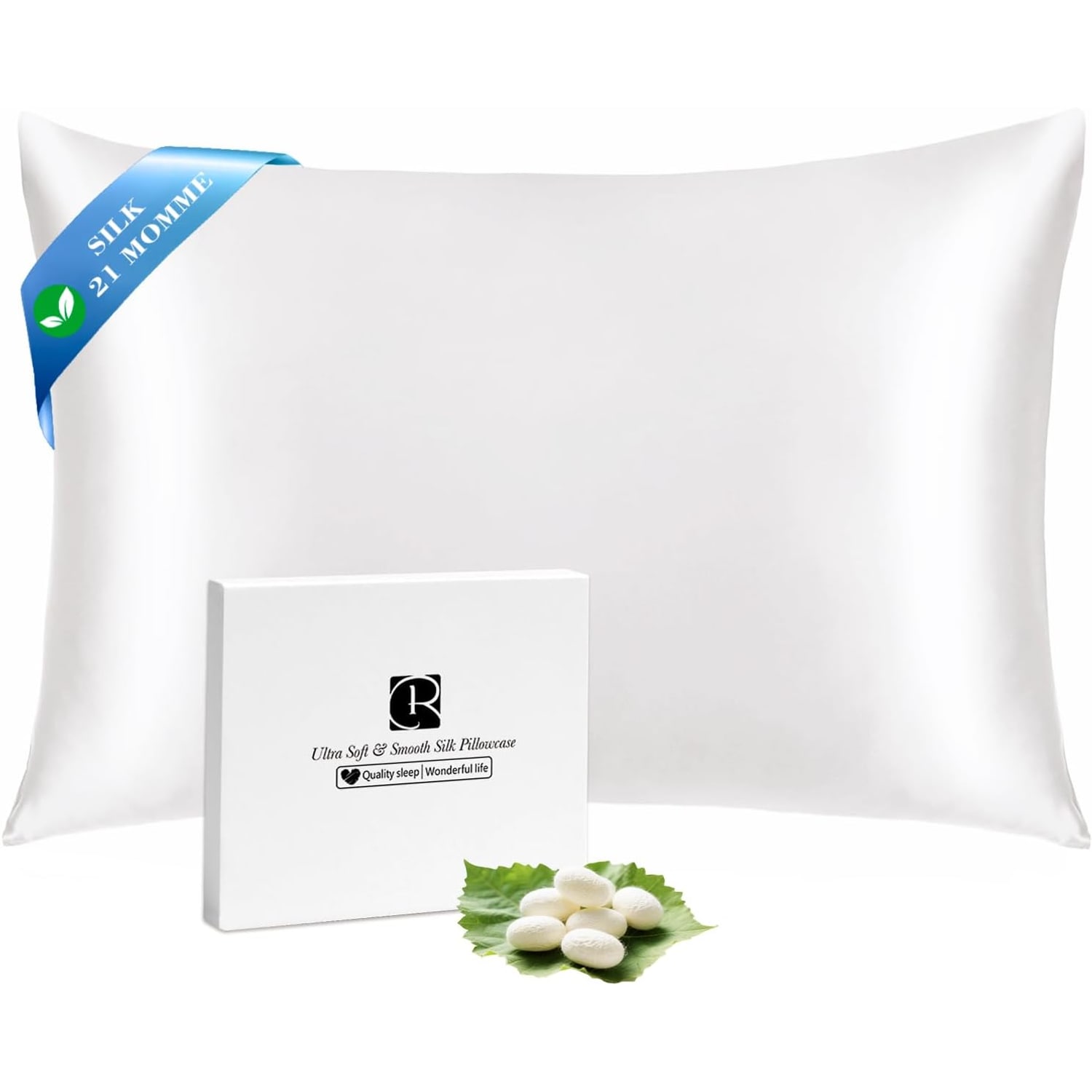
Somewhere around 19 to 22 momme is where pillowcases get good. The fabric has enough body to hold its shape, enough density to survive a weekly wash, and still that fluid drape silk is bought for. This one sits at 21 momme, right in that band. Pick it up and you will feel the difference against a thin silk immediately. It has heft, the way a good shirt does.
Pushing much higher than 22 or 25 momme gets you a heavier, more structured cloth. Some people love it. Others find it loses a little of the cool, liquid feel they wanted in the first place. For general use, the best mulberry silk pillowcase for most households sits in that low-twenties range.
The 600 thread count listed alongside tells you about weave density. With silk it is secondary to momme, but a dense, even weave is what gives you that uninterrupted sheen and a surface with no rough patches.
Getting the size right
US pillow sizing is simple once you know the three numbers. Standard is 20 x 26 inches. Queen is 20 x 30 inches. King is 20 x 36 inches.
This case is cut to 20 x 30 inches, so it is a queen. Here is the practical bit most guides skip. The width is the same across all three sizes, so the only question is length. A standard pillow will slide into a queen case and sit a little loose, with a few inches of spare fabric at one end. Plenty of people do this deliberately because they like the softer, less stretched look. What you cannot do is force a king pillow into a queen case. It will strain the seams and the zipper.
If you are not sure what you own, take a tape measure to the pillow itself rather than the case currently on it. Old cases stretch, and a stretched case will give you a misleading number.
Why the closure matters more than you think
There are three common ways a pillowcase closes. An open end, an envelope flap and a zipper.
Open ends are the cheapest to make and the worst in practice, because the pillow works its way out while you sleep. Envelope flaps are better, but with a slippery fabric like silk the flap can still slide free, and you wake to find a bare pillow corner against your face.
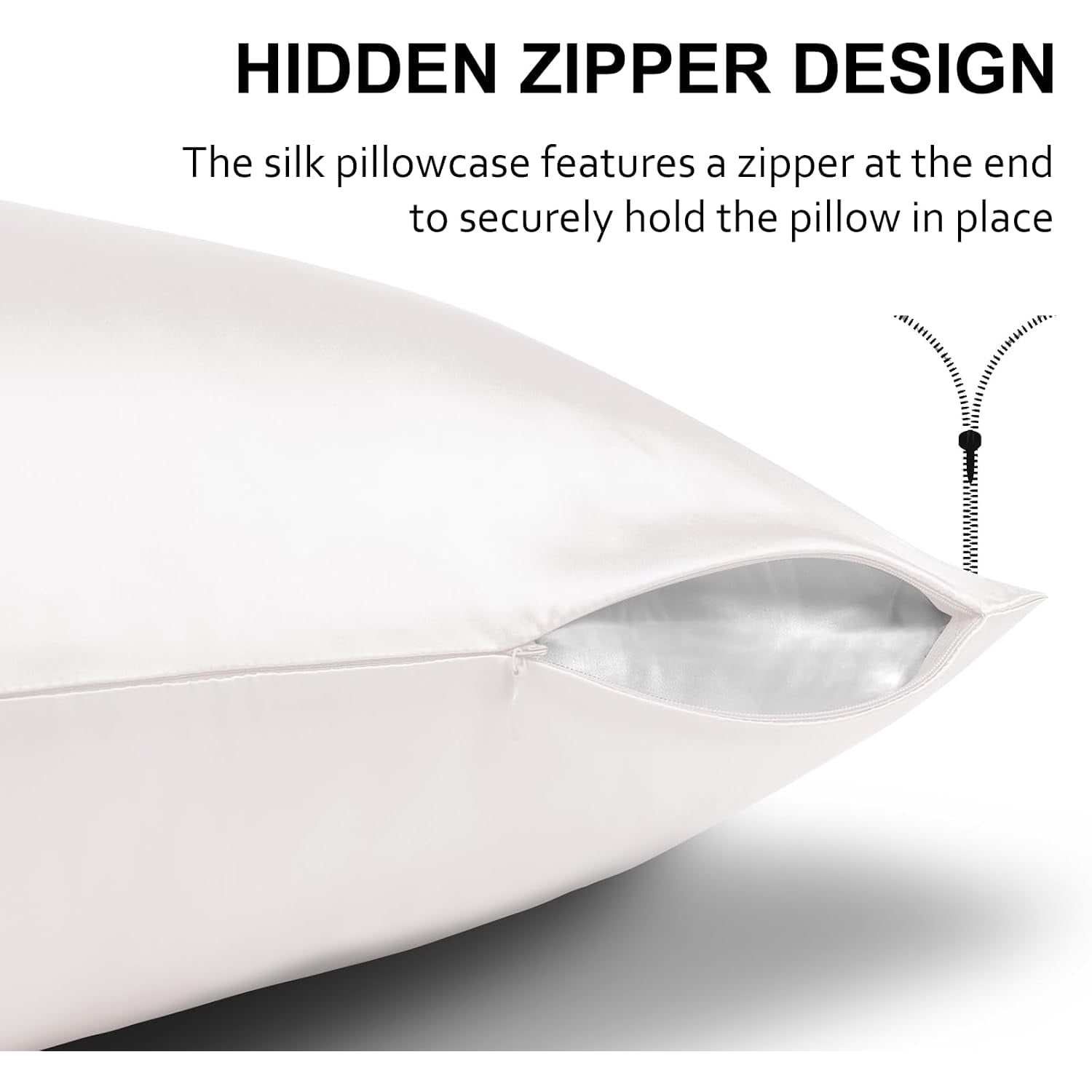
A zipper solves it. This case uses a hidden zipper set into the seam, which does two jobs at once. The pillow stays put all night, and the sleeping face stays completely smooth with no hardware showing. Look for the zipper to run long enough that a well-stuffed pillow goes in without wrestling. A short zipper on a plump pillow is how seams get stressed.
Who this suits
Side sleepers get the most obvious benefit, since half the face spends the night in contact with the fabric. People with long hair are next, especially anyone who goes to bed with it loose rather than tied up.
Hot sleepers are the other group worth mentioning. Silk is breathable and does not hold heat against the skin the way some dense synthetics do. If your current routine involves flipping the pillow three times a night chasing the cool side, a cooling silk pillowcase is a cheap experiment with a reasonable chance of helping.
It also travels unusually well. At 110 g it weighs almost nothing and folds down to the size of a paperback. Keeping one in a carry-on means a hotel pillow of unknown quality at least has a familiar surface.
And it makes a straightforward gift. There is no sizing anxiety beyond matching a queen pillow, the ivory white is neutral enough for any bedroom, and silk bedding is the category of thing most people enjoy receiving but never get around to buying for themselves.
Living with it
The reputation silk has for being high maintenance is mostly outdated. This one is machine washable.
Cold water, gentle cycle, mesh laundry bag. Use a mild detergent, ideally one made for delicates, and use less than you think you need. What ruins silk is not washing, it is the extras. Bleach breaks down the protein fiber. Fabric softener coats it and dulls the sheen you paid for. Stain removers are usually too harsh.
Wash it separately from anything with zippers, hooks or rough textures, because those are what snag a fine weave. Then line dry out of direct sunlight. Sun is harder on silk dye than detergent is. If you need to use a dryer, lowest no-heat setting, and pull it out while still a touch damp.
Pressing is optional. If you want it crisp, use a cool iron on the reverse side while the fabric is slightly damp.
A weekly wash is the right rhythm for most people. If you use rich night creams or leave-in hair products, make it more often, since those transfer onto the fabric and build up over time.
What to compare when you shop
Four questions sort the good from the forgettable.
First, is it 100% silk, or a blend with a silk-look finish. A satin weave in polyester will be described in language that sounds similar and feels nothing alike after a month.
Second, what is the momme. If a listing does not say, that usually tells you the answer is low.
Third, how does it close, and does the zipper run the full length.
Fourth, what is the real size in inches, not a vague size name. Sizing conventions differ between countries and a mismatch is the single most common reason a pillowcase gets returned.
The short version
This is a 20 x 30 inch queen pillowcase in ivory white, woven from 100% silk at 21 momme with a 600 thread count and closed with a hidden zipper. It weighs 110 g and goes in the washing machine on a cold gentle cycle.
The 21 momme weight is the part worth paying attention to, because it is the difference between a silk pillowcase that lasts and one that frays within a season. If you sleep on your side, have long hair, run hot at night, or just want the bed to feel a bit better than it does now, this is the practical place to start.