
The complete guide
How to Choose a Silk Sleep Mask That You Will Actually Keep Using
The problem is usually light, not you
People blame all sorts of things for poor sleep. Caffeine, stress, the mattress, the neighbor's dog. Those matter. But light is the one that gets overlooked, partly because you stop noticing it. A standby LED on the TV, a streetlamp through thin curtains, a partner reading on a tablet, the gray creep of a summer sunrise at half past four. None of them feel bright enough to be a problem, and all of them reach your closed eyelids.
Eyelids are thin. They block some light, not much. If the room is glowing, your eyes know about it.
A sleep mask solves this with no technology at all. You cover your eyes, the light stops, and your body gets a clearer signal that it is night. It costs less than blackout curtains, it works in hotel rooms and airplanes where curtains are not an option, and it fits in a pocket.
Why silk, and why mulberry silk in particular
Walk into any store and you will find foam masks, cotton masks, padded masks with gel inserts, and silk masks. They all block light. What separates them is how they feel against the skin for seven hours.
Silk has a notably smooth surface. The skin around your eyes is thin and moves a lot during the night, especially if you turn over. On a textured fabric there is more drag. On silk, things slide. That is a physical property of the fiber, nothing more dramatic than that, but it is the reason silk masks feel different the moment you put one on.
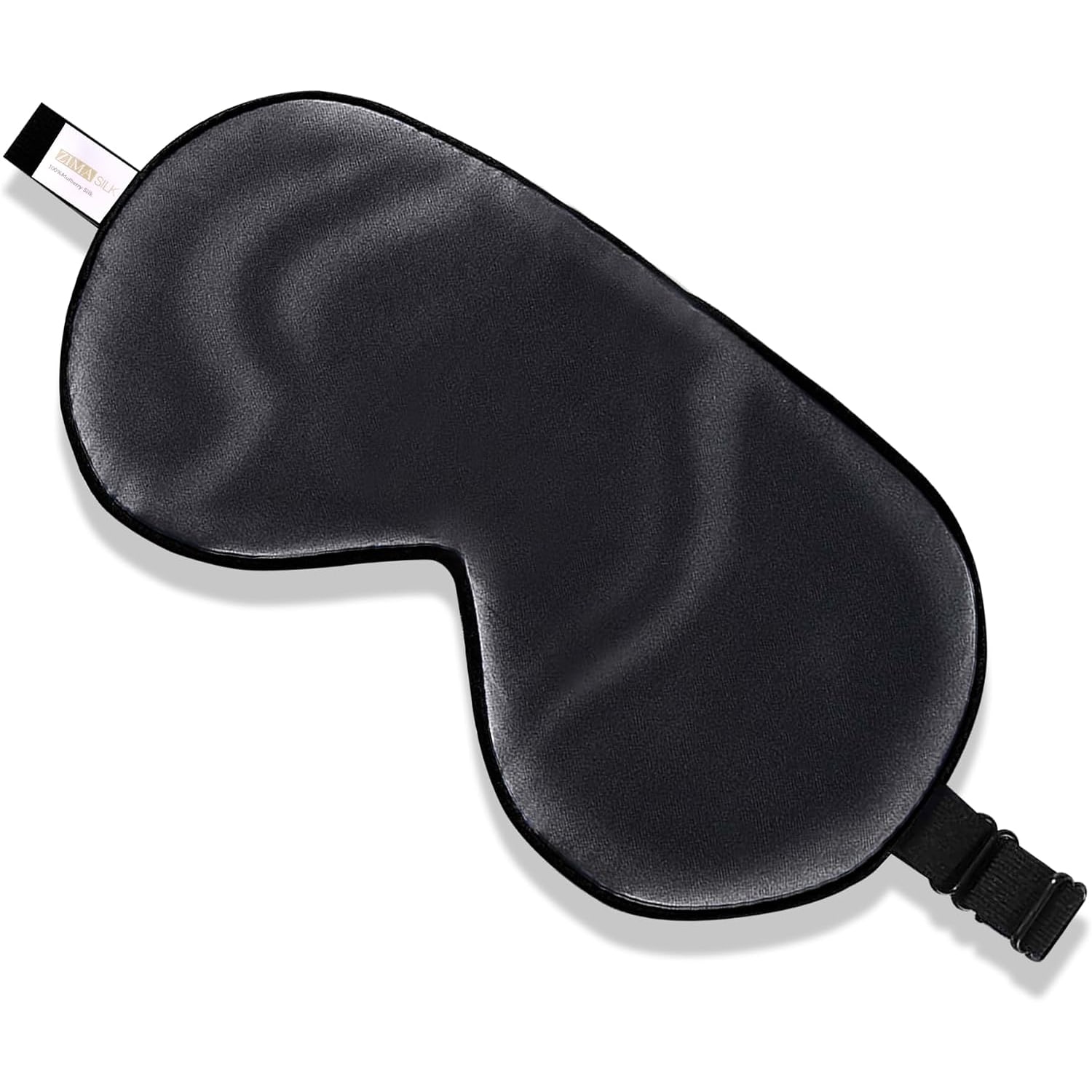
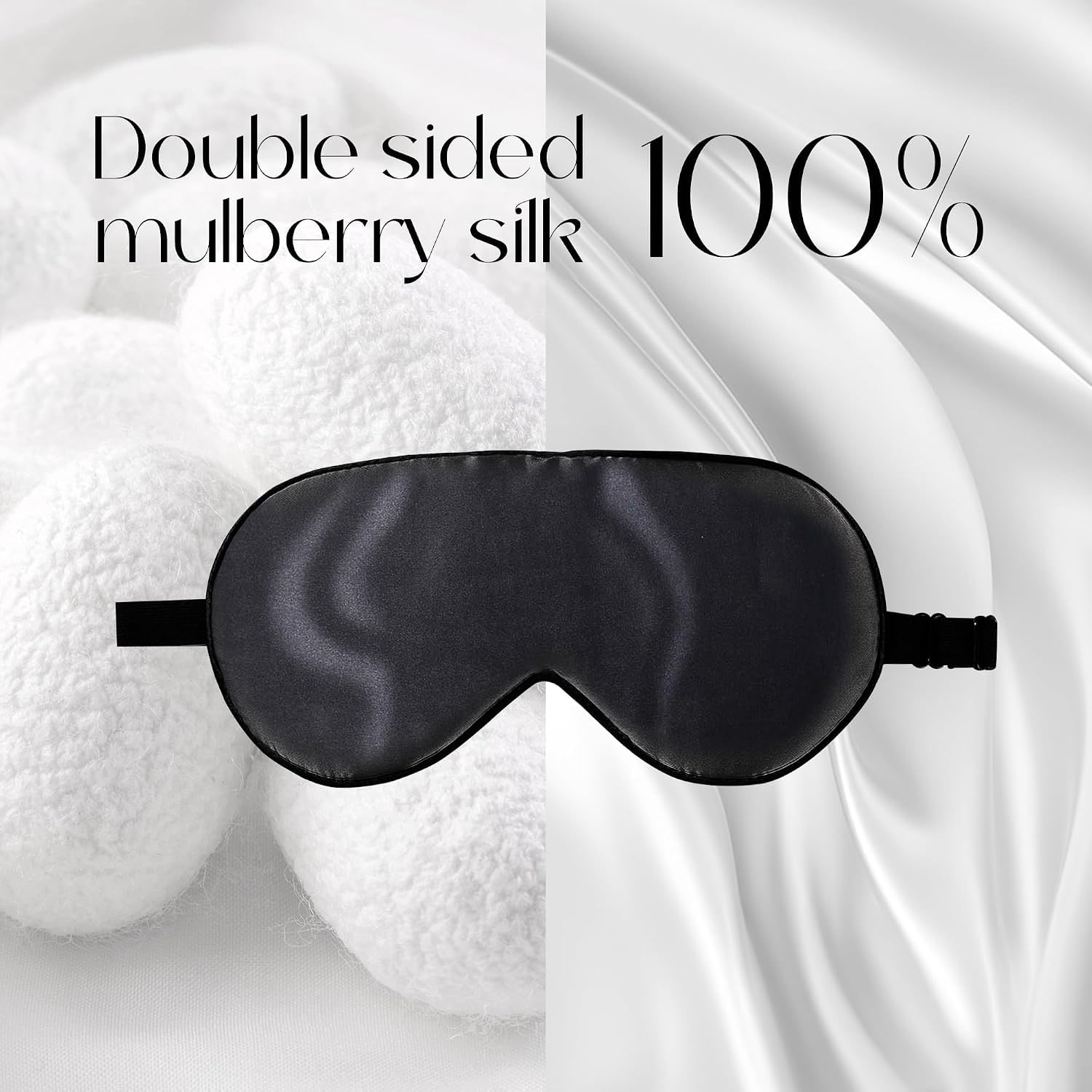
Mulberry silk is the type most commonly used for bedding and sleepwear. It is produced from silkworms raised on a mulberry leaf diet, which gives long, even fibers and a consistent, smooth weave. When a mask says mulberry silk on both sides, as this one does, it means the face touching your skin is the same quality as the one facing the room. Some cheaper masks use a silk face and a synthetic backing, which rather defeats the point.
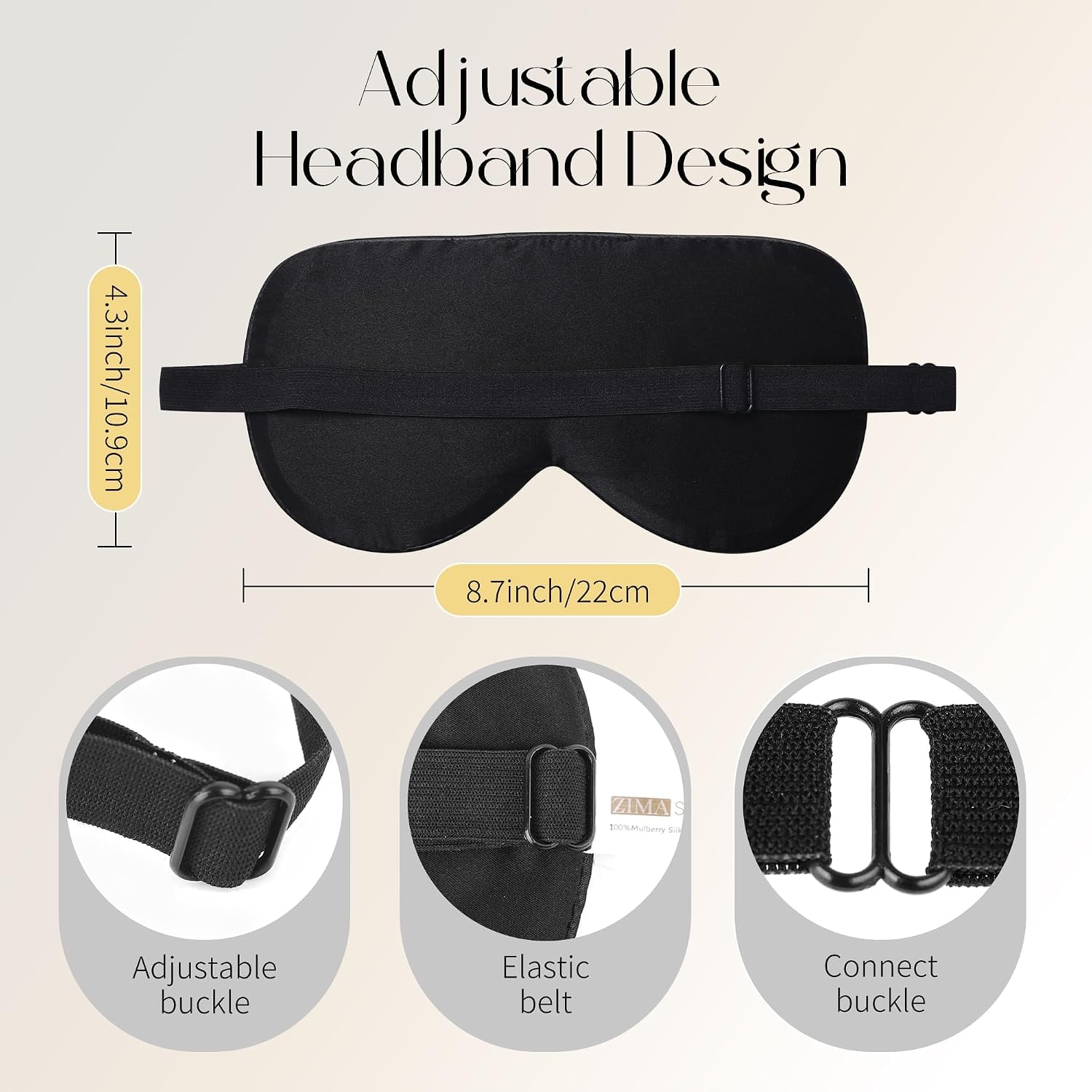
This mask does not state its momme weight, which is the number used to describe silk density. The maker does not state it, so we do not either. What we can tell you is the size, 8.4 by 4.3 by 0.2 inches, and the weight, about 1.06 ounces.
Weight changes everything
An ounce sounds trivial. Hold a heavier padded mask against your face for a minute and you will understand why it is not.
Heavier masks press. Thick foam ones sit against the eyelids and some people find that pressure comforting, but plenty of people find it stifling and take the thing off within twenty minutes. A thin silk mask at about an ounce rests rather than presses. There is no weight on the eyeballs and no sense of being enclosed.
The 0.2 inch depth matters for the same reason. It is flat. If you sleep on your side, a flat mask lies between your face and the pillow without a raised edge pushing into your cheekbone and dragging the mask sideways. Side sleepers who have given up on eye masks usually gave up on bulky ones.
The strap is the part that decides everything
Here is the honest truth about sleep masks. Most of them fail at the strap.
A cheap fixed elastic band works well for the first month. Then the elastic relaxes. Now it either slips over your forehead at 3am or you compensate by wearing it too tight, which leaves a line across your temples and gives you a dull ache by morning. Once either of those happens, the mask stops getting used.
An adjustable strap fixes both problems. You set it where it holds without pressure. When the band softens with use, you take up the slack. One mask, one setting, adjusted when needed.
Adjustability also means one mask fits different people. That is handy in a household, and it is the main reason this works as a gift. You are not guessing at head size.
If you are shopping around and comparing the best adjustable sleep mask options, check whether the adjustment sits at the back of the head rather than at the side. Side adjusters can press into your ear when you turn over.
Who this suits
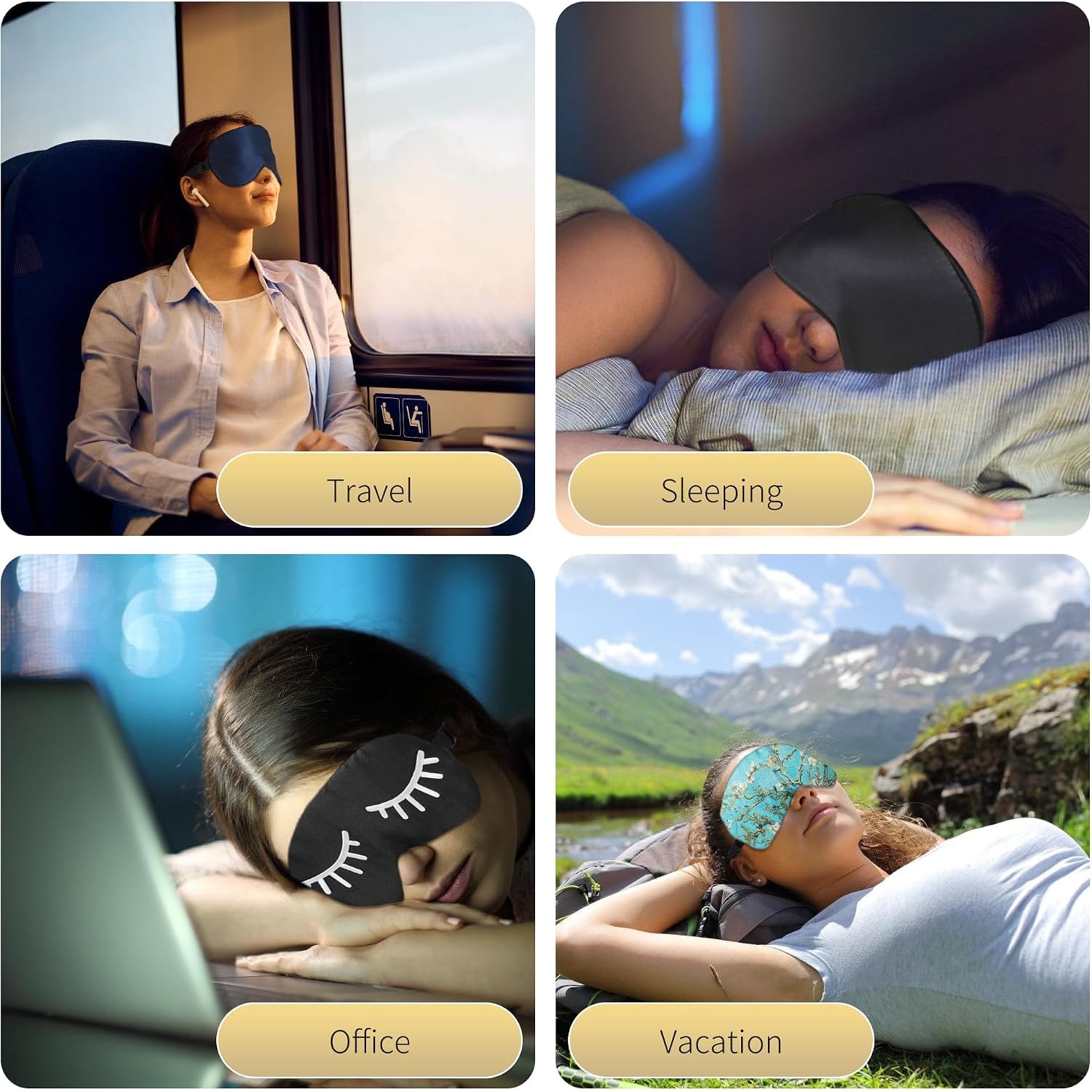
Travelers get the most obvious benefit. Airplane cabins never go properly dark, and the person two rows up will always have their light on. The mask packs into its pouch and weighs nothing in a carry-on.
Shift workers are the other group who really need this. Sleeping during daylight is hard, and most rented accommodation has curtains that let the sun straight through. A black mask is the cheapest fix available.
Then there are light sleepers at home, new parents snatching an hour, students in shared rooms, and anyone with a partner on a different schedule. If one of you is awake and reading while the other is trying to sleep, a mask ends that argument.
Black is the sensible color choice. It shows less wear than pale shades and it does not reflect any stray light back toward your eyes.
How to get the fit right
Put it on sitting up, with your eyes closed, and adjust until it is held in place but you cannot feel pressure on your temples or the bridge of your nose. Then lie down and check again. Fit changes when your head is on a pillow.
If you notice light coming in near your nose, nudge the mask slightly higher and let the lower edge sit over the top of your cheeks. Most light leaks come from the mask sitting too low rather than from the mask being too small.
Give it three or four nights before deciding. If you have never slept with anything on your face, the first night often feels strange and the fourth feels normal.
Looking after it
Silk is not fragile, but it does not like heat or harsh detergent.
Hand wash in cool water with a mild detergent made for delicates. Swirl it, do not scrub, and do not leave it soaking for ages. Rinse in cool water, then press it between a folded towel to get the water out. Never wring silk, since twisting it is what breaks the fibers.
Dry it flat at room temperature, somewhere out of direct sun. A sunny windowsill will fade black fabric faster than anything else. If you want it crisp, iron on the lowest setting with a cloth in between, though usually drying flat is enough.
Wash every week or two with regular use, more often if you use rich night creams. Between uses, keep it in the pouch. It stays cleaner, it does not collect lint from a bedside drawer, and you will always know where it is.
The short version
If light is keeping you awake, a mask is the simplest thing you can change. This one is mulberry silk on both faces, 8.4 by 4.3 inches, about an ounce in weight, flat enough for side sleepers, with a strap you can set yourself and a pouch for travel.
What it will not do is fix a noisy street or a bad mattress. What it will do is take light out of the equation, which for a lot of people is most of the problem. Set the strap properly, hand wash it now and then, keep it in its pouch, and it will quietly do its job for a long time.